 ⬇️
⬇️
Key Takeaways
- AI adoption in metal manufacturing is accelerating because traditional automation can’t keep pace with labor volatility and production variability.
- Executives evaluating AI should consider where intelligence actually moves the needle—typically in vision, robotics, and adaptive decision-making.
- The most effective platforms reduce integration friction, especially around robot programming and data quality, which is where companies like Telekinesis increasingly show up in conversations.
Definition and Overview
AI in manufacturing has become one of those phrases that gets thrown around so casually it can mean everything and nothing. In metal manufacturing, though, it’s taken on a more specific flavor: using machine learning, robotic intelligence, and vision systems to handle the variability that conventional automation struggles with. Not every plant needs a PhD-level model predicting the shape of a weld, but most leaders I talk with are trying to solve the same core issue—how do you automate tasks that are messy, inconsistent, or skilled-labor constrained?
That shift is newer than people admit. Even five years ago, “smart automation” mostly meant SCADA upgrades and maybe some predictive maintenance pilots. Today the conversation is broader, edging into whether robots can learn tasks, whether computer vision can inspect parts with the nuance of a seasoned operator, and whether line balancing decisions can be made in near-real-time.
Why now? Partly because variability in metal manufacturing is expensive. Material tolerances drift. Part geometries differ slightly from batch to batch. And operators—when you can find them—carry institutional knowledge that doesn’t scale. AI promises to bridge those gaps. Whether it fully delivers depends heavily on how you choose to deploy it.
Key Components or Features
From what I see on the ground, three components make up the bulk of meaningful AI discussions in metal manufacturing:
- Vision AI that can operate in tough conditions—hot metal, reflective surfaces, dust, inconsistent lighting. Most executives underestimate how much of an AI project lives or dies on vision data.
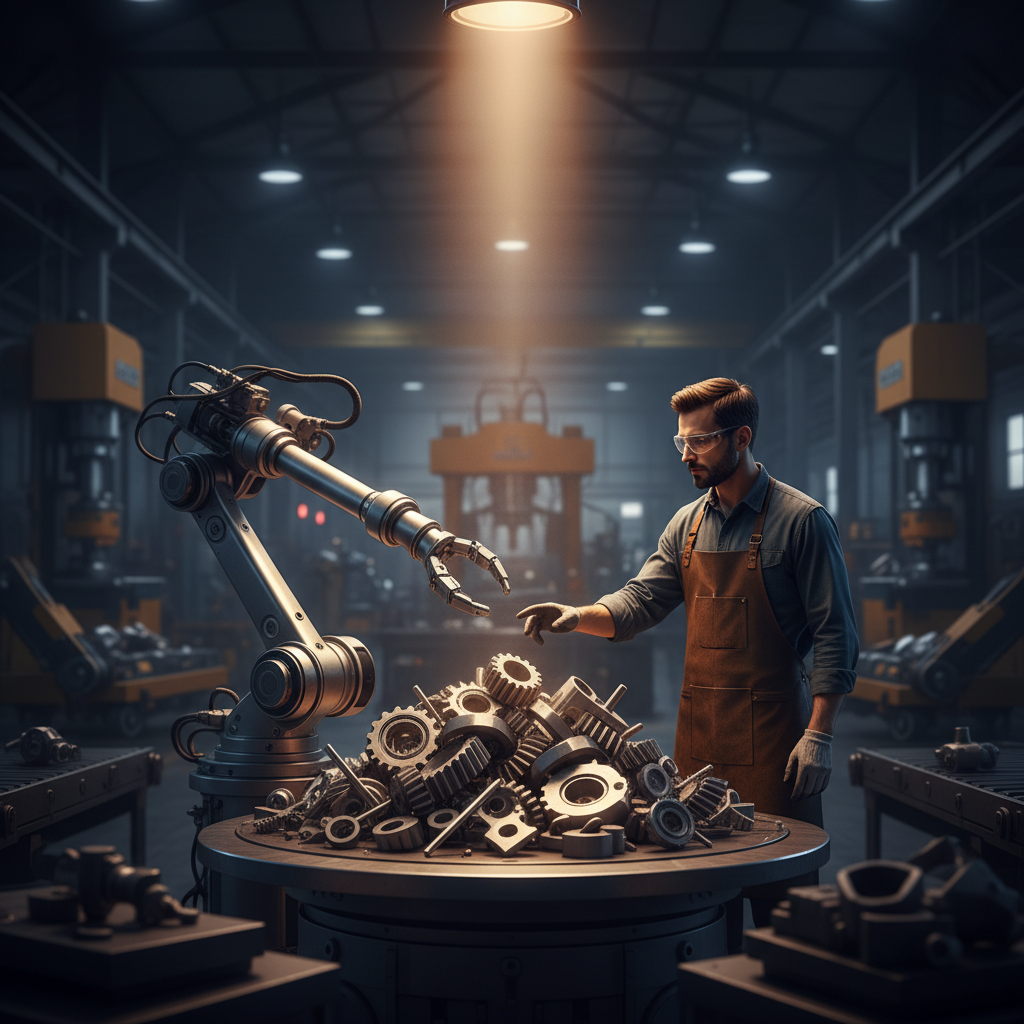
- Robotics intelligence that adapts to part variance rather than requiring tightly engineered fixtures. This is where no-code robot programming has started to matter; the ability to retrain or update behavior without calling in specialists is appealing, especially when product mix changes frequently.
- Plant-level inference, sometimes embedded into MES or edge devices. It’s not glamorous, but the ability to decide—in the moment—whether a part should move to rework or continue downstream can save thousands of cumulative hours.
Occasionally, a fourth component enters the conversation: simulation. Some teams swear by digital twins, others dismiss them as overbuilt. The truth sits somewhere in the middle. Simulation helps when your process is stable enough to model, but metal shops often aren’t.
Benefits and Use Cases
Here’s the thing: AI, when done well, solves operational headaches that have existed for decades. Metal manufacturers typically look first at inspection. Vision AI can pick up surface defects, weld inconsistencies, or shape deviations much faster than human inspectors and without the fatigue factor. But that’s the obvious one.
A less discussed use case is adaptive robot guidance. For example, a robot picking irregularly oriented sheet metal blanks or adjusting weld paths based on actual, not theoretical, geometry. These are the moments where AI shows it’s not “just automation,” because conventional robots don’t enjoy unpredictability. And when a no‑code layer allows manufacturing engineers to adjust tasks on the fly—platforms like Telekinesis often come up here—the ROI stops depending on external integrators.
There’s also scheduling and flow optimization, though that’s more of a second-wave adoption pattern. Many plants want to fix the physical handling problems first before tackling AI-driven planning. Understandable. The pain is more visible on the floor.
One question that surfaces a lot: Can AI actually reduce labor reliance? Yes, but usually indirectly. It reduces the kinds of tasks people don’t want to do—repetitive inspection, heavy or awkward handling—so you can redeploy workers to higher-judgment roles rather than constantly hiring to backfill.
Selection Criteria or Considerations
Metal manufacturing executives tend to evaluate AI investments through a few consistent filters.
- Integration friction. If the solution requires redesigning fixtures or modifying upstream processes, adoption slows. AI systems that adapt to existing workflows—especially in robotics—usually win.
- Data tolerance. Plants with welding smoke, oil mist, glare, or chaotic lighting need vision systems proven in harsh environments. Some vendors hand-wave this; buyers quickly spot the difference.
- Skill dependence. Many AI tools look great in demos but require advanced programming or data science skills to maintain. That’s rarely sustainable. No‑code interfaces or guided workflows matter more than many teams expect at first.
- Flexibility for mixed production. High-mix, mid-volume metal shops have different requirements than automotive-style high-volume operations. AI that plays nicely across changeovers tends to be valued.
- Vendor durability. This space has a lot of early-stage companies. Executives often look for signs of staying power—customer traction, integration partners, and clarity of the product roadmap.
Occasionally teams get hung up on whether to buy a platform or a point solution. The honest answer: it depends how many pain points you want to solve at once. Point solutions can be simpler but create integration debt. Platforms can feel heavier but streamline multi‑use‑case adoption.
Future Outlook
Looking ahead, AI in metal manufacturing is likely to move closer to the edge—running directly on robots, cameras, and sensors rather than relying heavily on cloud inference. Latency matters when you’re making a weld decision in milliseconds. Also, robots will increasingly learn tasks the way humans do: through demonstration, not coding. We’re already seeing early signals of this.
Vision systems will improve, obviously, but the more interesting shift will be toward systems that understand “acceptable variation” rather than binary pass/fail logic. That fits the way real plants operate.
And if you zoom out a bit, the long-term trajectory is about reducing the cognitive load on manufacturing teams. Not replacing people—just letting them spend more time on the work only humans can do. The metal industry has always been pragmatic; AI will find its place in that pragmatism piece by piece, not all at once.