 ⬇️
⬇️
Key Takeaways
- Lenovo introduced the AI Host Mini PC in China with access to more than 8000 downloadable AI capabilities through its Tianxi Claw marketplace.
- The device reflects accelerating adoption of AI PCs that rely on local NPUs for inference rather than cloud-only models.
- Enterprise analysts expect AI-native endpoints to expand rapidly as organizations seek low-latency, portable, and privacy-friendly AI execution.
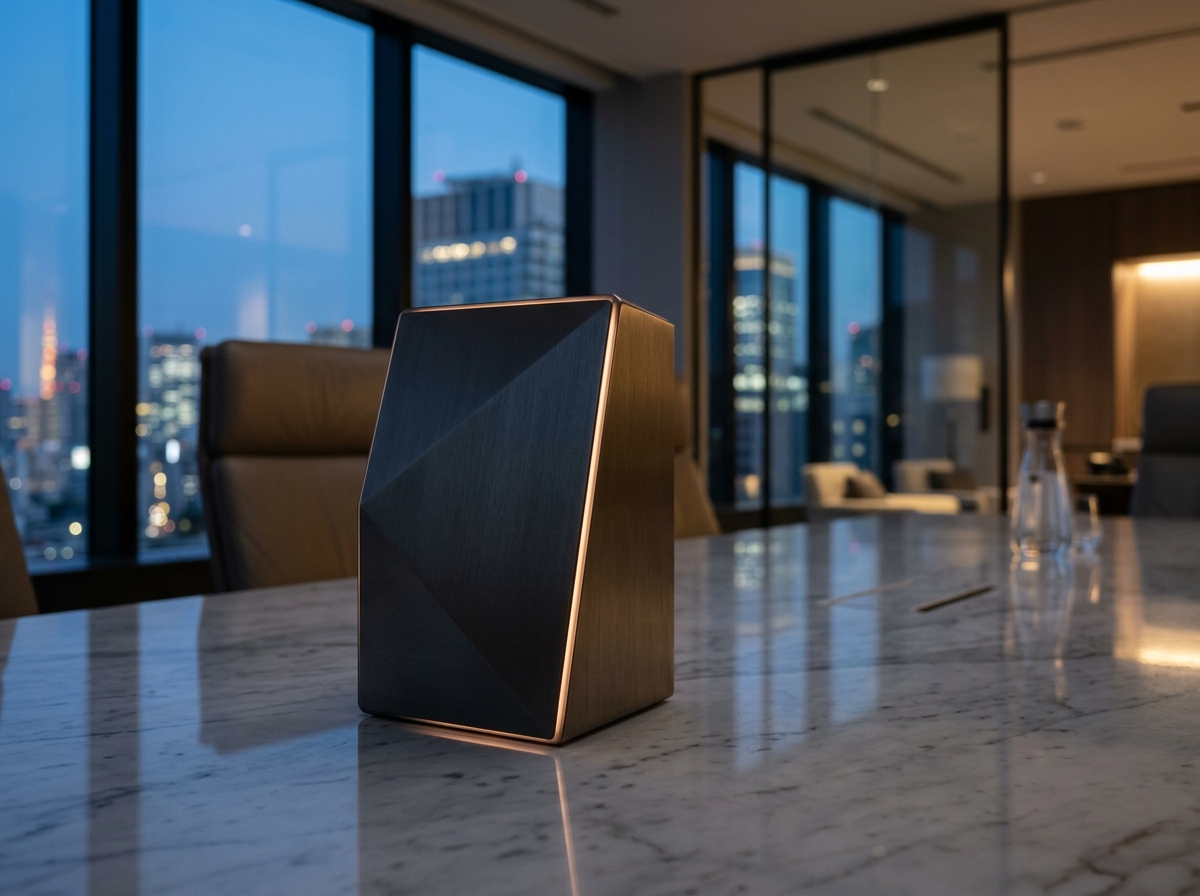
Lenovo has launched the AI Host Mini PC in China, a compact device that approaches personal computing from an AI-first perspective rather than as a traditional desktop replacement. Instead of a standard operating system stacked with legacy applications, Lenovo offers a catalog of more than 8000 downloadable AI functions that operate like modular agents, accessed through its proprietary Tianxi Claw marketplace.
The device aligns with industry expectations that endpoints will evolve into intelligent hubs rather than static application launchers. Analysts at Gartner have projected that by 2026, roughly 60% of new enterprise PCs shipped will fall into the AI PC category, carrying dedicated on-device accelerators. Devices like the AI Host Mini represent a preview of what organizations will soon evaluate as standard procurement options.
The AI Host Mini is configured initially by scanning a QR code with a smartphone, unlocking access to the skills marketplace. Lenovo ships the system with more than 20 preinstalled capabilities, allowing users to deploy thousands of additional AI tools depending on their requirements. Specific functions can connect directly to communication platforms such as QQ, WeChat, and Feishu, creating pathways for local, agent-driven workflows that interact with existing enterprise operations.
Multiple Claw instances can operate simultaneously while supporting access from several users sharing one physical device. This multi-tenant flexibility addresses small-team environments, differing from typical single-user PC configurations where an IT administrator must deploy and manage complex desktop applications.
The AI Host Mini is powered by the Cixin P1 CD8180, a 6nm Arm processor developed by China's Cixin Technology. Its 12-core CPU is designed to match the computing performance of several older high-end Intel mobile processors. A 10-core GPU based on the Arm Immortalis G720 architecture handles visual workloads, operating alongside a dedicated NPU rated at 30 TOPS. This contributes to Lenovo's claimed total AI performance of 45 TOPS. The system occupies just 0.48L of volume within its compact enclosure, measures 100 x 100 x 48.65 mm, and weighs 0.373 kg.
IDC forecasts that AI PC shipments will reach 167 million units in 2027, representing more than 60% of total PC shipments. Enterprises are evaluating these systems because they allow organizations to run AI workloads locally, reducing reliance on cloud computing that can introduce latency, privacy risks, and unpredictable operational costs. Organizations like the Linux Foundation have tracked a surge of investment in open, portable edge AI runtimes designed to allow AI models to move seamlessly between devices—a requirement that becomes critical as hardware vendors introduce isolated, skill-based marketplaces.
The device ships with Ubuntu and supports developer mode out of the box, though support for Windows appears uncertain at this stage. Reliance on the proprietary Tianxi Claw marketplace means Lenovo tightly controls the software ecosystem. It remains to be seen whether enterprise users will accept a closed marketplace instead of the traditional software model, especially where interoperability across diverse hardware endpoints is a priority.
For connectivity, the system includes two USB 3.2 ports, two USB-C ports, HDMI 1.4, DisplayPort 1.4, and integrated 2.5GbE networking. Local storage relies on a 256GB SSD, paired with 8GB of LPDDR5 memory operating at 6000MT/s. These components are specified precisely to support local AI execution rather than high-end desktop application performance.
Lenovo's hardware and software integration parallels ongoing industry efforts from competing vendors. Intel continues to encourage manufacturers to integrate NPUs into laptops and desktops, while ASUS has shipped hardware built specifically for real-time AI operations. As marketplaces for AI agents emerge across multiple platforms—including Microsoft Copilot—the transition toward skill-based software augmentation is gaining momentum across the hardware ecosystem.
Standards remain a critical factor in this landscape. The ONNX format serves as an interoperable standard to package AI models, while IEEE P2807 provides definitions and architectural guidelines for AI system design. Although Lenovo has not indicated plans to expand its 8000 capabilities beyond the Tianxi Claw platform, broader industry adoption of shared standards continues to drive workload portability for developers and enterprises.
Whether organizations will prefer purchasing modular AI capabilities instead of traditional software remains an open question. Adoption of devices like the AI Host Mini will depend heavily on platform usability, administrative trust in proprietary marketplace models, and how rapidly IT departments deploy mixed fleets of AI-capable endpoints.
Lenovo's AI Host Mini serves as a clear indicator of hardware designed specifically for local inference rather than legacy application support. Driven by dedicated accelerators and agent-based capabilities, the hardware aligns closely with the broader enterprise shift toward localized, highly specialized AI execution.