 ⬇️
Key Takeaways
- Starlink Snow Melt warms the terminal face to limit snow accumulation and related signal obstruction.
- Automatic and Pre-heat modes trade energy consumption against earlier, more consistent warming.
- The design offers terrestrial internet providers a model for automating weather protection at exposed network endpoints.
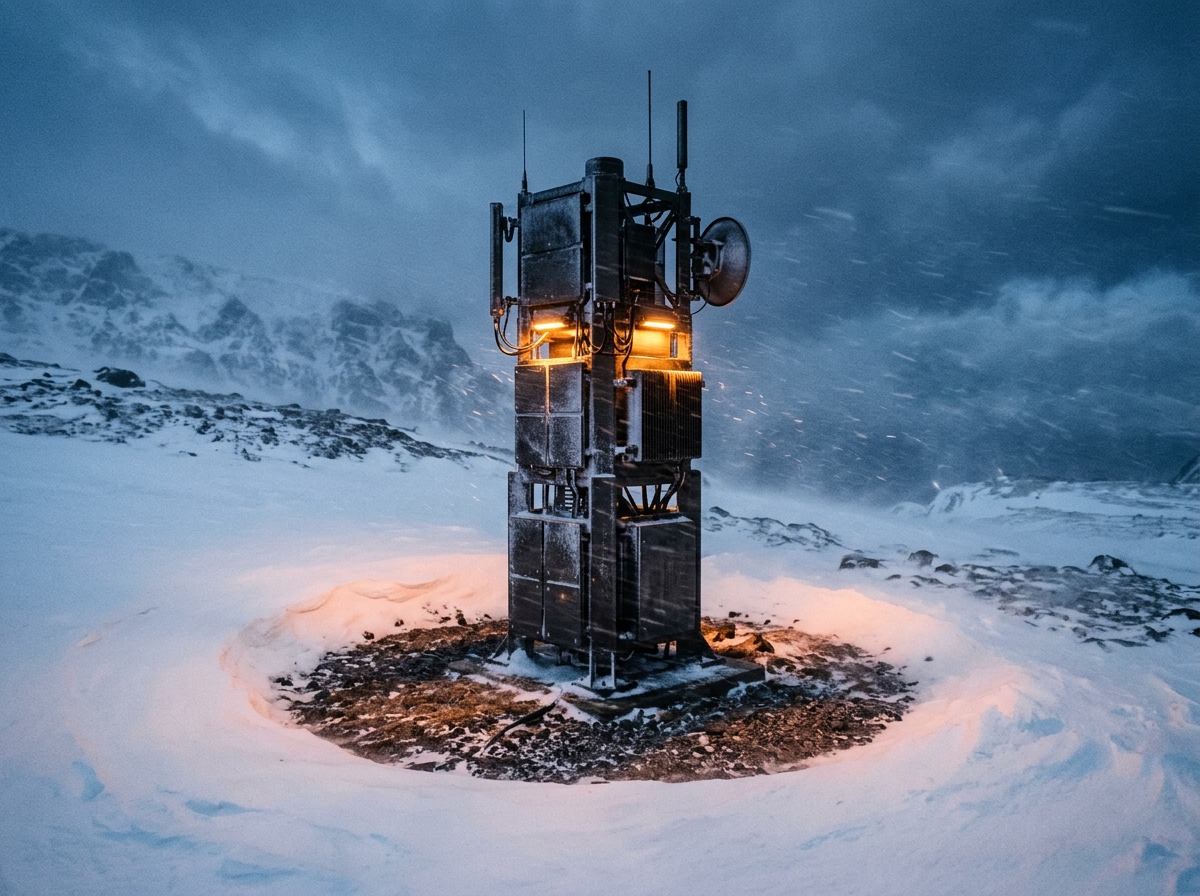
Outdoor broadband equipment has an unavoidable weakness: it lives outdoors. For Starlink, falling and drifting snow can obstruct a terminal’s view of the sky, causing anything from intermittent disconnections to outages lasting minutes or hours. The company addresses that risk through Snow Melt, an app-controlled feature that uses the terminal’s power draw to warm its face before snow becomes a substantial barrier.
That sounds simple. It is also a useful example of network resilience moving closer to the customer endpoint.
Snow Melt features Off, Automatic, and Pre-heat modes. Automatic activates warming when the terminal detects conditions associated with snow. Pre-heat keeps the terminal warm continuously, which can be useful when a major storm is forecast. Users manage the setting by opening the Starlink app, selecting Settings, choosing the Starlink tab and tapping Snow Melt.
The difference matters operationally. Automatic mode can reduce unnecessary electricity consumption during clear weather, while Pre-heat gives the terminal a head start. According to BGR, one user reported consumption of approximately 110 watts after leaving Pre-heat active for about a year, compared with roughly 35 watts after switching back to Automatic. Other winter reporting places Snow Melt consumption in the range of approximately 100 to 150 watts, depending on the terminal and conditions.
Melting capability also varies by hardware. Performance (Gen 3) is rated to handle 3.5 inches of snow per hour, while Performance (Gen 2) is rated for 3 inches. Starlink V5 is rated at as much as 1.6 inches per hour. Starlink V4 and Enterprise are rated at 1.5 inches, or about 40 millimeters, per hour, while Starlink Mini is rated at one inch per hour.
These figures describe melting capacity on the terminal face, not overall immunity from winter weather.
Snow can still accumulate around the mount, drift over the equipment or obstruct its wider field of view. Heavy atmospheric precipitation can also affect the radio link even when the terminal itself remains clear. PCMag reported stable Starlink service through multiple Idaho winters, but its testing also found that severe storms, precipitation and physical obstruction could still interrupt connectivity.
User experiences reflect that split. Some customers in Maine and Ontario have reported clear terminals and stable operation during substantial snowfall. Others have found that Automatic mode activates only after signal quality begins deteriorating, making Pre-heat more suitable ahead of a known storm. In heavier accumulation, either mode can be overwhelmed and manual clearing may still be required.
What happens if the electricity fails first? Snow Melt depends on power, as does the rest of the Starlink installation. Severe regional winter storms frequently leave wide swathes of customers without electricity. For businesses using Starlink as a primary connection or failover circuit, battery capacity and generator availability therefore remain part of the same resilience calculation.
Installation choices count, too. A terminal positioned where roof runoff, drifting snow or falling ice can bury it may underperform regardless of its warming mode. Operators should consider elevation, drainage, field of view and safe maintenance access. Ingress protection under IEC 60529 can help procurement teams compare enclosure resistance to water and solids, while ITU-T Y.1541 provides a useful reference for evaluating IP-network performance objectives.
The broader lesson is not limited to satellite broadband. 4WD Talk notes that Starlink can continue operating through many rain and snow conditions, but obstruction and severe weather remain practical constraints. Comcast, Verizon and T-Mobile could apply the same general philosophy to exposed cable or fixed-wireless equipment through controlled heating, hydrophobic surfaces or automated environmental monitoring. The available evidence does not establish that they currently use those specific approaches.
For internet providers, the important shift is conceptual. Weather mitigation can become a managed endpoint function rather than a customer chore or truck-roll trigger. Starlink Snow Melt does not eliminate winter outages, but it can reduce one common failure mode before a technician ever needs to put on boots.