 ⬇️
⬇️
AVer and Sennheiser Expand Intelligent Camera Tracking for Modern Collaboration Spaces
Key Takeaways
- Sennheiser’s EW-DX microphone system now integrates with the AVer MT300(N) Matrix Tracking Box for audio-triggered camera control
- The update introduces encrypted communication and faster control signals via SSCv2
- The combined solution supports more streamlined wireless microphone workflows in hybrid meeting and learning environments
A small but important shift is happening in hybrid collaboration technology. Instead of treating audio and video as separate systems that merely coexist, vendors are increasingly leaning into deeper, protocol-level integrations. That’s where the latest collaboration between Sennheiser and AVer lands—right in the middle of the convergence trend.
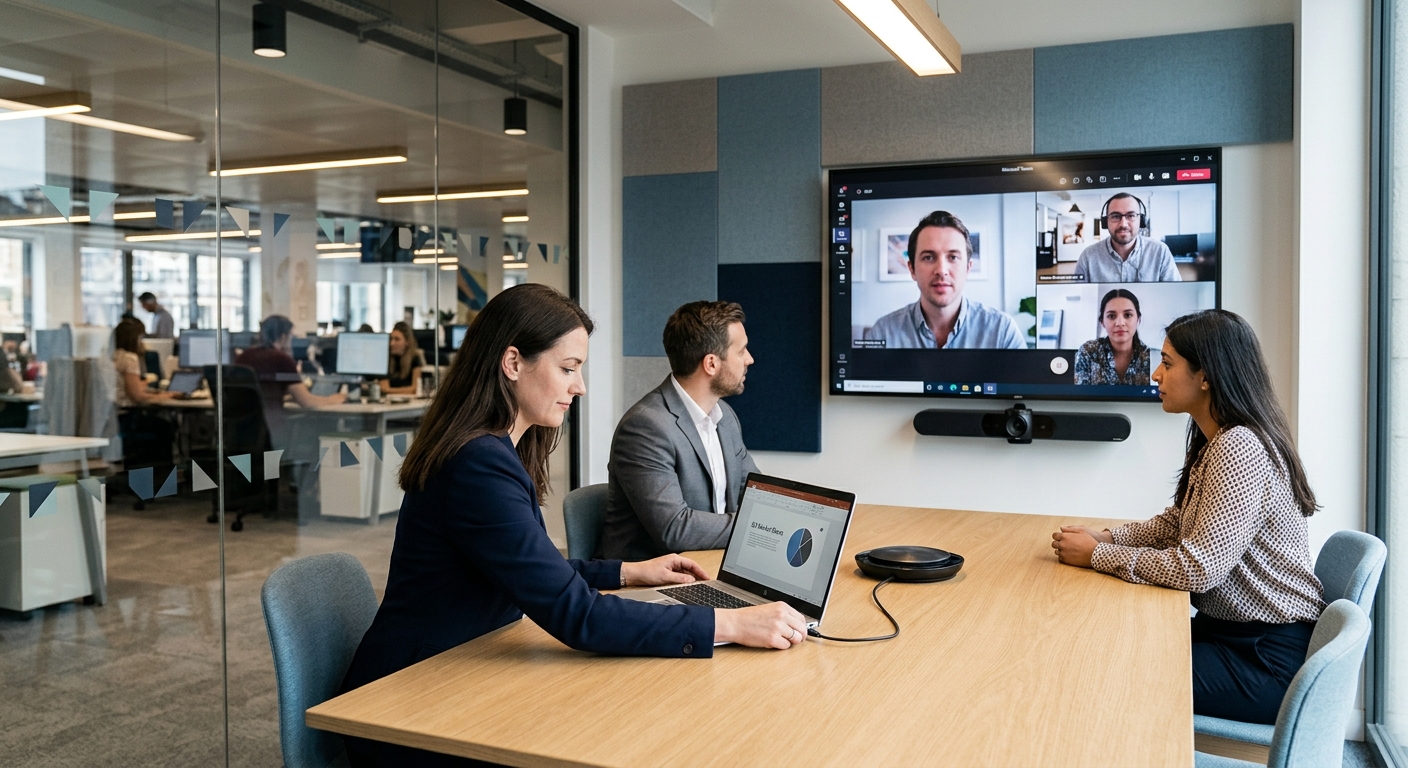
At the center of the announcement is Sennheiser’s EW-DX wireless microphone system, which now connects directly to the AVer MT300(N) Matrix Tracking Box using the company’s Sennheiser Sound Control Protocol v2 (SSCv2). The integration allows meeting and classroom cameras to switch automatically based on who is speaking, using voice position data from EW-DX. It’s the kind of user experience enhancement that people only notice when it stops working. But when it works consistently? Rooms feel more natural, and presenters forget the technology is even there.
Here’s the thing: audio-triggered camera control isn’t entirely new. What’s notable is how it’s being applied to wireless microphone setups—traditionally a tougher environment for precise, real‑time tracking. SSCv2 compatibility gives the MT300(N) firmware the ability to process encrypted commands quickly, reducing lag and making transitions feel more fluid. That matters in larger boardrooms and lecture halls, where a split-second delay can look jarring on recordings or during live discussions.
The update also reinforces the ongoing move toward tighter AV system security. Encrypted communication between the microphones and the tracking processor aims to reduce interference and maintain more predictable performance. Not every organization will call this out as a top priority, but for enterprise deployments and higher education AV teams, dependable system behavior is increasingly non‑negotiable.
Interestingly, this firmware upgrade lands alongside the companies’ existing collaboration on ceiling microphone tracking through Sennheiser’s TeamConnect Ceiling line. The addition of EW-DX simply broadens the ecosystem, giving integrators more flexibility in how they design audio pickup and speaker‑tracking strategies. One room might favor wireless mics for mobility, while another leans on ceiling arrays for simplicity—both now feed into AVer’s camera tracking logic.
Why does this matter? Because AV budgets are under pressure, and IT teams want systems that will scale without constant hardware replacement. A firmware‑based improvement hits the sweet spot: better functionality without adding complexity to the rack or ceiling. The integration also brings multi-camera switching into play, which is increasingly important for larger hybrid teaching spaces where a single point of view isn’t enough.
That said, audio-triggered switching workflows do invite questions. For example, how well does the system distinguish between ambient noise and intentional speech? And what happens when multiple participants speak at once? While Sennheiser doesn’t address these scenarios directly in the announcement, the inclusion of voice position data suggests that directional detection—not just volume—is part of the control logic. That usually results in more accurate camera choices, even in messy real-world conversations.
Across the AV industry, we’re seeing more demand for this type of automation. Hybrid meetings aren’t going away, and organizations want more natural interactions without forcing participants to manage cameras manually. Audio-triggered tracking is one of the few technologies that can deliver that without requiring additional user training. In other words, it solves a problem without asking anyone to change their behavior.
And while this integration isn’t a major product overhaul, incremental improvements like these tend to accumulate. They reduce friction. They let AV teams support more rooms with fewer resources. They also help maintain consistent experiences across campuses or enterprise locations—something that’s surprisingly hard to achieve when relying on disparate hardware and control platforms.
The companies note three core benefits in the update: smarter switching, enhanced security, and suitability for wireless workflows. Those might sound simple, but they map neatly onto everyday deployment challenges. Wireless systems promise flexibility, yet they also introduce variables that can complicate camera automation. Adding protocol-level intelligence helps tame some of that unpredictability.
If anything, this announcement hints at where AV ecosystems are heading next. Interoperability is becoming as important as hardware specs, especially as IT departments take on more responsibility for AV infrastructure. Solutions that communicate cleanly and securely stand a better chance of fitting into modern technology stacks.
For integrators and AV managers evaluating next steps, the update is available through AVer’s firmware portal, and both the EW-DX system and MT300(N) tracking workflow remain positioned for professional collaboration, lecture capture, and hybrid learning environments. Ultimately, the integration reflects a broader industry shift: smarter rooms built on tighter, more efficient connections between audio and video systems.