 ⬇️
⬇️
Key Takeaways
- Big Sky Digital Infrastructure is moving forward with a 500 MW data center in Yellowstone County with plans to reach 1 GW by 2030.
- NorthWestern Energy has signed a letter of intent to support up to 1,000 MW of power for the project.
- The initiative underscores a broader rise in U.S. data center electricity demand and the need for robust grid and fiber connectivity.
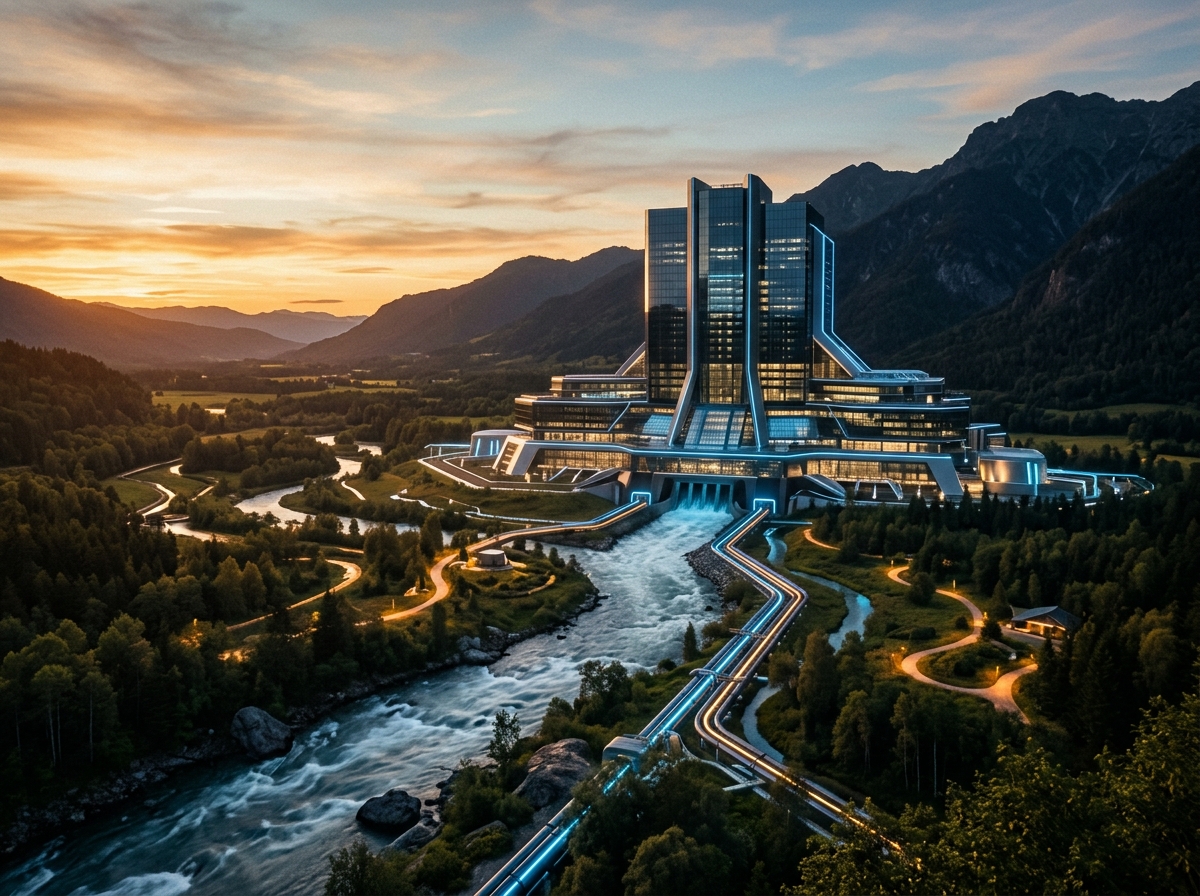
The scale of Big Sky Digital Infrastructure’s proposed data center campus in Yellowstone County highlights the rapid expansion of infrastructure and utility requirements. With an initial 500 MW load and a roadmap aiming for 1 GW by 2030, the project fits squarely in the hyperscale category. This capacity reflects the shift across AI and cloud architectures, where multi-hundred megawatt designs are becoming standard.
The developer's plans for the campus include access to new high-speed fiber routes, which are essential for AI training and large dataset movement. This network backhaul infrastructure prevents data transfer bottlenecks that often constrain high-demand compute facilities.
Power availability is the primary constraint for campuses of this size. NorthWestern Energy has signed a letter of intent to supply up to 1,000 MW for the Yellowstone project. The utility’s involvement addresses critical timeline factors, including interconnection queues, substation upgrades, and long lead times for transformers, ensuring regional grid capacity aligns with hyperscale deployments.
The U.S. Department of Energy reports that data centers used about 4.4% of U.S. electricity in 2023, projecting this could reach between 6.7% and 12% by 2028. The wide range in federal projections reflects the rapid evolution of AI workloads. The International Energy Agency tracks similar momentum globally, estimating that data centers, AI, and cryptocurrencies consumed roughly 460 TWh in 2022 and could more than double by 2026.
Industry analysts at Gartner note that organizations designing AI-scale capacity are increasingly clustering near strong utility partners. Latency zones, water availability, and power procurement strategies now operate as early design constraints rather than secondary considerations. The Yellowstone County project reflects this methodology by securing utility energy agreements prior to breaking ground.
Traditional enterprise data centers, typically in the 5 MW to 30 MW range, rely on conventional procurement strategies and standard Tier III designs. Hyperscale AI campuses favor modular growth, specialized cooling configurations, and resiliency models that integrate the Uptime Institute Tier Standard with software-defined failover. Operators increasingly mix on-site generation with utility feeds to reduce exposure to grid curtailment programs.
Large AI clusters depend on dense interconnect fabrics. In rural or semi-rural areas, new long-haul fiber routes are as critical as power substations. The Montana project incorporates new high-speed fiber routes to support regional carrier-neutral builds. While long-haul network diversity in the Mountain West is still developing compared to coastal corridors, operators targeting lower-cost land and energy find the tradeoff viable.
Hyperscale developments directly influence broader IT planning through rising coordination between utilities, regulators, and large compute buyers. Facilities of this scale act as catalysts for regional economic development, drawing secondary investments in fiber deployment, construction services, and power equipment manufacturing.
To secure these massive infrastructure assets, operators building next-generation campuses increasingly align with the NIST Cybersecurity Framework 2.0 to manage operational and physical risks. The framework emphasizes continuous monitoring and establishes clear governance lines between IT and OT systems. As facilities scale past 500 MW, integrating digital and physical controls is a mandatory component of operational risk modeling.
A broader economic shift occurs in regions like Yellowstone County as high-demand compute arrives. Local infrastructure, workforce programs, and tax structures must adapt to the influx of development. Communities navigate the balance between economic gains and resource utilization, particularly as water and power consumption curves accelerate.
The expanding presence of hyperscale campuses in Montana fits the pattern of a national buildout. Developers like Quantica Infrastructure and utility partners like NorthWestern Energy are shaping a landscape defined by high-growth electricity loads and rapid AI-driven compute expansion. With initial planning benchmarks now routinely targeting 500 MW, gigawatt-scale design is no longer the outlier, it is the operational template.