 ⬇️
⬇️
Key Takeaways
- Resorts are turning to dark fiber as guest connectivity expectations rise faster than traditional circuits can keep up.
- Owning or leasing raw fiber gives resorts more control over bandwidth, routing, and long-term scalability.
- The economics only make sense when paired with a clear operational strategy, not just a desire for more speed.
Definition and overview
The conversation around dark fiber in resort environments has shifted in the past few years. It used to be a niche idea reserved for tech-heavy properties or sprawling casino complexes. Now it is showing up in planning discussions at mid-sized resorts that never thought they would be in the business of managing optical infrastructure. The trigger is almost always the same: guests expect seamless digital experiences everywhere on the property, and the traffic patterns behind those experiences spike far more aggressively than IT teams predicted even two or three years ago.
Dark fiber, at its simplest, is unused fiber infrastructure that a resort can lease or sometimes build and light with its own equipment. That means the resort controls the transport layer rather than buying predefined bandwidth from a carrier. It sounds like a small distinction. It is not. Control over the physical path changes how a resort thinks about redundancy, what kind of bandwidth it can scale to, and how it supports the mix of guest and internal applications that now run simultaneously.
Some resorts work with providers like Optical Diversity Telecom when they need a mix of internet, SD-WAN, or TV services on top of the underlying fiber. Others prefer a separation between fiber ownership and carrier services. There is no universal playbook, which is partly why this category is gaining attention. Resorts are looking for levers they can pull on their own terms.
Key components or features
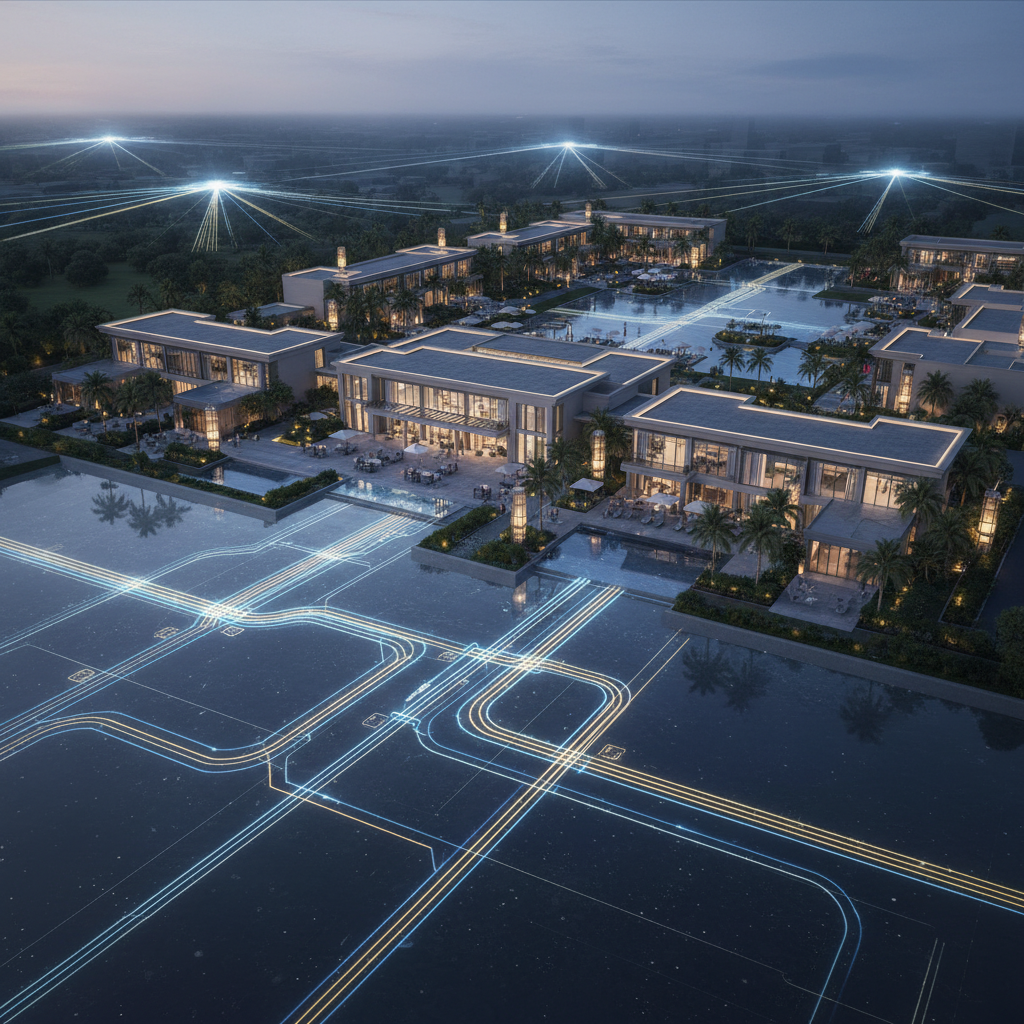
Most dark fiber deployments for resorts fall into one of two patterns. The first is point-to-point fiber connecting a resort to a regional hub or data center where it aggregates traffic. The second is intra-campus fiber that links buildings, villas, entertainment areas, and backend operations. Sometimes it is both. Neither is inherently more complex, but the operational dependencies are different.
Lighting the fiber typically requires optical equipment, wavelength services, or transport gear that is more specialized than what a resort would deploy for standard internet access. This is where some IT teams hesitate. They can manage switches and Wi-Fi all day, but running optical transport feels like a step into carrier territory. There are managed models where the provider handles the optical layer, although not every market has equal options.
Then there is the question of path diversity. Resorts often sit in geographically constrained areas, which can make it difficult to secure physically diverse entrances. A single fiber cut during peak season is the scenario nobody wants. Some organizations address this through hybrid builds or by using different rights of way. Sometimes the solution involves creative routing or partnerships with local municipalities. It is rarely straightforward.
Benefits and use cases
Here is the thing: resorts do not pursue dark fiber because it looks good on a strategy slide. They pursue it because they are tired of being throttled by bandwidth ceilings they cannot control. High-density guest Wi-Fi, 4K and 8K streaming, cloud-based PMS platforms, AI-driven concierge systems, and staff applications that rely on real-time data all hit the same pipes. At certain properties, guest internet usage peaks at levels that would have seemed extreme in 2020. Now it is the baseline.
A common use case is dedicating wavelengths on the fiber to internal operations while leaving others for guest traffic, giving each its own performance characteristics. Another scenario is supporting multiple buildings that need consistent low-latency connectivity for security cameras, access control, and in some cases private 5G nodes. Ski resorts sometimes use dark fiber to connect mountain base areas to summit facilities where weather sensors and safety systems need stable backhaul. Not glamorous, but critical.
One interesting trend is the rise of digital entertainment layers that sit on top of the resort network. Interactive TV, app-based service ordering, or gaming experiences that depend on real-time rendering all need predictable performance. Some resorts are pairing dark fiber with edge compute in local data centers to keep latency tight. Whether that becomes mainstream or stays a niche experiment remains to be seen.
Occasionally someone asks whether dark fiber is overkill for a mid-sized property. Reasonable question. The answer usually depends on how fast their guest experience roadmap is expanding. If the property is adding capacity every year, dark fiber can be an insurance policy that pays off quickly. If growth is flat, the economics are harder to justify.
Selection criteria or considerations
Cost is the starting point, but it is not the deciding factor. Resorts typically weigh four things.
- Fiber availability. Not every location has dark fiber close enough to be practical. Rural and island properties in particular face challenging construction economics.
- Operational capability. Who will manage the optical layer? Does the resort want that skill set in-house?
- Redundancy strategy. Without physically diverse routes, dark fiber might not deliver the reliability improvements buyers expect.
- Growth assumptions. If the resort plans to increase capacity, add buildings, or expand its digital services, dark fiber can provide the flexibility to scale without renegotiating carrier contracts.
Some procurement teams try to model the total cost of ownership over ten years, although the numbers can be squishy. It helps to build scenarios rather than precise forecasts. How much bandwidth might guest usage require in 2029? Unknown, but directional thinking is usually enough to guide the decision.
One more thing: hospitality IT teams often prioritize simplicity over technical purity. If dark fiber creates additional operational overhead without clear benefits, they will walk away from it. Vendors sometimes underestimate how lean resort IT teams can be.
Future outlook
Looking ahead, dark fiber in resort environments is likely to become more common as entertainment, security, and operational systems continue to merge into shared network fabrics. AI-assisted guest services and more immersive digital experiences will only increase bandwidth demands. Some resorts may eventually treat fiber the way they treat power infrastructure, something critical enough to manage as a core asset.
Whether that shift happens quickly or gradually depends on construction economics and the maturity of managed optical services. Still, the directional trend is clear. Resorts are recognizing that controlling their physical connectivity pathways gives them more room to innovate, and in a competitive hospitality market, that control can be the difference between keeping pace and falling behind.