 ⬇️
⬇️
Key Takeaways
- Peer, Earthjustice, and DarkSky International want the FCC to pause licensing for orbital data center projects pending environmental reviews.
- SpaceX and Blue Origin proposals could add tens of thousands, and potentially more than 1 million, satellites to orbit.
- Launch emissions, satellite re-entry, space debris, light pollution, and high costs challenge the business case for orbital AI infrastructure.
Environmental groups are pressing the Federal Communications Commission to pause approvals for orbital data centers proposed by SpaceX, Jeff Bezos’s Blue Origin, and other operators until their cumulative environmental effects receive closer scrutiny.
The petition, filed by Public Employees for Environmental Responsibility, known as Peer, Earthjustice, and DarkSky International, argues that the FCC should evaluate the projects under the National Environmental Policy Act. That process could assess alternatives, mitigation measures, and whether licensing vast satellite networks serves the public interest.
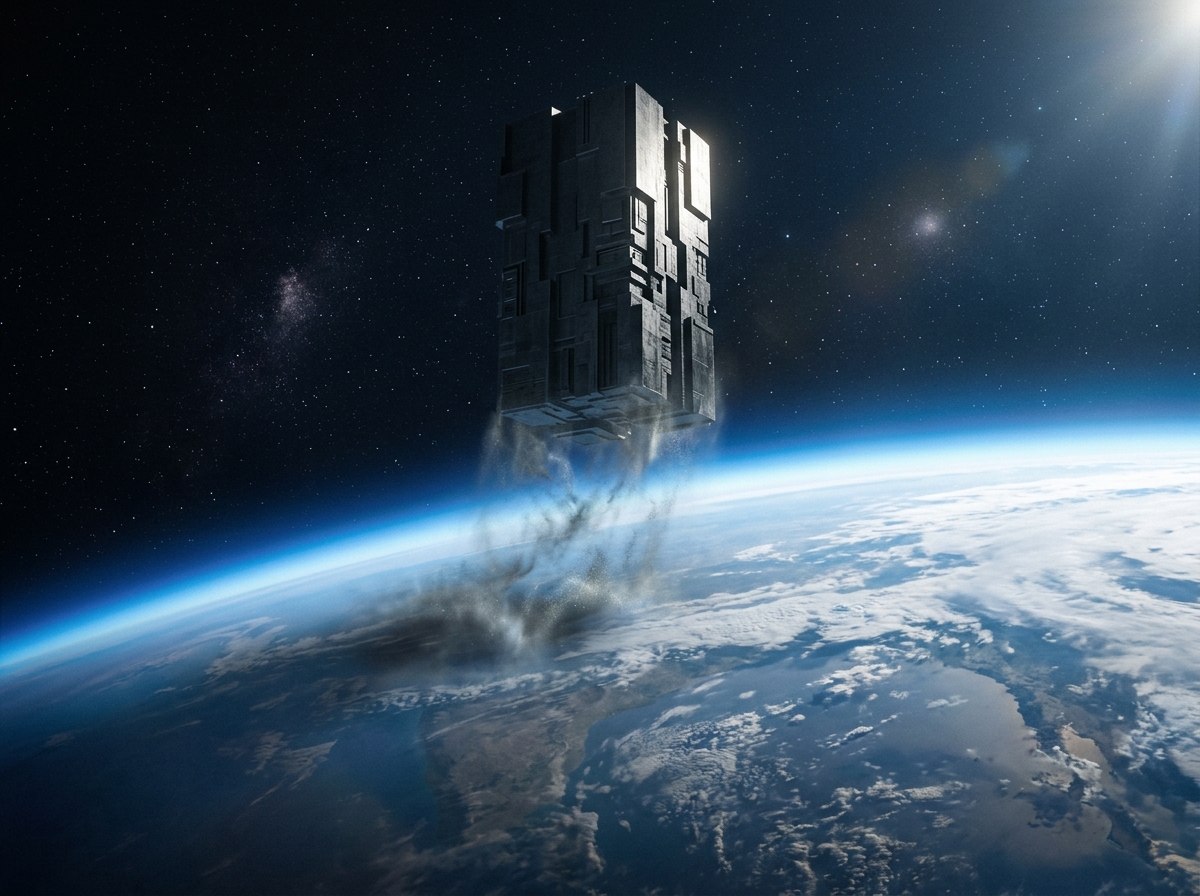
The immediate concern is scale. Blue Origin’s Project Sunrise has sought authorization for more than 50,000 data-center satellites, while Elon Musk has discussed scenarios involving up to 1 million AI satellites. Cowboy Space Corporation separately wants to establish a 20,000-satellite power system, beginning with a first launch in 2028.
Those numbers would represent a sharp break from today’s orbital environment. Active satellites increased from about 1,400 in 2015 to roughly 15,000 currently, and as many as 100,000 could be operating within the decade even before proposed data-center networks are counted.
Why send computing infrastructure into orbit at all? AI is creating immense demand for electricity, cooling, land, and grid connections. Gartner’s 2024 estimate that data centers could consume roughly 4% of global electricity by 2030 helps explain the appeal of solar-powered orbital computing. In theory, satellites could draw abundant solar energy while reducing some pressure on terrestrial power systems.
Moving servers off Earth does not eliminate their physical footprint; rather, it shifts much of that footprint into rocket manufacturing, launch operations, satellite production, ground communications, and eventual re-entry.
Launches can release black carbon, nitrogen oxides, carbon monoxide, aluminum oxide, and chlorine gases at altitudes where their effects may differ substantially from emissions near the ground. Satellites decommissioned after five to 15 years can then vaporize during re-entry, releasing aluminum and other metals into the upper atmosphere.
A Guardian report cited a 2023 Noaa-sponsored measurement flight that detected metals in sulfuric acid aerosols in the stratosphere. Scientists have described the interaction among spacecraft metals, naturally occurring materials, and those aerosols as largely unknown. That uncertainty is central to the petition: operators are proposing industrial activity in a sensitive atmospheric region before its long-term effects are well characterized.
Steve Volz, former head of the Noaa satellite office, compared the prospect to filling the atmosphere with refuse from a smokestack. The question for regulators is straightforward, if difficult: how much uncertainty is acceptable when a proposal could involve hundreds of thousands of launches, replacements, failures, and re-entries over time?
Debris adds another layer. More satellites mean more collision opportunities, greater traffic-management demands, and more complicated end-of-life planning. Bright constellations could also interfere with astronomy and change naturally dark skies. Ruskin Hartley, executive director of DarkSky International, warned that the projects could permanently alter the night sky, with possible consequences for wildlife that depends on darkness.
The economics are hardly settled either. MoffettNathanson estimated that deploying 1 million orbital AI satellites could cost trillions of dollars, according to Computerworld. That is far beyond a conventional hyperscale build-out. Hardware would also face radiation, thermal cycling, communications latency, limited repair options, and expensive replacement cycles.
Analysys Mason has concluded that space data centers are more likely to complement terrestrial facilities than replace them for the foreseeable future. Reporting from Times Now likewise highlights expert concern about the feasibility and environmental consequences of proposals associated with Musk, Bezos, and other technology leaders.
For enterprise buyers, investors, and insurers, regulatory approval would be only one checkpoint. Credible projects would also need lifecycle emissions accounting, collision-risk modeling, replacement assumptions, spectrum coordination under ITU-R rules, and greenhouse-gas reporting that includes launch and re-entry. ISO 14064 could provide part of that accounting structure, though orbital operations introduce impacts that conventional terrestrial inventories rarely capture.
The petition does not settle whether orbital computing can become commercially useful. It does, however, challenge SpaceX, Blue Origin, and other applicants to show their work before orbital AI infrastructure moves from ambitious filings to an industrial-scale experiment in the atmosphere.