 ⬇️
⬇️
Key Takeaways
- Retail teams planning for Wi-Fi 6/6E or 7 often assess whether Cat6A cabling and fiber backbones can support higher-density APs and PoE loads.
- Evaluators typically map TIA/EIA-568 requirements to store layouts to confirm telecom rooms, pathways, and entrance facilities are sized correctly.
- Standards bodies like NIST help buyers compare vendors by verifying that proposed designs align with recognized low-voltage and Ethernet norms.
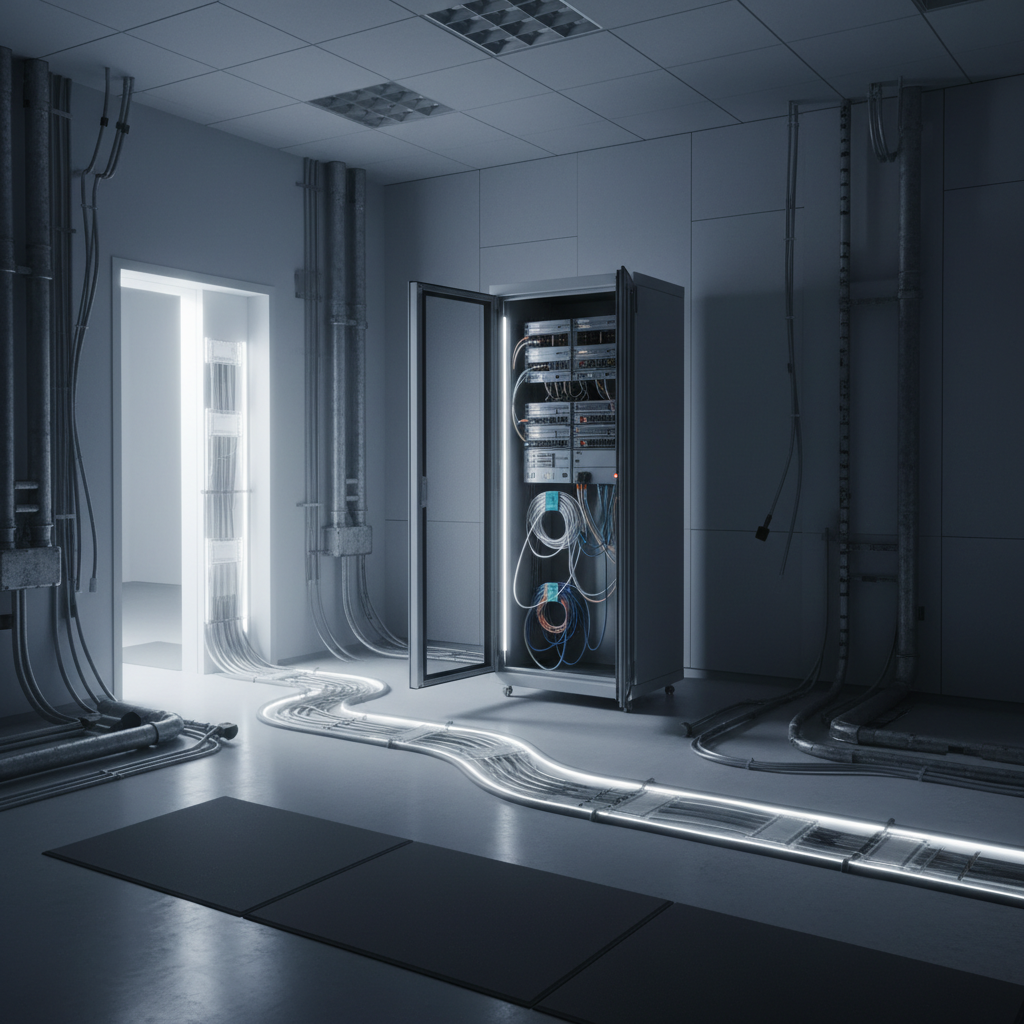
A store remodel or new concept launch often exposes hidden wiring problems. A retailer may add ten cameras to support shrink initiatives and suddenly discover the existing Cat5e bundle feeding the network video recorder cannot reliably handle the additional throughput. Another team might pilot new digital signage, only to find the telecom room lacks structured cabling trays to route additional power and data lines. These situations are common, and they drive many retail and consumer goods teams to reconsider how they evaluate low-voltage wiring strategies.
The projected growth of the global structured cabling market, expected to reach nearly $15 billion by 2027 according to Field Nation industry estimates, signals that more retailers are upgrading store infrastructure. Buyers face a crowded field of vendors, service models, and design patterns. This guide outlines how retail and CPG teams can approach the evaluation process and prepare for decisions that tend to have multi-year implications.
Problem to Solve
Retail networks increasingly support inventory sensors, high-resolution cameras, A/V displays, access control panels, and multiple point-of-sale terminals. Each device commonly relies on low-voltage wiring at 50 volts or less. When these systems live on outdated cabling or unplanned pathways, teams often report recurring issues.
One frequent pain point is congestion inside the telecom room. Patch panels might be mislabeled or mixed across multiple categories of cabling, making troubleshooting far slower than it needs to be. Another recurring challenge comes from insufficient power budgets. PoE cameras that operate at 25 watts or more may overload earlier generation switches if the initial wiring plan was never designed for that draw. In some stores, a single power supply fault can knock out several essential devices at once because everything was bundled through the same undersized line.
Store remodels also highlight environmental issues. Cables sometimes run too close to HVAC equipment or fluorescent lighting, which introduces interference and intermittent network drops. Teams often discover this only when upgrading to higher bandwidth applications like loss prevention analytics or real-time shelf monitoring.
Security adds one more layer. As retailers adopt VoIP phones and IP-based access control, network segmentation becomes critical. A poorly labeled or loosely organized wiring bundle makes it difficult to isolate devices into the correct VLANs or verify compliance with internal IT standards.
Evaluation Approach
A structured evaluation usually begins with aligning the design to recognized standards such as TIA/EIA-568 and low-voltage safety provisions published by NFPA. Buyers compare vendor proposals against those documents to confirm cable categories, grounding practices, bend radius rules, and separation from electrical power.
Teams then consider the bandwidth roadmap. If a store plans to deploy Wi-Fi 6E or 7, high-resolution digital signage, expanded self-checkout, or high-density camera clusters, Cat6A or fiber backbones frequently appear in shortlists. Retailers that rely heavily on in-store analytics prioritize similar infrastructure because camera streams and sensor data can saturate older copper runs.
At this stage, buyers also assess entrance facility requirements. That includes examining how the main demarcation connects to internal backbone cabling and whether fiber is warranted for multi-floor locations. For organizations operating dozens of sites, consistent entry and pathway layouts help reduce support complexity because technicians know what to expect inside each store.
Finally, teams review the management layer. They ask vendors how labeling will be handled, what documentation will be supplied, and how changes will be tracked. Retailers evaluating combined low-voltage wiring and network configuration expertise often include providers like Tampa IT Services in their reviews.
Implementation Considerations
A typical rollout unfolds in phases. The initial phase usually includes site surveys to map existing pathways and determine what can be reused. One common obstacle is discovering older conduits that lack capacity for new Cat6A bundles. When this happens, buyers weigh whether to rebuild the pathway or relocate the telecom room entirely.
The next implementation phase generally covers physical installation. Teams coordinate between store operations, merchandising, security integrators, and network engineers. Because these systems overlap, many retailers schedule cabling work overnight so they can re-terminate or reroute live lines without disrupting point-of-sale systems. Installers use plenum-rated cables in ceiling returns and verify pull tension to prevent micro-bends that degrade signal quality.
Midway through implementation, network teams validate switch compatibility. Some organizations operate mixed environments with switch models that support different PoE classes. If the proposed wiring design relies on PoE+ or higher loads, the team checks whether the switch can deliver the required wattage without throttling. This technical check is essential because it affects which devices can share a single panel or run.
Documentation wraps up the final stage. Buyers expect detailed maps of horizontal cabling, backbone routes, rack elevations, and labeling schemes. In many stores, this becomes the most valuable long-term asset because it allows remote troubleshooting without dispatching a technician for every issue.
Outcomes to Measure
Retail and CPG teams planning an upgrade usually define success measures ahead of time. They typically track network uptime, port utilization rates, and the time required to onboard new devices.
Some organizations track whether switch port utilization stays within expected thresholds after introducing new PoE hardware. Others observe how quickly a store can adopt a new retail technology, such as smart cameras or checkout kiosks, without requiring additional conduit construction. A well-planned wiring system reduces help desk tickets caused by misrouted cables or insufficient power.
Security teams watch segmentation outcomes. Structured labeling and properly distributed patch panels help them verify which devices reside on which VLANs. They also review whether access control panels and VoIP phones behave predictably after the wiring change.
A final measure is upgrade agility. If a future remodel requires adding more APs or displays, the presence of a modern Cat6A or fiber foundation shortens the physical deployment time.
Buyer Takeaways
Several insights tend to surface for teams evaluating low-voltage infrastructure. When planners involve store design early, they uncover pathway constraints that could affect camera or A/V placement. When network engineers validate PoE budgets at the beginning, they avoid mid-project rework on switch layouts. When IT leadership reviews documentation formats in advance, they steer vendors toward templates that align with the retailer's internal support model.
These lessons recur across enterprise evaluations, helping buyers compare proposals more effectively. They also highlight why many teams prefer providers who can coordinate cabling and network configuration within a unified plan, a capability that specialists like Tampa IT Services commonly include in their service catalogs.
Broader Applicability
Any retail or CPG organization building new store concepts or planning heavy A/V or analytics deployments can adapt this evaluation framework. Even single-site operators benefit from mapping their low-voltage design to recognized standards to extend the useful life of their cabling investments.
Question: How long does a low-voltage wiring project usually take for a retail store?
Timelines vary by store size and construction constraints, but projects often span one to two months when surveys, installation, testing, and documentation are included. Stores with legacy conduits or outdated telecom rooms frequently require additional time to remediate pathways before pulling new cable. Retailers with consistent store layouts complete projects faster since teams can reuse design templates.
Question: What is the difference between Cat6 and Cat6A for retail environments?
Cat6 supports gigabit speeds with shorter 10G capability, accommodating basic A/V or point-of-sale loads. Cat6A is typically considered when retailers deploy high-density access points or 4K digital signage because it supports higher bandwidth and full 100-meter 10G runs. Cat6A also handles crosstalk interference more effectively in congested ceilings, which is common in larger retail locations.
Question: Is low-voltage wiring over fiber worth it for small or mid-market retailers?
Fiber becomes attractive when stores need long backbone distances, high bandwidth for camera clusters, or multi-gigabit application capacity. Smaller retailers often choose hybrid designs, using fiber for the backbone and Cat6A for horizontal runs. The choice depends on expected device growth and how many new network-reliant systems the store plans to introduce over the next few years.