 ⬇️
⬇️
Key Takeaways
- EverWind plans to invest C$10 billion total, including C$8 billion in an AI data-centre campus and C$2 billion in onshore wind generation at Point Tupper.
- The project targets 420 MW of total wind capacity, although Nova Scotia’s existing grid would initially supply the data centre.
- Anthropic’s Claude service is reported to be the initial customer, linking the development to rapidly rising global demand for AI computing capacity.
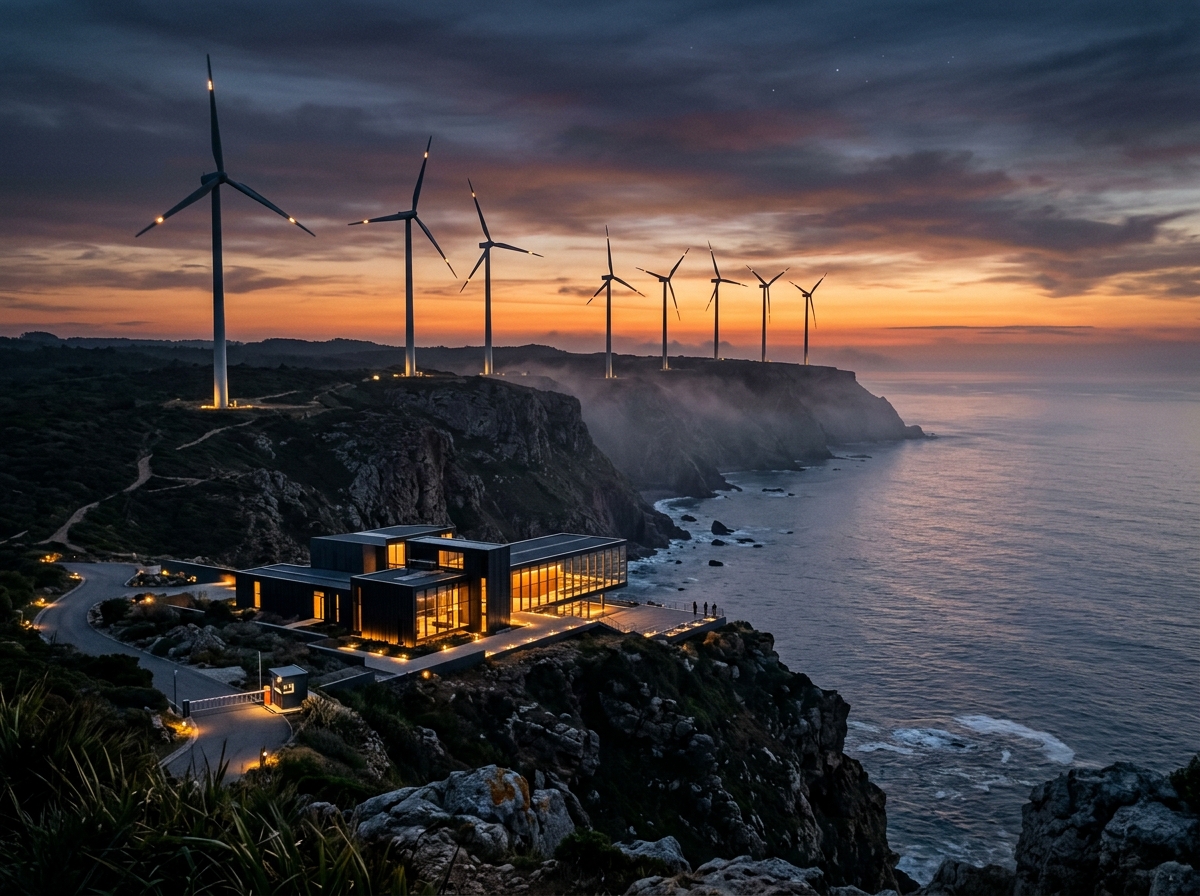
EverWind has announced a C$10-billion development at Point Tupper in Cape Breton that would combine a large AI data-centre campus with new onshore wind generation. The proposal, described by EverWind as the largest private investment in Nova Scotia’s history, places energy infrastructure at the centre of an increasingly urgent technology-sector challenge: finding enough electricity for AI.
The planned investment includes C$8 billion for the data-centre campus and C$2 billion for wind projects. According to CBC, Anthropic’s Claude AI service is expected to be the initial customer.
That customer connection gives the project a clearer commercial foundation than a purely speculative data-centre proposal. It also illustrates how developers are increasingly pairing computing facilities with dedicated or nearby generation instead of relying solely on an already constrained regional grid.
EverWind is targeting 95 MW of wind capacity by late 2027, followed by another 325 MW in 2028. Together, the projects would provide 420 MW. The full development is expected to support roughly 2,000 construction jobs and 215 permanent positions, creating a substantial industrial footprint in a region with deep ties to energy and heavy infrastructure.
Still, the data centre and its wind supply will not arrive at the same time. EverWind says the wind farms will not be operating when the facility first opens. Existing Nova Scotia grid infrastructure would supply the initial electricity, while planned battery storage is expected to help support reliability.
This timing gap could become one of the project’s most closely watched features. A large AI campus represents a concentrated, potentially fast-growing electrical load. Its effect on the provincial system will depend on the campus ramp-up, the delivery schedule for wind and storage, and any transmission or grid upgrades required to connect them.
The issue extends well beyond Nova Scotia. The International Energy Agency reported that global data-centre electricity demand increased 17% in 2025, while demand from AI-focused facilities grew 50%. It projects total data-centre consumption will rise from 485 TWh in 2025 to 950 TWh in 2030, with AI-centre demand tripling over that period.
Investment has followed the electricity curve. Data-centre spending reached approximately $580 billion in 2025, according to the IEA World Energy Outlook 2025. Much of that activity remains concentrated in the United States, China and the European Union, but grid congestion is encouraging developers to consider locations with land, generation potential and viable infrastructure.
Point Tupper may offer that combination. Yet access to renewable resources does not automatically make an AI campus carbon-free. Electricity consumed from the grid before dedicated wind capacity enters service will reflect the grid’s actual generation mix. Renewable-energy contracts and certificates can affect market-based emissions reporting, but they are different from having matching clean generation available every hour.
The Greenhouse Gas Protocol Scope 2 Standard provides one framework for reporting purchased-electricity emissions. For operational efficiency, ISO/IEC 30134-2:2016 defines power-usage effectiveness, or PUE, which compares a data centre’s total energy consumption with the energy used by its computing equipment. Neither measure, on its own, captures the complete regional impact.
Cooling requirements, battery operation, transmission constraints and demand-management arrangements will matter too. How quickly can the site reduce or shift consumption during a grid emergency? That question is becoming more important as AI operators deploy dense clusters of accelerators whose power requirements can rise in large increments.
As BNN Bloomberg reported, EverWind is presenting the development as a historic private-sector commitment to Nova Scotia. The scale supports that description, but execution will determine its broader significance.
For enterprise technology buyers, the announcement signals another shift in the AI supply chain. Compute availability increasingly depends on energy procurement, transmission access and construction schedules, not simply chips and servers. Microsoft and Google are expanding AI-compute campuses globally under similar pressures.
EverWind’s Point Tupper plan brings those pressures into one project: a major AI customer, billions in infrastructure spending and a phased renewable build-out. If the generation, storage and data-centre schedules remain aligned, Cape Breton could become an important Canadian AI infrastructure hub. The early reliance on the provincial grid, however, means the transition from ambitious announcement to credible energy model will be measured in megawatts delivered, not only capital committed.