 ⬇️
⬇️
Key Takeaways
- Ghost emerged from stealth with $11 million in seed funding led by Andreessen Horowitz.
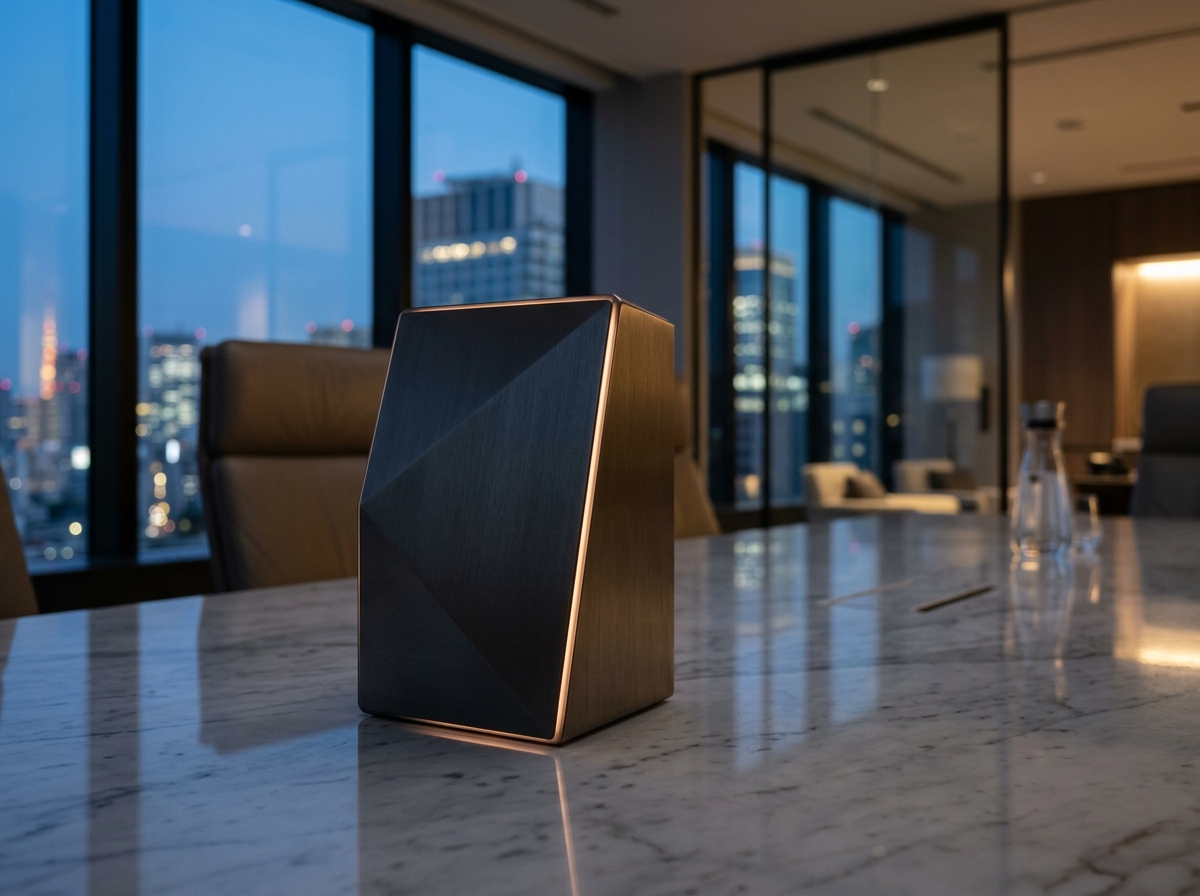
- Core is a screenless personal computer built to run AI agents locally and costs $3,499.
- Enterprise interest may hinge on security controls, software compatibility, performance, and the economics of local inference.
Ghost has entered the increasingly crowded AI hardware market with Core, a computer designed around autonomous software rather than conventional desktop applications. Founded by 19-year-old Zain Javaid, the startup emerged from stealth in October 2026 after raising $11 million in seed funding led by Andreessen Horowitz, according to TechCrunch.
Core costs $3,499 and has no integrated screen. Its defining proposition is that personal AI agents can run locally, take actions on a user's behalf, and rely less heavily on remote cloud infrastructure. That positioning separates the device from laptops marketed mainly through AI-enhanced productivity features.
The distinction matters. Most AI PCs remain recognizable personal computers with neural-processing hardware added to accelerate tasks such as transcription, image generation, search, and video effects. The manufacturer is taking a different route by making agent execution the central purpose of the machine. Core is less about putting an assistant inside an existing desktop experience and more about giving that assistant dedicated computing resources.
An agent that can act is more demanding than a chatbot that only responds. It may need to maintain context, coordinate several applications, store sensitive information, and execute multistep tasks. Running more of that activity on a local machine can reduce network latency and limit the amount of data sent to outside services. It may also make some functions available when connectivity is unreliable.
Local processing does not automatically resolve the difficult questions, however. What is an agent permitted to access, and how does a business stop an incorrect action before it reaches a customer, financial system, or production environment? Organizations evaluating Core will likely look for permission controls, audit records, identity integration, workload isolation, and practical ways to supervise agent activity.
Coverage from AI Weekly similarly describes Core as a system for running local AI agents. DiarioBitcoin also reported the company's $11 million financing and personal AI computer launch. Those reports support the central product and funding details, although broader questions about availability, configuration options, enterprise support, and model compatibility remain important for prospective buyers.
At $3,499, Core sits well above the price of many mainstream PCs, according to Yahoo Tech. The comparison is not straightforward, though. Nvidia RTX-equipped workstations, Apple Mac models using Apple silicon, and Qualcomm Snapdragon X PCs already provide various levels of local AI processing. The creator therefore needs to show why a purpose-built agent computer delivers enough additional value to justify separate hardware rather than software installed on an existing workstation.
For businesses, total cost will extend beyond the purchase price. Local inference may reduce some recurring cloud usage, but companies still have to account for deployment, management, electricity, model updates, security reviews, and support. Performance can also vary sharply depending on model size, numerical precision, memory capacity, and the degree to which software is optimized for the available accelerators. Raw specifications tell only part of the story.
Portability could become another factor. Enterprises rarely want important workflows tied permanently to one model, runtime, or device. Support for common model formats and multiple inference environments could make Core easier to evaluate alongside existing infrastructure. Conversely, a tightly controlled stack may offer better optimization while increasing migration concerns. That trade-off is familiar, even if agent-focused computers give it a new shape.
Still, Ghost is arriving at an opportune moment. Dedicated neural-processing capabilities are becoming more common across the PC market, while businesses are examining whether AI workloads belong in the cloud, on employee devices, or somewhere in between. Core turns that architectural debate into a physical product. Its commercial prospects will depend on whether the startup can translate the appealing idea of a private, persistent AI agent into dependable operations, manageable risk, and measurable value for users.