 ⬇️
⬇️
Key Takeaways
- Restaurants are moving from reactive guest management to real-time voice and sentiment intelligence.
- AI-driven spoken word analysis is becoming a core component of modern unified communications strategies.
- Mid-market and enterprise food service operators are turning to integrated platforms that combine real-time alerts, operational visibility, and customer experience insights.
The Challenge
For restaurant operators in 2026, the pressure feels different than it did even a few years ago. Customer expectations are rising, staffing remains unpredictable, and service recovery windows have shrunk to seconds. Most leaders in this space will say the same thing that operators have been hinting at for years: they no longer have the luxury of waiting until after a shift to understand how things went. They need to know in the moment.
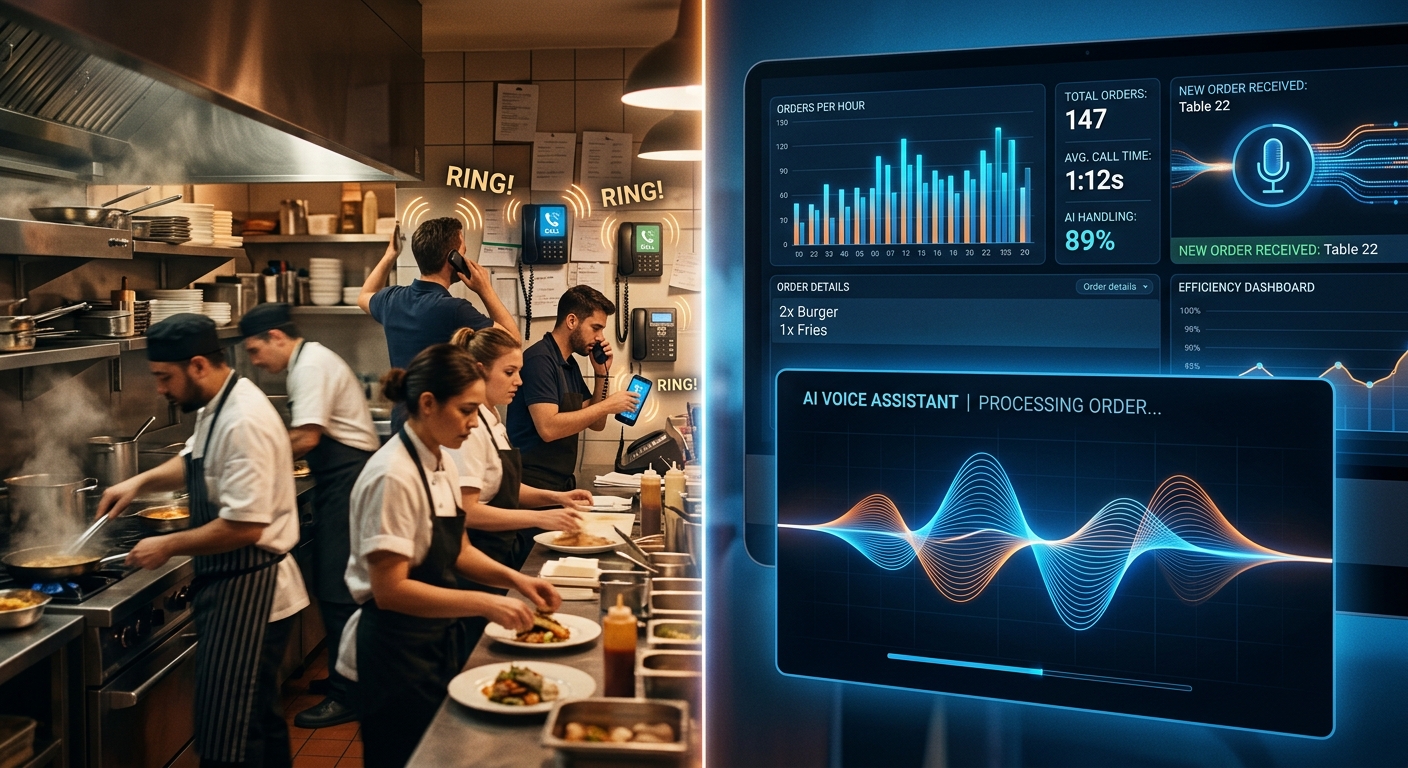
Voice interactions still play an outsized role in food service. Phone orders, curbside coordination, catering requests, and even delivery problem resolution all rely on spoken conversations. Yet for many enterprise or mid-market brands, those conversations were traditionally a black box. What actually happened during the call? Was the customer frustrated? Did an employee sound overwhelmed? Was a missed order rooted in confusion or sentiment shift?
Modern customers rarely complain loudly. They simply defect quietly. That said, the signals exist in their voices long before they walk away. This is one reason why AI-powered sentiment and spoken word analysis has surged in interest this year. Operators finally see that there is actionable intelligence hiding in everyday customer interactions.
Unified communications systems started this evolution years ago, but the space has accelerated quickly. Today, providers like Unified Office, Inc. are being pulled into conversations about how to merge voice platforms with real-time analytics and automated insights.
The Approach
In most evaluation cycles, restaurant IT and operations teams begin by trying to answer a deceptively simple question: what exactly do we want to know that we cannot know today? The list grows faster than expected.
- Are guests showing signs of frustration before negative reviews appear?
- Which locations experience frequent call abandonment?
- How well do team members handle phone-based ordering during peak hours?
- How often do customers mention competitors or pricing?
- Do sentiment shifts correlate with staffing levels?
There is usually a moment in these conversations when leaders realize that call recordings alone are not enough. Listening to hundreds of hours of audio after the fact does not drive same-shift decisions. What they need is real-time insight plus automated detection.
This is the point where AI-driven spoken word analysis becomes more than a nice-to-have add-on. It becomes operational infrastructure.
Instead of waiting for post-shift reporting, operators want platforms that can parse tone, urgency, keywords, and sentiment as calls happen. They want alerts when a caller shows signs of frustration or when certain trigger phrases appear. Some are even starting to look at historical sentiment patterns by location, daypart, staffing profile, or menu change.
It sounds sophisticated, but the buying mindset is surprisingly practical. Leaders want simplicity. They want something that works without constant tuning. They want analytics that frontline teams will actually respond to. And since restaurant tech stacks have already become cluttered, they are gravitating toward AI that lives inside a unified communications environment.
The Implementation
Consider a multi-location fast casual chain that recently undertook this transition. Although anonymized here, their situation reflects what many regional and national operators are working through.
They began with a unified communications platform upgrade. The old system could handle call routing, but it lacked any intelligence layer. Implementing AI-driven spoken word analysis required a solution that could ingest live call data and interpret it immediately.
The rollout happened location by location. Early pilots focused on call handling and customer sentiment during high-volume periods. The organization trained managers on what the alerts meant and how to respond. A frustrated caller alert did not mean panic, for example. It meant a quick check for long wait times, missing orders, or a staff member needing support.
During implementation, the chain also connected the analytics feed to its broader operational dashboard. It was not perfect at first. There were debates about alert frequency, how much information team members should see, and whether sentiment tagging was too sensitive. That said, the pilot teams quickly gained confidence.
One interesting moment happened halfway through deployment. Management noticed that one location had a spike in negative sentiment clustered around a new third-party delivery partnership. This micro-tangent in the data sparked a deeper look. It turned out that customers were confused about order pickup protocols. A small procedural change solved the issue. Without spoken word and sentiment analytics, that pattern would have taken weeks to uncover.
The Results
Results arrived gradually, then all at once. The most visible improvement came from fewer missed opportunities. Calls that once would have gone unanswered or ended abruptly started receiving quicker internal escalations. Staff became more aware of the signals that indicated trouble, and managers intervened earlier.
Customer satisfaction indicators, while not represented here as percentages, showed a noticeable lift according to leadership teams. Repeat orders increased. Locations with historically inconsistent performance started trending in the right direction.
Operators also gained a clearer sense of how staffing influenced customer sentiment. They could see which hours sparked spikes in negative tone and adjusted labor accordingly. Another benefit came from training. Real voice examples with sentiment overlays helped teams understand the difference between a rushed caller and a frustrated one, something that is not always easy for new employees.
Finally, executive leadership found themselves relying less on gut feel and more on real-time intelligence. It created a culture where decisions were grounded in what customers were actually saying.
Lessons Learned
A few patterns have emerged from restaurants that adopt AI-powered spoken word and sentiment analysis.
- Simplicity matters more than feature lists. Teams adopt tools faster when the alerts are clear and actionable.
- Real-time insight changes behavior. When operators can respond during the same call or shift, outcomes improve dramatically.
- Sentiment is powerful but contextual. Not every sharp tone signals a problem, so platforms must avoid over-alerting.
- Integration with unified communications drives the biggest gains. Having analytics detached from voice systems creates unnecessary friction.
And one more lesson, one that operators frequently mention in conversations. They did not realize how much intelligence was hidden in everyday customer interactions. Voice data was an untapped asset, and once unlocked, it reshaped how they understood performance.
Restaurants are not looking for futuristic AI experiments. They want tools that help them serve guests better today. Spoken word and sentiment analysis has quietly become one of those tools, and the shift is only accelerating.