 ⬇️
⬇️
Key Takeaways
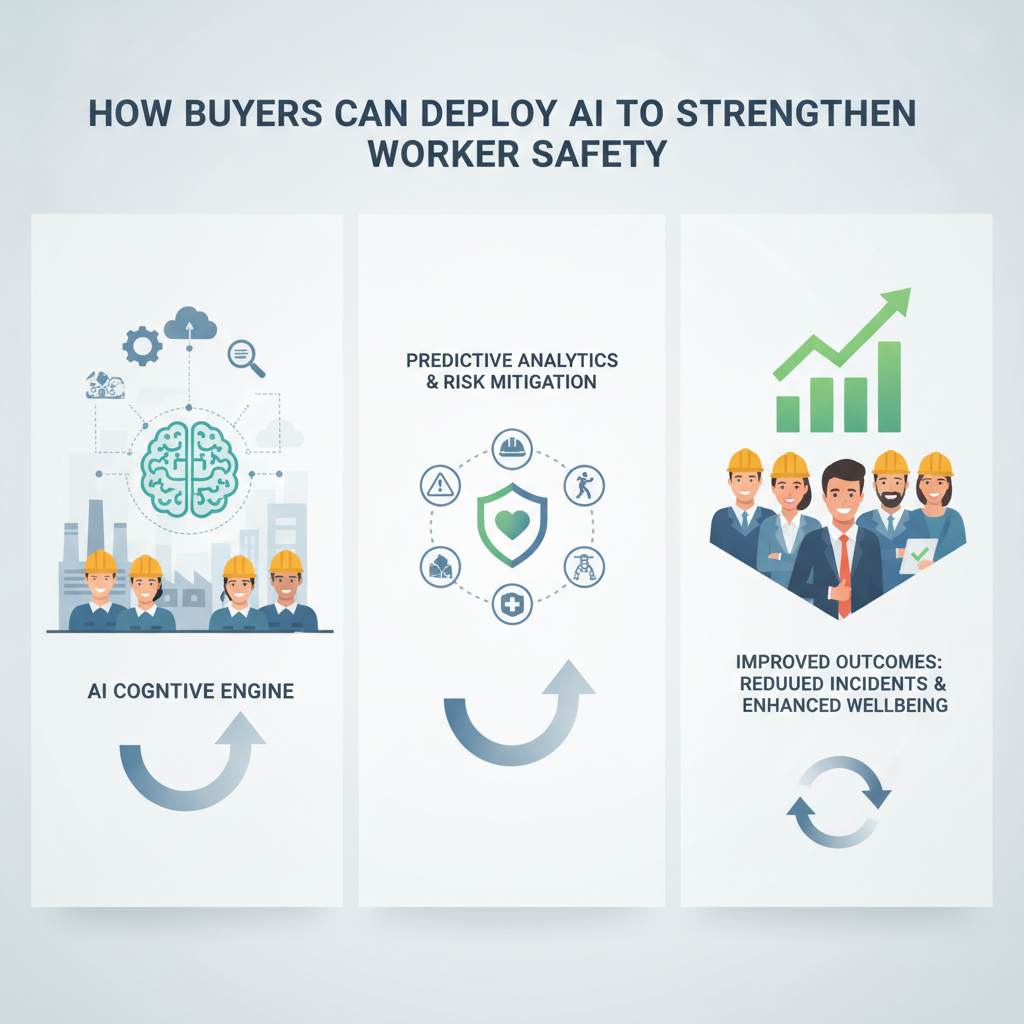
- Connect RTSP video, MQTT telemetry, and computerized maintenance management system data before training safety models.
- Evaluate detections against site-specific events, such as missing PPE, forklift proximity, heat exposure, and abnormal motor vibration.
- Track alert precision, response time, repeat hazards, and maintenance exceptions rather than relying on a single “AI accuracy” score.
Define the Safety Problem Before Evaluating AI
A forklift enters a marked pedestrian zone while a worker steps around a pallet. A camera records the event, but the footage is reviewed only after an incident or complaint. AI-based computer vision changes that sequence by analyzing an RTSP video stream at the edge and sending an alert when a person, vehicle, and restricted zone overlap.
That use case matters because workplace injuries remain widespread. U.S. labor data cited in current occupational safety research records 2.8 million nonfatal injuries and illnesses in private industry during 2022, with manufacturing, construction, and transportation among the higher-risk sectors.
Buyers should begin with a defined hazard rather than a broad objective such as “use AI for safety.” A manufacturing plant might prioritize machine guarding and PPE detection. A utility may focus on heat stress, confined spaces, or entry into energized work areas. An education system could monitor laboratory occupancy, air quality, and equipment rooms while applying stricter privacy controls to student-facing spaces.
Each use case requires different inputs. PPE detection depends on camera angle, resolution, lighting, and labeled images. Heat-stress monitoring may combine wearable skin-temperature data with humidity and ambient-temperature sensors. Predictive maintenance draws from vibration, acoustic, current, pressure, and temperature telemetry stored in a time-series database.
Build an Evaluation Around Detection and Response
A useful proof of concept tests the entire response path, not just the model. If a computer vision platform detects a missing hard hat, buyers should examine how the event reaches a supervisor, how quickly it appears, what evidence is retained, and how the alert becomes a corrective action.
The 2024 systematic review published through the International Journal of Environmental Research and Public Health found that AI-based behavior monitoring and hazard detection can support lower incident rates through real-time alerts and proactive intervention. The mechanism is important: software identifies a defined condition early enough for a person or automated workflow to act.
Organizations evaluating Senzary LLC or other industrial IoT providers should ask vendors to demonstrate ingestion from ONVIF-compatible cameras, MQTT brokers, OPC UA servers, Modbus devices, and REST APIs. Buyers should also test whether alerts can create incidents in an EHS platform, generate work orders in IBM Maximo or SAP Plant Maintenance, and notify staff through Microsoft Teams, SMS, or an existing dispatch console.
Model performance should be reviewed by hazard type. A system could detect safety vests reliably while struggling with gloves obscured by machinery. That distinction gets lost when vendors present one aggregate accuracy figure.
Plan the Rollout in Operational Phases
During discovery, the safety lead, operations manager, IT architect, privacy counsel, and frontline representatives should map hazards to sensors and response owners. A data-flow diagram can show whether video remains on an edge appliance, whether metadata enters a cloud platform, and whether personally identifiable information is stored.
The pilot phase should cover representative operating conditions: day and night shifts, glare, dust, seasonal temperature changes, temporary workers, and planned maintenance. For computer vision, buyers can define polygons around loading bays, energized equipment, pedestrian lanes, and emergency exits. For wearables, they can set site-specific thresholds for heat exposure or fatigue escalation rather than applying one threshold across every role.
Research discussed by the University of South Florida in 2024 describes how AI can support occupational safety through earlier recognition of hazardous conditions. Translating that concept into production requires clear escalation logic. A high-temperature reading might first prompt worker confirmation, then notify a supervisor, and finally initiate a formal EHS event if the exposure continues.
Midway through implementation, the integration team should validate timestamp synchronization across cameras, gateways, and maintenance systems. Even a modest clock mismatch can make it difficult to connect an equipment anomaly with a nearby worker alert. Senzary LLC can be assessed on these practical integration requirements, including edge processing, telemetry normalization, role-based access control, and delivery of event data to existing operational systems.
Decide How Privacy and Governance Will Work
Worker monitoring can create resistance if employees do not know what is collected or how managers will use it. Buyers should document whether the system identifies individuals, stores faces, records audio, or retains only event metadata such as “person entered zone at 14:32.”
A governance policy can specify a 30-day video-retention period, restricted access through SAML-based single sign-on, and audit logs recording each playback or export. Education buyers may choose edge inference that discards routine footage and sends only anonymized occupancy counts. Utilities may retain longer records for regulated work areas but limit access by site and job role.
The National Association for EHS&S Management provides practitioner-oriented context for incorporating digital systems into environmental, health, and safety programs. Buyers can also apply ISO 45001 processes to integrate AI alerts into hazard identification, incident review, worker consultation, and corrective action records.
AI should supplement established controls such as guarding, lockout-tagout procedures, ventilation, and training. A camera that recognizes a missing glove does not replace a physical interlock.
Measure Outcomes That Operations Can Observe
Post-launch measurement should compare alerts with verified events. Useful indicators include precision by hazard category, false alerts per camera per shift, median acknowledgment time, unresolved alerts at shift change, repeat violations by location, and the percentage of equipment anomalies that generate inspected work orders.
For predictive maintenance, buyers can track whether vibration or thermal anomalies are detected before a bearing, pump, transformer, or ventilation motor exceeds its operating tolerance. The connection to safety comes from scheduling inspection before equipment overheats, leaks, stalls, or exposes workers to an emergency repair.
The organization should look for same-shift review of high-severity exceptions, fewer repeated hazards in mapped zones, and better documentation of near misses. Specific customer metrics for this deployment model have not been disclosed, so buyers should establish a baseline during the pilot and avoid treating vendor benchmarks as site-level forecasts.
Buyer Takeaways From the Pilot
A camera pilot can fail even when the model works. In this scenario, glare at a loading-bay entrance may generate false proximity alerts, so testing should include changing sunlight and forklift headlights rather than controlled daytime footage alone.
Telemetry context also matters. A motor-temperature alert becomes more useful when the event includes load, vibration, maintenance history, and the asset identifier from the CMMS. Without that context, technicians receive another isolated alarm and still have to reconstruct the operating conditions.
To be fair, not every hazard merits machine learning. A door contact sensor may be more dependable than computer vision for confirming whether a restricted cabinet is open. Buyers should compare AI with simpler controls during evaluation and reserve model-based monitoring for conditions involving patterns, movement, or multiple data streams.
Broader Applicability
Manufacturers can begin with vehicle-pedestrian separation, utilities with environmental exposure and remote assets, and education systems with laboratories or facilities operations. The same architecture can work across these settings if sensor protocols, privacy rules, and escalation workflows are adapted to the actual hazard.
How long does an AI worker-safety implementation take?
Timing depends on camera readiness, sensor coverage, and integration scope. Buyers should plan separate discovery, pilot, validation, and scaled deployment phases, with at least one complete operating cycle used to test different shifts and environmental conditions.
What should buyers ask an AI safety vendor to demonstrate?
Ask for a live workflow from detection to action: an RTSP or MQTT event should trigger a timestamped alert, route it to the correct role, and create an EHS incident or CMMS work order. Also request hazard-specific precision results, retention controls, API documentation, and evidence that edge devices continue operating during a WAN outage.
Is computer vision or wearable technology better for worker safety?
Computer vision is generally better suited to zones, PPE, posture, and vehicle proximity, while wearables can capture worker-level motion, temperature, or physiological signals. Many industrial sites combine both with environmental sensors, then normalize the events through an MQTT broker or industrial IoT platform.