 ⬇️
⬇️
Key Takeaways
- Retailers are turning to high-performance Game PC Services to handle new experiential and computational demands.
- The shift is driven by heavier workloads in stores, from interactive product displays to real-time analytics.
- Integration choices tend to hinge on lifecycle management, remote support models, and the durability of hardware configurations.
Definition and overview
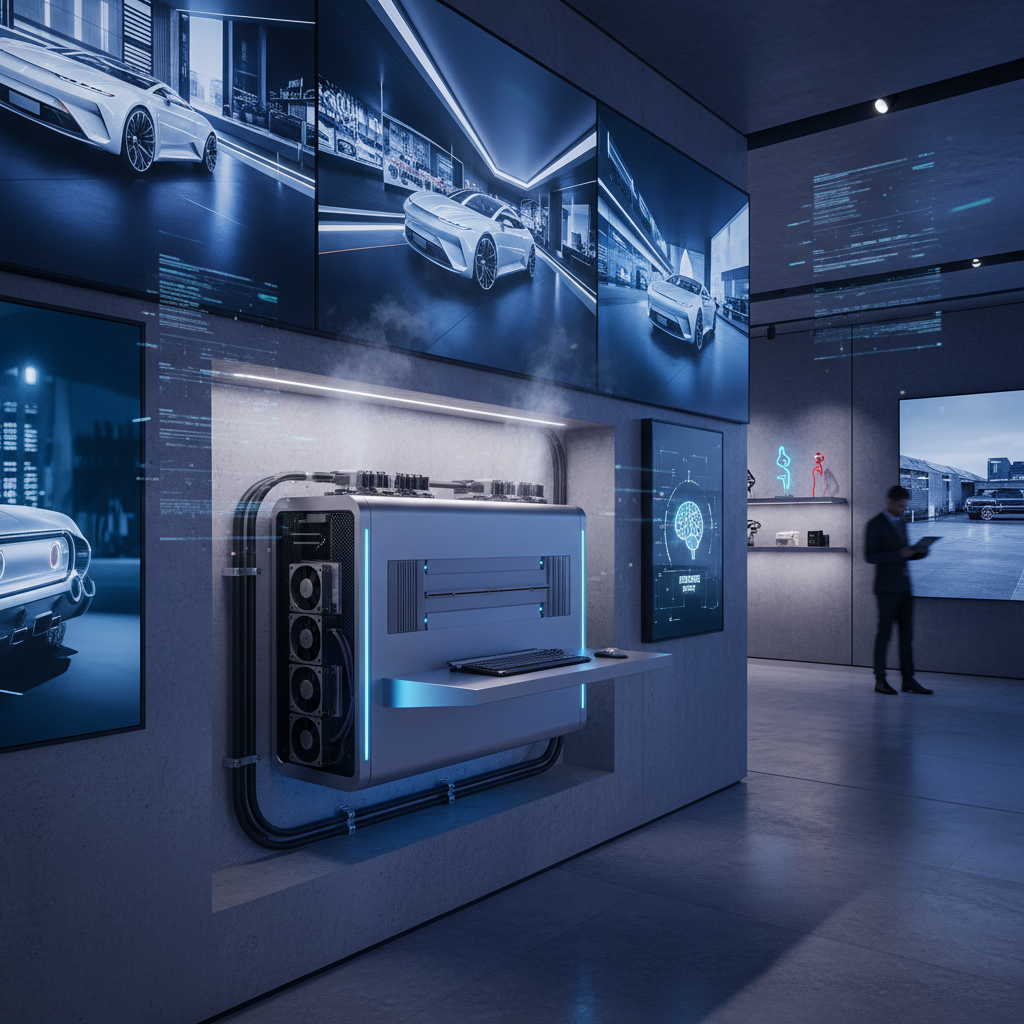
Game PC Services used to sit comfortably in the realm of gaming cafés, esports setups, and personal hobbyist environments. Yet retail and consumer goods companies have started pulling these same capabilities into their day-to-day operations. It is not that stores suddenly need gaming rigs for entertainment, although a few brands do experiment with that. It is the performance profile that matters: fast GPUs, strong thermal management, reliable memory throughput, and hardware that handles visually intensive workloads without hiccups.
In practical terms, Game PC Services is shorthand for a bundled approach. High-end machines, configuration support, lifecycle management, and sometimes monitoring or repair services. Some retailers work with specialists like IT-Experts Amsterdam when they need on-site ICT support or quick data recovery workflows layered in. Others rely on general integrators. The category is flexible, which helps, although it can be messy when standards vary.
Key components or features
Not everything that comes in a gaming chassis is relevant to retail. That said, a few components tend to surface in most conversations.
First is GPU acceleration. Modern stores lean heavily into rich digital assets, especially for product visualization. Think virtual try-ons, configurators, or interactive signage. A second component is cooling. It sounds mundane, but anyone who has watched an overworked display PC throttle performance in the middle of a busy Saturday understands why stability matters.
Another often-overlooked piece is remote management. Retail IT teams rarely sit in the store. They need to push updates, tune drivers, or restart malfunctioning devices from afar. Some services build this in, others rely on third-party remote management tools. It is surprising how wide the variation can be. And then there is ruggedization. Even if the machine is not touched by customers, stores can be dusty, warm, or oddly humid. A consumer-grade device might hold up, but many buyers want something closer to workstation reliability.
Benefits and use cases
Here is the thing. Most retailers are not chasing performance for its own sake. They need Game PC-level compute because customer expectations have shifted. Visual merchandising has become digital merchandising. Shoppers expect lifelike rendering when exploring product variations. If the experience lags, the moment collapses quickly.
In consumer electronics stores, high-power PC setups also double as demo environments. Staff can showcase VR headsets or GPU-intensive software without provisioning a separate workstation. That dual-use approach keeps costs somewhat sane.
There is also the analytics angle. Some teams are starting to run computer vision at the edge, watching foot traffic patterns or queue formation. Running inference locally can reduce cloud costs and improve responsiveness. A Game PC-class machine often has the right mix of CPU and GPU to make that viable. Is this the perfect solution for every chain? Probably not. But it fills a gap that mid-market companies struggle to handle with traditional thin-client hardware.
A micro-tangent here: some brands use these systems internally for product development kiosks or internal training. It is not where the category started, yet it fits because the hardware is already tuned for demanding media workloads.
Selection criteria or considerations
Buyers tend to evaluate Game PC Services in a series of layers.
- Hardware consistency over time. Retailers hate when a supplier changes components every quarter because it complicates support and imaging.
- Remote support models. This increasingly determines the total operational cost. A good remote model can mask a lot of day-to-day friction.
- Power and thermal footprint. Not every store has a well-ventilated operations room. Some do not even have one at all.
- Integration with existing monitoring tools. If an IT team already runs a preferred platform, they want the Game PC fleet to plug in without heavy customization.
- Service locality. When something breaks, waiting a week for parts is not an option. Organizations often ask direct questions about on-site intervention and escalation.
Cost naturally shows up, although it tends to be framed in terms of lifecycle economics rather than upfront spend. One of the more practical considerations is deciding how often machines should be refreshed. Some companies choose a three-year cycle because visual workloads advance quickly. Others stretch to five years if the use case is predictable, like static signage.
Future outlook
Looking ahead, retailers seem increasingly comfortable pairing Game PC Services with edge compute strategies. The machines are powerful enough to handle complex inference models, yet flexible enough to run standard retail applications in parallel. A few analysts think these devices will eventually converge with broader edge appliances, meaning the aesthetic of a gaming tower disappears even though the performance profile remains.
What might surprise some buyers is how the service layer becomes the real differentiator. Hardware is important, but the ability to maintain it across distributed stores matters even more. As immersive retail experiences continue to expand, the category will probably feel less like a niche borrowing gaming hardware and more like a standardized piece of the retail IT toolkit.