 ⬇️
⬇️
Key Takeaways
- Healthcare organizations are turning to IP-PBX systems to unify communications across increasingly complex care environments.
- The technology supports clinical efficiency, patient experience improvements, and operational resilience in ways legacy PBX systems rarely could.
- Buyers are focusing less on features and more on interoperability, uptime, and workflow alignment.
Definition and overview
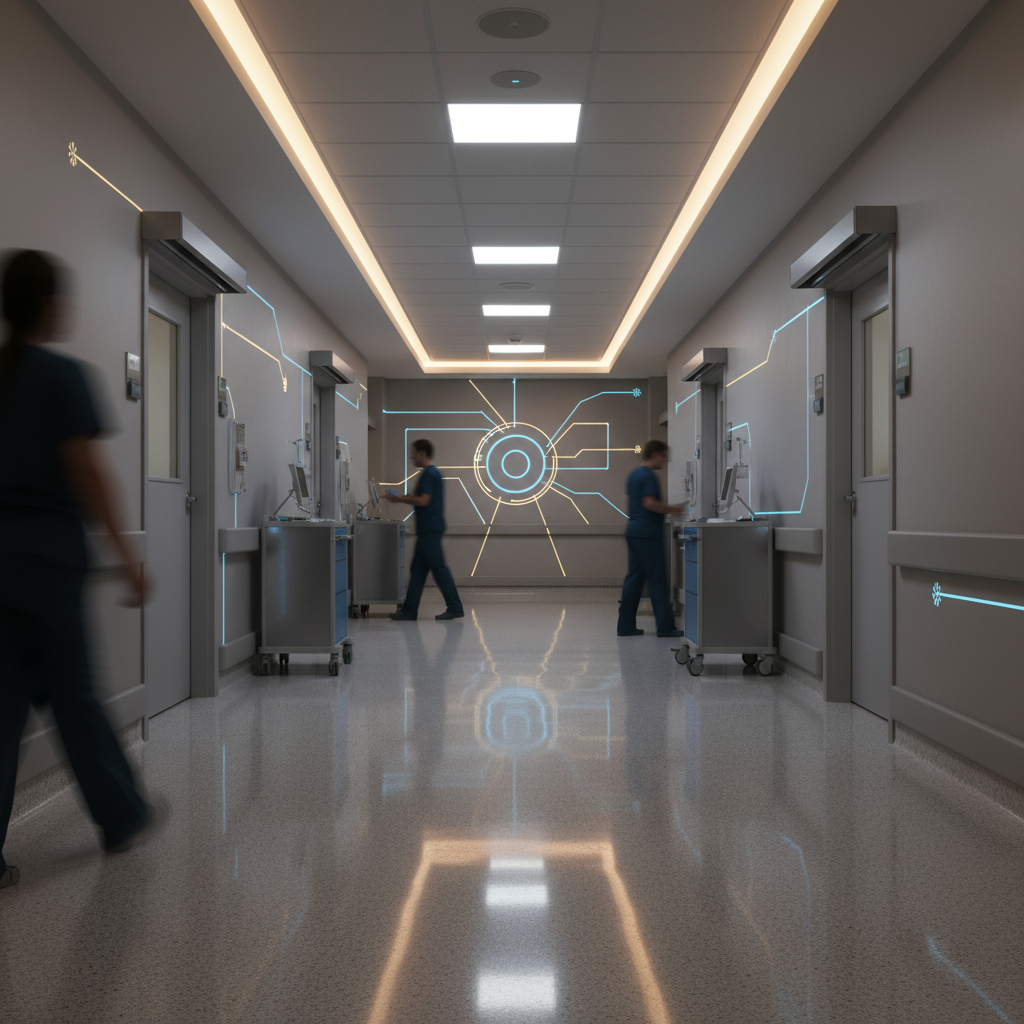
Hospitals have always been communication-heavy environments, but the last few years have made the gaps in legacy telephony painfully clear. Staff mobility, growing outpatient networks, and the rise of hybrid care models exposed how brittle many older PBX systems had become. Calls still route, sure, but getting information to the right clinician or care team at the right moment has become more complicated than analog systems can comfortably handle.
This is where IP-PBX systems usually enter the conversation. At a simple level, an IP-PBX is a telephony system that routes voice, video, and messaging over IP networks instead of traditional phone lines. Most people describe it as the bridge between VoIP endpoints and the broader communication infrastructure. That is accurate, although in healthcare it tends to play a more central role. It becomes the backbone that ties together nurse call systems, EHR-driven alerts, remote clinics, and increasingly, patient engagement tools.
Some organizations come to IP-PBX planning because an equipment lease is ending. Others hit a breaking point after one too many outages. The forcing function varies, but the underlying driver is the same. Healthcare now depends on communications that are mobile, interoperable, and resilient.
Key components or features
Here is the thing: not every IP-PBX platform is built with clinical workflows in mind, and buyers usually figure that out the hard way. The underlying components are mostly standard, but how they are tuned matters.
Common elements include:
- SIP trunking for flexible voice routing
- Internal call management software that handles extensions, queues, and rules
- Integration interfaces, often through APIs or SIP connectors
- Centralized administration tools
- Support for cordless or mobile endpoints that clinicians can actually carry
- Failover capabilities for power or network interruptions
Healthcare buyers tend to linger on that last point. Redundancy is not a luxury. A backup trunk or alternative routing path can determine whether a critical lab result gets through or waits twenty minutes longer than it should.
Another component that often gets overlooked is the messaging layer. Many modern IP-PBX platforms support SMS, secure messaging modules, or at least a bridge to external messaging tools. In hospitals, this becomes useful when a care team needs to coordinate around a patient move or discharge. It is rarely the headline feature, but it shapes adoption later.
A small tangent here: some integrators, like Pacific Softcom, often get pulled in at this stage to untangle device compatibility or tie the platform into existing telephony wiring. It is usually less glamorous than the selection process, but no less important.
Benefits and use cases
Most healthcare leaders evaluating IP-PBX systems are chasing one of three outcomes. Better patient flow, better staff coordination, or better resiliency. Everything else tends to be a derivative.
One clear use case is care team communication inside large hospitals. Nurses switching between units need roaming extensions that follow them instead of forcing them to hunt for a desk phone. Physicians want voicemail-to-email because they are rarely near a stationary handset. Maintenance and security staff appreciate having unified contact groups so they can be reached quickly during facility incidents.
Another use case shows up in outpatient and multi-site medical networks. Clinics want to feel connected to the main hospital system. An IP-PBX platform lets them share call queues, extension directories, and even on-call routing logic without relying on a patchwork of local PBX boxes. Multi-site imaging centers use this more than most people realize.
Patient-facing communication is a growing area as well. Some organizations tie IP-PBX events to EHR workflows so appointment reminders or pre-op instructions trigger automated calls or messages. It is not always smooth, and not every vendor loves integrating with an EHR, but when done well it reduces no-shows and improves throughput.
Then there is resiliency. Power outages, fiber cuts, equipment failures. Healthcare facilities experience all of them. An IP-PBX with multi-path redundancy gives organizations a way to keep critical communication flowing. Not perfectly, but well enough to maintain operations until the primary network recovers. This is one of those benefits that gets little attention until it saves the day.
Selection criteria or considerations
Buyers looking at IP-PBX platforms are weighing more than cost per extension. A few criteria tend to surface repeatedly.
Interoperability comes first. Few hospitals are in a position to rip and replace paging systems, nurse call infrastructure, or EHR messaging modules. The IP-PBX needs to integrate or at least coexist peacefully.
Reliability and redundancy come next. Uptime requirements in healthcare are relentless. Buyers probe vendor architectures, backup switching capabilities, and how the system behaves if the WAN link falters.
Security naturally remains a front-line concern, especially as VoIP traffic becomes a larger share of network load. SIP security, encryption options, and the vendor's approach to remote management all get microscope-level attention.
Workflow alignment is harder to quantify but tends to drive satisfaction long-term. Systems that support on-call rotation logic, flexible queueing, or mobile endpoints that staff actually like will outperform technically sound but inconvenient alternatives.
And then there is support. Healthcare organizations often prefer integrators with experience in clinical environments because small details matter. For example, knowing which units need cordless phones with antimicrobial casings or which areas require noise-tolerant handsets. These details rarely show up in marketing material but can make or break adoption.
Future outlook
Looking ahead, IP-PBX systems in healthcare will probably continue drifting closer to unified communications platforms, even if hospitals adopt those features slowly. The rise of hybrid care is pushing voice and video into the same operational workflows. Some buyers are already exploring lightweight integrations with collaboration tools or mobile clinical communication apps.
An interesting question is whether AI-assisted call routing or triage will move into the IP-PBX layer or stay in separate patient engagement platforms. Hard to say. Hospitals tend to adopt automation in careful increments.
What does seem clear is that healthcare will demand more interoperability, not less. As clinical, operational, and patient-facing technologies continue to converge, the IP-PBX will remain the quiet but essential bridge holding these conversations together.