 ⬇️
⬇️
Key Takeaways
- Environmental analyzers in manufacturing are no longer niche tools; they’re operational safeguards.
- Humidity, temperature, and CO2 measurements form the backbone of stable, compliant production environments.
- Experienced buyers increasingly look for systems that balance precision, integration flexibility, and long-term reliability.
Definition and Overview
Most manufacturers don’t start by shopping for analyzers. They start with a problem—materials behaving unpredictably, processes drifting out of spec, or auditors asking questions the team can’t answer quickly. The tricky part is that these issues rarely appear dramatic at first. A bit of moisture here, a slight temperature swing there. But anyone who has lived through a few cycles of manufacturing technology knows these small variations compound. That’s really why the analyzer category has expanded so rapidly.
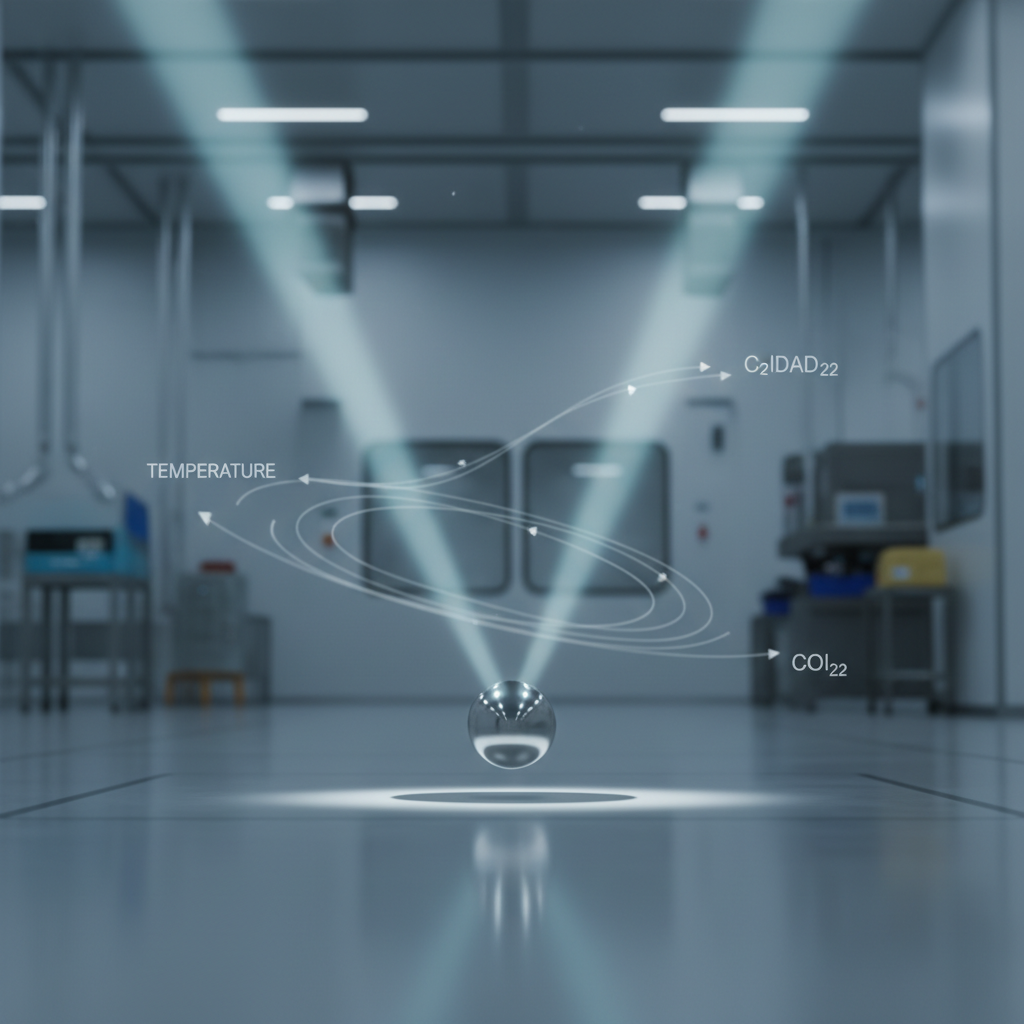
Across the sector, analyzers for humidity, temperature, and CO2 have shifted from “nice-to-have” instrumentation to foundational infrastructure for environmental control. You see this especially in pharmaceuticals, precision electronics, specialty chemicals, and high-volume food production. Even in more traditional plants, internal expectations around data transparency have tightened.
It’s in this context that companies like Rotronic have shaped their approach—less about single-point measurement, more about helping teams build environmental monitoring architectures that age well. Not every vendor thinks that way, but the trend is moving in that direction.
Key Components or Features
Humidity measurement is often the first domino. Not because it’s glamorous, but because humidity interacts with virtually every manufacturing material—powders, adhesives, coatings, biomaterials. That said, experienced engineers look past the sensor spec sheet and ask more practical questions: How often will this drift? Does calibration require downtime? Can my team integrate the data into existing automation platforms without a systems integrator rewriting half the plant’s code? Those details matter more than many buyers initially assume.
Temperature measurement tends to be more straightforward, though still easy to underestimate. In modern plants, temperature stability isn’t just about hitting a target; it’s about maintaining predictable gradients, especially in mixed‑environment spaces like cleanrooms adjacent to production lines. Here, analyzer reliability becomes more about consistency under variable loads—airflow, vibration, cleaning cycles—than about laboratory-grade precision.
CO2 analyzers, meanwhile, have gained traction as manufacturers push toward tighter indoor air quality controls, often for worker safety but increasingly for process outcomes. CO2 can influence biological cultures, curing processes, and even certain polymerization steps. A manufacturer might not think of CO2 as a production variable until something subtle goes wrong. This happens more often than people admit.
Benefits and Use Cases
Some of the most interesting use case scenarios appear in facilities where product quality is highly sensitive to moisture. Powdered pharmaceuticals, for example, can shift characteristics with even brief humidity excursions. Electronics manufacturers see similar issues with solderability and component aging. And food processors deal with shelf life, clumping, and microbial risks—all tied to moisture.
Then there are HVAC-integrated manufacturing environments where temperature and CO2 analyzers play a balancing act. A plant might install a high‑efficiency HVAC system only to discover the new airflow patterns subtly destabilize humidity control. If you’ve been in this industry long enough, you’ve watched that movie before. Good analyzers, when deployed strategically, tend to reveal these interactions sooner rather than later.
Automotive suppliers, meanwhile, increasingly use environmental analyzers to validate process repeatability. It’s not unusual for major OEM audits to request long-term environmental trend data—far more detailed than what legacy logging systems captured. This is where analyzers that natively integrate with modern automation and monitoring platforms provide a real operational edge.
One small tangent: even smaller mid-market manufacturers are finding that granular environmental data strengthens their negotiations with clients or auditors. Having reliable analyzer outputs can shift conversations from reactive to proactive.
Selection Criteria or Considerations
Buyers evaluating analyzers today weigh several considerations:
- Sensor stability over time, not just initial accuracy
- Calibration workflows that minimize operational disruption
- Protocol compatibility—Modbus, analog outputs, digital networking, cloud gateways
- Physical durability in cleaning-heavy or vibration-heavy environments
- The ability to scale from a few measurement points to site-wide deployments
A subtle point often missed: how cleanly the analyzer’s data model fits into existing automation logic. A device can be extremely accurate but still cumbersome to integrate. And in a world where OT and IT teams increasingly share responsibility, anything that simplifies that handoff tends to win.
When evaluating humidity, temperature, or CO2 analyzers specifically, buyers also look at how the vendor approaches long-term drift. Some offer stable sensor architectures; others rely on frequent recalibration. There’s no one-size-fits-all answer, but the trend leans toward solutions that maintain accuracy with minimal intervention.
Future Outlook
Looking ahead, analyzers in manufacturing are shifting toward higher connectivity and more predictive capabilities. Not full AI-driven diagnostics (despite the hype), but gradual improvements: analyzers that self-check, warn earlier, or integrate more naturally with digital twins. You can see early versions of this in environmental monitoring platforms that correlate humidity or CO2 fluctuations with process deviations. It’s incremental, yet meaningful.
What’s changing most is the mindset. Instead of treating humidity, temperature, and CO2 analyzers as isolated instruments, more organizations view them as part of a broader environmental intelligence layer. And that shift—slow, uneven, but very real—is shaping how vendors design their next generation of analyzers, including those from established players in the environmental monitoring and industrial automation space.