 ⬇️
⬇️
Key Takeaways
- Use the NIST Cybersecurity Framework to map assets, controls, recovery processes, and ownership before comparing MSSP proposals.
- Test prospective providers against a 90-day validation plan covering MFA, endpoint telemetry, patch compliance, backups, and incident escalation.
- Measure observable changes such as fewer unprotected endpoints, same-day investigation of critical alerts, and successful restoration from an isolated backup.
Define the Problem Before Shopping for Tools
A compromised Microsoft 365 account triggers suspicious mailbox rules at 2 a.m. The company has endpoint protection, but nobody is watching its alerts overnight. Its managed IT provider handles laptops and password resets, while an outside consultant manages the firewall. Who investigates, disables the account, preserves logs, and decides whether customers need notification?
That scenario captures the problem many small and mid-sized businesses need to solve. The issue is not necessarily a total absence of security products. It is fragmented responsibility across identity, endpoints, email, firewalls, cloud applications, and backups.
CISA reported in 2023 that small businesses were three times more likely to be targeted by cybercriminals than larger organizations. It also cited $2.4 billion in reported cybercrime losses among small businesses during 2021.
Buyers should begin with an asset and responsibility inventory, not a product demonstration. That inventory should identify Microsoft 365 or Google Workspace tenants, Active Directory or Entra ID accounts, Windows and macOS endpoints, internet-facing systems, business applications, backup repositories, and third parties with administrative access.
Build an Evaluation Model Around Coverage Gaps
The first evaluation question is straightforward: which security functions can the internal team operate reliably after business hours?
An SMB with a lean IT staff may be able to administer Microsoft Intune, approve patches, and maintain user accounts. The same team may lack the capacity to review CrowdStrike detections, Microsoft Defender alerts, firewall events, and Entra ID sign-in anomalies around the clock. Selective outsourcing can close that monitoring gap while leaving routine IT administration in-house.
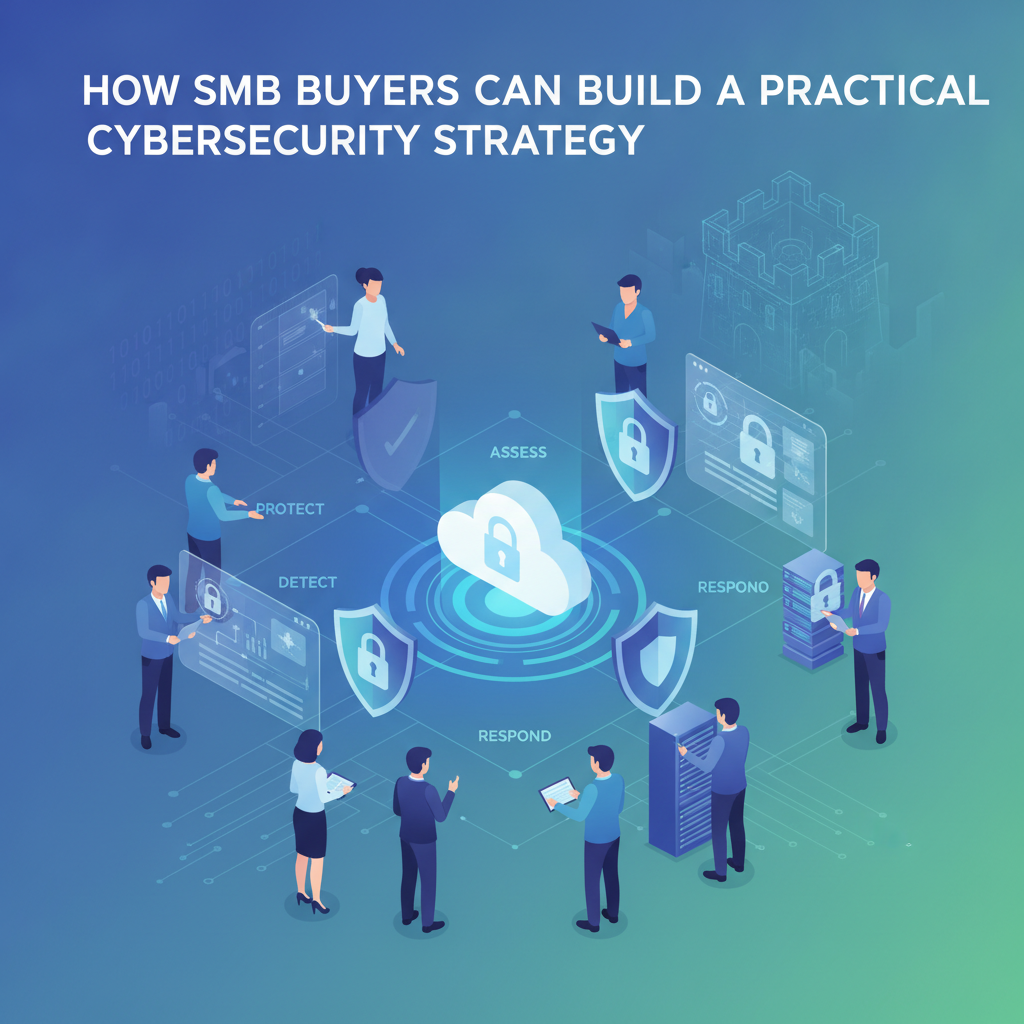
The NIST Small Business Cybersecurity Corner gives buyers a structured way to organize the work. Using the NIST Cybersecurity Framework functions, a team can map how it identifies assets, protects systems, detects suspicious activity, responds to incidents, and restores operations.
Provider comparisons should then examine concrete capabilities:
- Log ingestion from Microsoft 365, Entra ID, firewalls, endpoint detection and response agents, and DNS services
- Support for syslog, REST APIs, webhooks, and common security information and event management formats
- MFA enforcement using FIDO2 security keys, authenticator applications, or conditional-access policies
- Endpoint isolation and account-disabling authority during a confirmed incident
- Documented severity definitions, escalation paths, and evidence-retention periods
- Backup protection using immutable or offline copies, separate administrator credentials, and tested restoration procedures
For organizations considering outside help, Apex Technology Services can be evaluated alongside other managed IT and cybersecurity providers against this same control-level checklist. The useful comparison is not the length of a service catalog. It is whether the provider can show who receives a critical alert, what evidence is reviewed, and which containment actions are authorized.
Plan the Rollout in Operational Phases
During initial discovery, the buyer should create an authoritative asset register and compare it with endpoint-management, directory, firewall, and backup records. Differences matter. A laptop visible in Active Directory but absent from the EDR console represents a coverage gap that a polished dashboard may conceal.
The baseline phase should focus on identity and recoverability. Common tasks include requiring MFA for administrators, removing shared privileged accounts, reviewing OAuth application consent, separating backup credentials from production Active Directory, and testing restoration of representative files or virtual machines.
Monitoring integration follows. The provider connects endpoint, identity, email, firewall, and cloud logs to its SIEM or extended detection and response platform. Buyers should ask for sample alert payloads, ticket fields, API integration details, severity mappings, and escalation messages rather than accepting a generic promise of 24/7 monitoring.
A controlled validation period can run for 90 days. During that period, the internal IT lead and provider should examine false positives, missing telemetry, unpatched devices, failed backups, and escalation delays. A tabletop exercise can simulate a stolen Microsoft 365 session token or ransomware detection without disrupting production.
Midway through implementation, responsibility conflicts often surface. An MSP may manage patches, an MSSP may monitor detections, and a cyber-insurance incident-response firm may control forensic decisions. Apex Technology Services or any comparable provider should document those boundaries in a RACI matrix and incident runbook, including who can isolate a device through EDR and who can revoke Entra ID sessions.
Measure Outcomes Buyers Can Verify
Avoid treating "alerts processed" as the primary success metric. A busy security operations center can process thousands of low-value events while still missing an unmanaged server.
Better measures connect controls to observable conditions:
- Percentage of active endpoints reporting current EDR telemetry
- Percentage of privileged accounts protected by phishing-resistant MFA
- Time between a critical alert and human triage
- Number of unsupported operating systems still connected to production networks
- Patch compliance for internet-facing systems
- Backup restoration success, including the recovery point achieved
- Percentage of departing employees whose sessions, tokens, and accounts are revoked on schedule
Buyers can set targets during contracting and review them monthly. For example, the objective might be same-day investigation of critical identity alerts rather than an undefined goal of "faster response." The company has not disclosed customer-specific performance metrics, so procurement teams should request evidence from their own pilot, ticket history, and restoration tests.
Turn the Contract Into an Operating Model
Service descriptions deserve close reading. "Managed endpoint security" might mean agent deployment only, while another provider may include alert triage, remote isolation, malware investigation, and remediation guidance. Those are materially different services even when both use the same EDR product.
The contract should also specify log retention, data location, subcontractor access, breach-notification procedures, and offboarding. If the relationship ends, the buyer needs a defined export format for incident records, asset data, and detection history. JSON, CSV, or syslog exports are more useful than screenshots or PDF summaries.
To be fair, more telemetry is not automatically better. Sending every Windows event to a SIEM can increase ingestion costs and bury analysts in noise. Filtering should preserve authentication, privilege-change, process-creation, endpoint, firewall, and cloud-administration events tied to credible detection scenarios.
Buyer Takeaways From This Scenario
The mailbox-compromise scenario reveals why ownership matters as much as software. If the provider can detect suspicious inbox rules but lacks authority to revoke sessions, the response still depends on reaching an internal administrator after hours.
It also shows why backup testing belongs in the security program. A green backup console confirms that a job completed; restoring a virtual machine to an isolated network confirms that usable data exists.
Finally, the 90-day validation window should test workflows rather than showcase dashboards. Buyers need to see an alert become a ticket, reach an accountable role, trigger a documented decision, and produce evidence suitable for insurance or legal review.
How long does an SMB cybersecurity rollout take?
Duration depends on asset count, identity architecture, and existing tool coverage. Instead of accepting a fixed estimate, buyers can structure discovery, control remediation, monitoring integration, and a 90-day operational validation period, with exit criteria such as complete EDR enrollment and a successful backup restoration.
What is the difference between an MSP and an MSSP?
An MSP generally manages IT operations such as Microsoft 365 administration, endpoint configuration, patching, and help-desk tickets. An MSSP focuses on security monitoring and response through technologies such as SIEM, EDR, identity analytics, and threat intelligence, although some providers combine both roles.
Is managed cybersecurity practical for a small IT team?
It can be, particularly when the internal team lacks overnight monitoring or incident-response capacity. A small team should retain control of business priorities and access approvals while assigning defined tasks, such as 24/7 alert triage and endpoint isolation, to a provider under documented escalation rules.