 ⬇️
⬇️
Key Takeaways
- The vendor is moving from an acquisition-heavy model to a unified platform centered on automation and AI-driven execution.
- The 2026 State of the MSP findings show strong demand for integrated operations and autonomous IT management.
- Competitors such as ConnectWise, N-able, and Datto are also consolidating their stacks as managed service providers prioritize efficiency and scale.
The recent shift from Kaseya signals a structural change in how the managed services market operates. The company spent years stitching together a massive managed service provider (MSP) portfolio through acquisition, establishing a major footprint in the space. The current strategy focuses less on acquiring standalone tools and more on building coherence across its existing assets. This pivot, aligned with product updates released on June 17, 2026, reflects broader channel consolidation.
Buyers in the MSP market are increasingly focused on operational efficiency, automation, and consistent delivery. According to the company's 2026 State of the MSP report, which gathered insights from more than 1,000 MSPs worldwide, 48% identified AI and automation as their top client need for 2026. Security followed at 42%, and backup at 36%. Those priorities align with broader IT management trends flagged by analysts at Gartner and Forrester, pointing to rising demand for consolidated toolchains and improved service consistency across distributed environments.
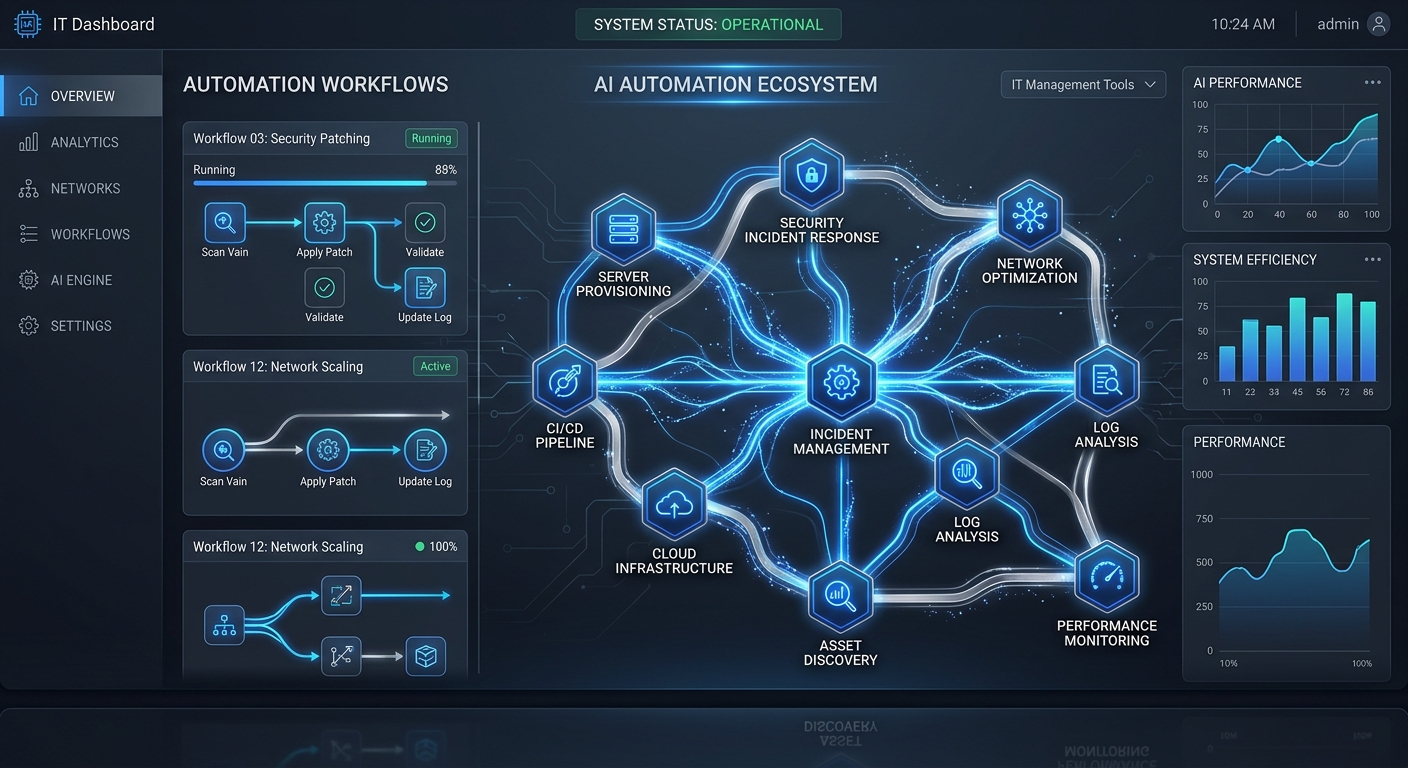
The vendor's push toward an agentic IT management platform lands squarely in this context. It introduced AI-powered Digital Specialists designed to autonomously handle high-volume tasks like ticket triage. This represents a step toward execution-driven automation, comparing closely to emerging AI operations models described by IDC. The approach directly targets the industry's documented appetite for reducing manual overhead.
Market consolidation remains a primary driver. Vendors such as ConnectWise, N-able, and Datto are leaning heavily into unified platforms. Each competes to integrate remote monitoring and management (RMM), professional services automation (PSA), security, backup, and endpoint management into a single operational fabric. For MSPs juggling multiple vendors, centralized management offers operational relief. While platform sprawl risks replacing tool sprawl, the integration of Kaseya 365 and the Intelligence stack indicates a direct effort to mitigate deployment friction.
In practice, the shift toward unified platforms aligns with recognized frameworks like ITIL 4 for service management workflows and NIST Cybersecurity Framework 2.0 for structured risk governance. Many MSPs base their internal processes on these standards, making vendor platforms that mirror these compliance patterns easier to implement. This alignment also supports client communication, as customers increasingly demand clear visibility into how providers maintain control and consistency across environments.
The distinction between standard workflow tools and execution automation is central to this transition. Traditional RMM and PSA systems require direct technician involvement, even when work follows predictable processes. By contrast, autonomous digital specialists execute delegated, repeatable actions on behalf of technicians. This mirrors the AI-powered runbooks currently tested by enterprise IT operations teams. The resulting efficiency addresses core MSP challenges, including technician capacity limits and ongoing wage inflation.
MSP buyers have become more selective, demanding tighter integration across products and unified management experiences. Industry publications report a defined shift away from fragmented toolchains and toward operational scale. Consolidating a massive inventory of acquired products into an AI-anchored platform directly targets this demand. While integrating years of acquisitions poses distinct engineering challenges, the unified architectural approach follows a clear operational logic.
On the ground, MSPs require operational differentiation in a crowded market. Some providers express concern about over-reliance on AI or the cultural shift required to transition technicians into oversight-oriented roles. Yet, with 48% of surveyed MSPs citing AI and automation as their top client need, momentum strongly favors adoption. This adoption rate suggests the industry will soon treat autonomous operations as baseline requirements rather than premium features.
The broader managed services landscape is rapidly becoming more platform-oriented, paralleling transitions in cloud management, cybersecurity operations, and enterprise IT. Convergence continues to accelerate as organizations attempt to simplify operations and reduce vendor complexity. Because MSPs typically operate with smaller teams than enterprise IT groups, these automated efficiency gains directly impact service margins and profitability.
Adoption strategies will likely remain bifurcated. Some MSPs plan to implement AI-driven capabilities gradually, layering them over established processes to minimize disruption. Others aggressively pursue autonomous operations to structurally differentiate their service offerings. Platform providers are increasingly orienting their core architectures around these automated expectations rather than treating execution software as an optional add-on.
The sector is entering a new period defined by integrated operations, AI-driven execution, and pressure to scale without adding headcount. Agentic capabilities, combined with a consolidated product suite, align with a competitive landscape where buyers prioritize simplicity and automation. As the channel moves toward autonomous IT execution, these consolidated platform strategies will dictate operational workflows for the rest of 2026 and beyond.