 ⬇️
⬇️
Key Takeaways
- WebRTC session control infrastructure is shifting quickly as consumer VoIP expectations rise and network complexity increases
- Buyers are weighing scalability, security, and multi-device consistency more heavily than in prior years
- SBC and session control providers vary widely, so understanding architectural tradeoffs is essential before committing
Category overview and why it matters
Consumer VoIP has always moved in cycles. A new device trend emerges, user expectations shift, and suddenly the session control layer feels a few steps behind the actual applications people rely on every day. That dynamic is even stronger in 2026 as WebRTC becomes the default engine for real-time voice inside browsers, mobile apps, connected devices, and even embedded interfaces in customer support systems. The infrastructure that manages signaling, media flow, and cross-network interoperability is carrying a much heavier load than it did even three years ago.
Some buyers notice this shift only once call quality problems appear. Others experience it when trying to extend VoIP experiences to new markets where network variability creates unpredictable behavior. The core challenge is that WebRTC simplifies client-side development, but it magnifies the complexity behind the scenes. This is exactly why investment in session control infrastructure is rising in both enterprise and midmarket IT teams. They need predictable behavior, not another set of troubleshooting rabbit holes.
A provider like Sansay, Inc. sits in this conversation naturally, although the broader market includes numerous players. The real story is that organizations are trying to consolidate, modernize, or at least rationalize the components that touch their WebRTC call flows. Buyers are asking what kind of architecture will serve them for the next five years, not just the next budget cycle.
Key evaluation criteria
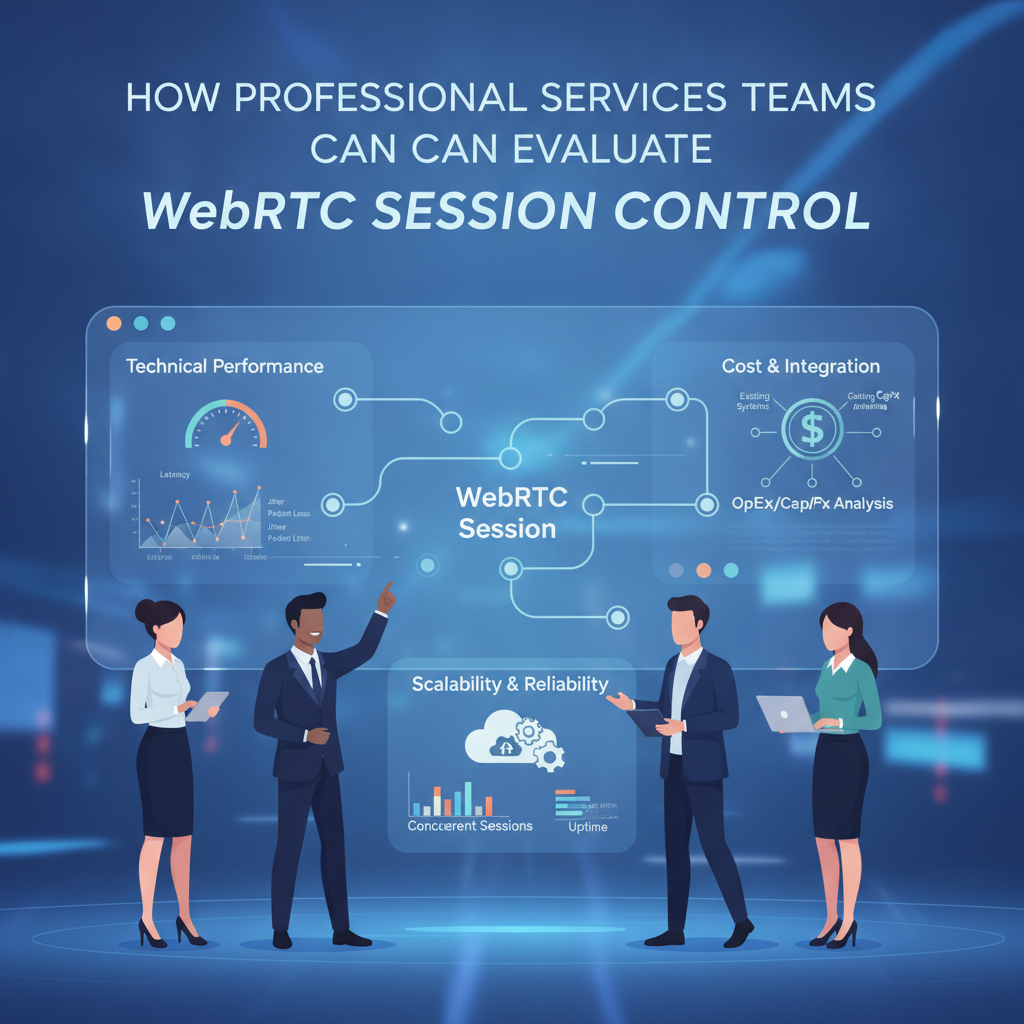
When enterprises evaluate WebRTC session control infrastructure for consumer VoIP, they often start with performance, but that is only one layer of a complicated puzzle. Reliability is usually the first thing that crosses their minds, and for good reason. Even small jitter or signaling delays can ripple into user frustration. But the criteria tend to expand as stakeholders realize how many systems must cooperate.
Security typically rises quickly to the top. The mix of WebRTC encryption, STUN and TURN traversal, and SBC policy enforcement can get messy if the solution lacks a clear architecture. Some buyers even ask whether the vendor supports emerging protocols or identity models. It is a fair question, although sometimes asked earlier than necessary.
Scalability is next. Not just raw call capacity, but multi-region scaling that avoids creating fragmented policies or hard-to-manage routing rules. Then comes manageability. Teams want something they can troubleshoot without twenty windows open and a pile of inconsistent logs. Can the platform provide unified analytics? Does it help detect patterns across media and signaling, or does it leave all the correlation work to engineers?
And then, of course, is cost. Not simply licensing, but total operational impact. How much time will the platform require to maintain? Does it reduce other infrastructure footprints like legacy SBC farms or outdated session managers? These questions sometimes come later in the conversation, though they probably should come earlier.
Common approaches or solution types
Organizations usually gravitate toward one of three approaches. None is perfect, but each reflects a certain mindset.
The first group prefers appliance or virtual appliance SBCs. These remain common because they offer predictable behavior and well understood routing logic. They also work well when traffic patterns are stable. But for teams with rapidly shifting WebRTC usage, this approach can feel a bit rigid.
The second group leans toward cloud native session control. This style supports microservices architectures, autoscaling clusters, and geographic expansion with fewer manual steps. It also pairs naturally with modern enterprise cloud strategies. Still, the tradeoff is complexity during implementation. Some organizations underestimate the nuance of distributed signaling behavior.
A third approach mixes both. Hybrid deployments appear more often in global enterprises that want cloud flexibility but still maintain controlled edges for compliance or specific carrier interconnects. It is not unusual to see a company document a hybrid plan only to revise it mid-project as real-world constraints emerge. That is part of the process.
A side note here: buyers sometimes assume WebRTC eliminates the need for SBC functions. It does not. STUN, TURN, NAT traversal, media routing, and policy enforcement all remain necessary. WebRTC simply shifts the boundaries. If anything, it can widen the gap between what apps need and what networks provide.
What to look for in a provider
Evaluating providers in 2026 requires a different lens than five years ago. The volume and diversity of consumer VoIP endpoints have expanded, and that puts pressure on session control vendors to remain adaptable. Providers need to demonstrate architectural clarity along with some willingness to discuss tradeoffs honestly. A good vendor will explain not just what their platform does, but where its design choices might constrain future expansions.
Buyers also want operational transparency. Does the provider offer useful troubleshooting tools or just logs? Do they help customers design HA patterns, or is that something you are expected to figure out alone? Some teams underestimate how important this becomes when usage spikes or traffic shifts between regions.
Support models matter too. You might have global traffic but a small operations team. Will the provider meet you where you are? And what about integration experience? Many deployments still rely on SIP interworking, carrier peering, and legacy CPE interactions. A provider that glosses over this can create unexpected problems later.
There is also the question of how future proof the platform feels. Vendors do not need crystal balls, but they should have roadmaps that reflect industry direction. WebRTC continues to evolve, and new codecs or media behaviors tend to surface every year. You want a partner who is paying attention.
Questions to ask vendors
Buyers often ask tactical questions first, but strategic ones usually reveal more. For example, how does the platform handle sudden changes in user geography? Or what happens if TURN usage spikes due to new firewall behavior by ISPs? These scenarios are becoming more common as global networks tighten security controls.
Other useful questions include:
What telemetry is available in real time, and how does it support root cause analysis?
How does the provider recommend structuring multi-region signaling?
Where does the vendor see WebRTC session control evolving over the next two to three years?
And perhaps the simplest question that is surprisingly revealing: What does your platform intentionally not do?
Asking what a vendor avoids can surface design philosophy more clearly than any feature checklist. It also helps buyers see how a platform aligns with their own operational model. Does it complement your existing tools, or will it create parallel systems that drift over time?
If you are pursuing a hybrid approach, it is also worth asking whether the provider has reference architectures. They will not disclose sensitive customer details, but they may offer general patterns that can help guide your planning.
Making the decision
Choosing a session control provider for WebRTC based consumer VoIP is partly about technology and partly about organizational comfort. Some teams value complete control over signaling logic. Others want minimal overhead and clear automation paths. Neither choice is inherently better. What matters is alignment with the realities of your own environment.
Decisions also hinge on timing. Are you addressing a current constraint or preparing for future growth? These contexts tend to influence whether a buyer selects a more established architecture or a more modern cloud oriented design. It is surprisingly common for organizations to settle on an approach, then refine it again once they see initial results. That is normal. Session control infrastructure tends to expose assumptions that were hidden in earlier planning stages.
Another factor is long term adaptability. If user growth is unpredictable, you probably want a platform with elastic scaling capabilities. If compliance constraints shape your architecture, you may need more granular policy control. And if your team is small, operational simplicity might outweigh feature richness.
In the end, buyers are looking for a path that reduces friction. WebRTC is powerful but can become chaotic when not anchored by reliable infrastructure. Whether you choose an appliance style SBC deployment, a cloud native design, or something hybrid, the important part is clarity. You should walk away confident that your chosen provider understands the shape and direction of your traffic patterns. You should also feel comfortable asking hard questions without getting vague answers.
The market will keep evolving. User expectations will keep rising. But with careful evaluation and the right partner, the session control layer can become a source of strength rather than surprise. And that, more than anything, is what enterprise and midmarket buyers are really trying to achieve.