 ⬇️
⬇️
Key Takeaways
- Microsoft and Meta stocks are under pressure as hyperscalers push through an intensive six- to twelve-month AI infrastructure buildout.
- Analysts warn of a potential 10% to 20% broader market correction amid valuation concerns and geopolitical tension.
- Shipping disruptions and extreme heat across Europe create additional economic strain as global markets brace for earnings season.
The global equities landscape moved cautiously as Q2 earnings season looms and investors evaluate the economic impacts of artificial intelligence, geopolitical instability, and climate pressure. Asian markets were mixed, with South Korea's KOSPI up 0.97% today and 96.69% year to date. Japan's Nikkei 225 climbed 0.86%. India's Nifty 50 was flat, while China's CSI 300 logged a 1.07% gain. European trading followed, with the Stoxx 600 rising 0.69% in early trading.
Market attention centered heavily on the ongoing turbulence around Microsoft, Meta, and the broader AI complex. Investors remain jittery after Apple's recent price increase announcement triggered a sharp reaction, pointing to a market that feels stretched. A Wedbush analyst described Microsoft and Meta as being treated like they are wearing winter jackets to the beach in the summer, observing that investor sentiment has shifted in ways disconnected from the long-term fundamentals of hyperscale AI. Wedbush has argued for weeks that traders are treating Microsoft and Meta as bear market names that cannot be owned.
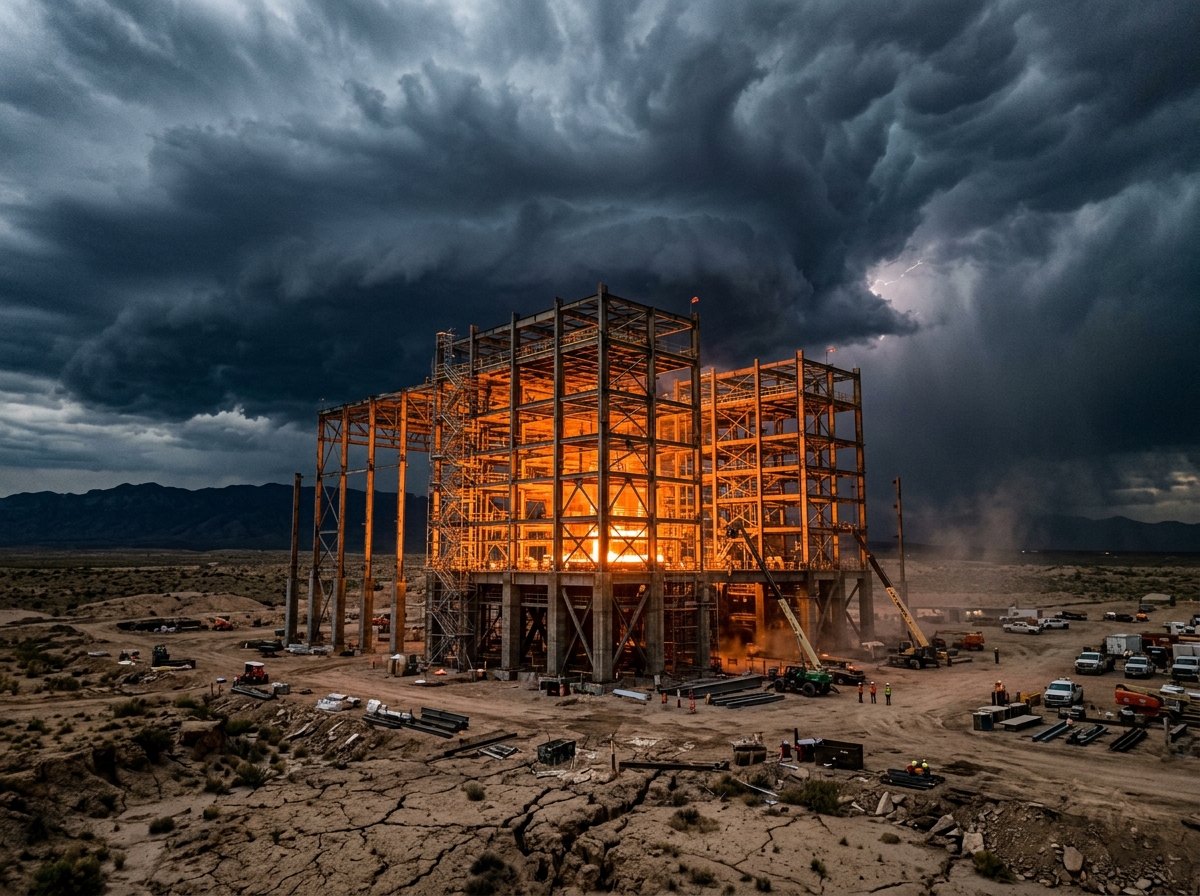
Hyperscalers are pushing through a massive six- to twelve-month investment window that could total up to $700 billion in AI data center construction. This aligns with broader research, including global projections that AI spending will reach $632 billion by 2028, based on trends tracked by IDC. The Fortune analysis notes that the spending wave currently outpaces monetization. That lag is creating an air pocket where costs hit the income statement long before consumer AI hardware or enterprise deployments generate predictable revenue.
According to Gartner research highlighted in the same Fortune coverage, Microsoft Azure and Amazon Web Services remain dominant infrastructure providers for enterprise AI workloads. This positioning is critical because many organizations are still in early experimentation stages for generative AI. As a McKinsey study underscored last year, widespread experimentation has not yet translated into widespread monetization. It can take time for enterprise customers to turn proofs of concept into production deployments that deliver measurable revenue impact.
Trader psychology often prioritizes the next quarter rather than the next decade. Analysts believe the cost pressures will slow over the coming year as the infrastructure wave stabilizes, eventually giving way to scaled AI deployments. The current investment era resembles the construction of the Las Vegas Strip in the 1950s, where substantial capital was deployed before returns materialized.
The chief investment officer at Kerux Financial warned that recent volatility may be the tip of the iceberg, projecting a potential 10% to 20% correction driven by elevated valuations, geopolitical uncertainty, and historically low summer trading volume. Equities have not seen a double-digit pullback in over a year, heightening expectations of a market cooling-off period.
Geopolitics added another layer of complexity to global logistics. The closure of the Strait of Hormuz affected shipping prices globally rather than just for oil haulers, with hundreds of immobilized vessels causing ripple effects throughout supply chains. Apollo Global Management noted broad-based signs of distress, including rising freight prices across container, truck, and air transport. Analysts at Oxford Economics observed that shipping costs have already begun to fall as oil prices drift lower.
In maritime logistics, the Rich Starry, a Chinese-owned tanker trapped in Hormuz since the early stages of the conflict, was spotted near Sri Lanka yesterday, signaling that traffic might be slowly normalizing.
Climate pressures continue to shape business outcomes across Europe, which has faced a record heat wave since late May. Paris hit 38 degrees Celsius, London reached 36, and Berlin experienced similar temperatures. Allianz estimated that France, Italy, Germany, and Spain face measurable heat-related GDP losses by 2030, reflecting declining labor productivity and increases in cooling costs. Research from various academic and labor studies demonstrates that students and workers experience measurable performance drops on high-temperature days.
AI's effect on inflation is complicating macroeconomic forecasts. Pantheon Macroeconomics data indicates that while tech spending overall tends to be disinflationary, the PCE index is registering rising prices tied directly to AI components. Macquarie analysts noted that wages in construction outpaced general wage growth since the AI data center boom began. As hyperscalers secure compute capacity, chip prices have climbed sharply, according to Deutsche Bank analysis.
ING reported that AI data centers in the United States now have 55 gigawatts of planned behind-the-meter power capacity, exceeding the total installed capacity of the state of New York. Texas leads this buildout, followed by New Mexico and Pennsylvania.
Governance, security, and political tensions also impacted specific organizations and markets. EY faced scrutiny after an employee allegedly accessed the Australian prime minister's bank details. The CEO of Berkshire Hathaway delayed an annual donation to the Gates Foundation pending a review of connections to a disgraced financier. The U.S. Supreme Court ruled that presidents can fire independent agency heads, with an exception for the Federal Reserve. Concurrently, the Wall Street Journal highlighted growing concern over the scientific basis for AI therapy chatbots.
At Brown University, an economics professor dealt with widespread cheating after allowing students to take a midterm from home following a local tragedy. Many turned to AI-generated answers. After the instructor confronted the class, nearly half the students dropped the course, and the final exam average collapsed from 96 to 48. The professor argued that uncritical use of AI risks eroding human critical thinking.
As global markets contemplate a potential correction, technology companies like Microsoft and Meta are navigating a capital-intensive period that will dictate the next generation of computing infrastructure. Investor interpretation of this infrastructure lag is poised to shape the trajectory of AI adoption and enterprise technology spending well into the 2030s.