 ⬇️
Key Takeaways
- OpenAI’s “AI compute campus” language signals a move toward larger, purpose-built infrastructure for training and serving AI models.
- Electricity, cooling, memory, and storage constraints could shape where projects are built and how quickly capacity becomes available.
- The scale of AI infrastructure is likely to draw greater political scrutiny over jobs, energy costs, public incentives, and local development.
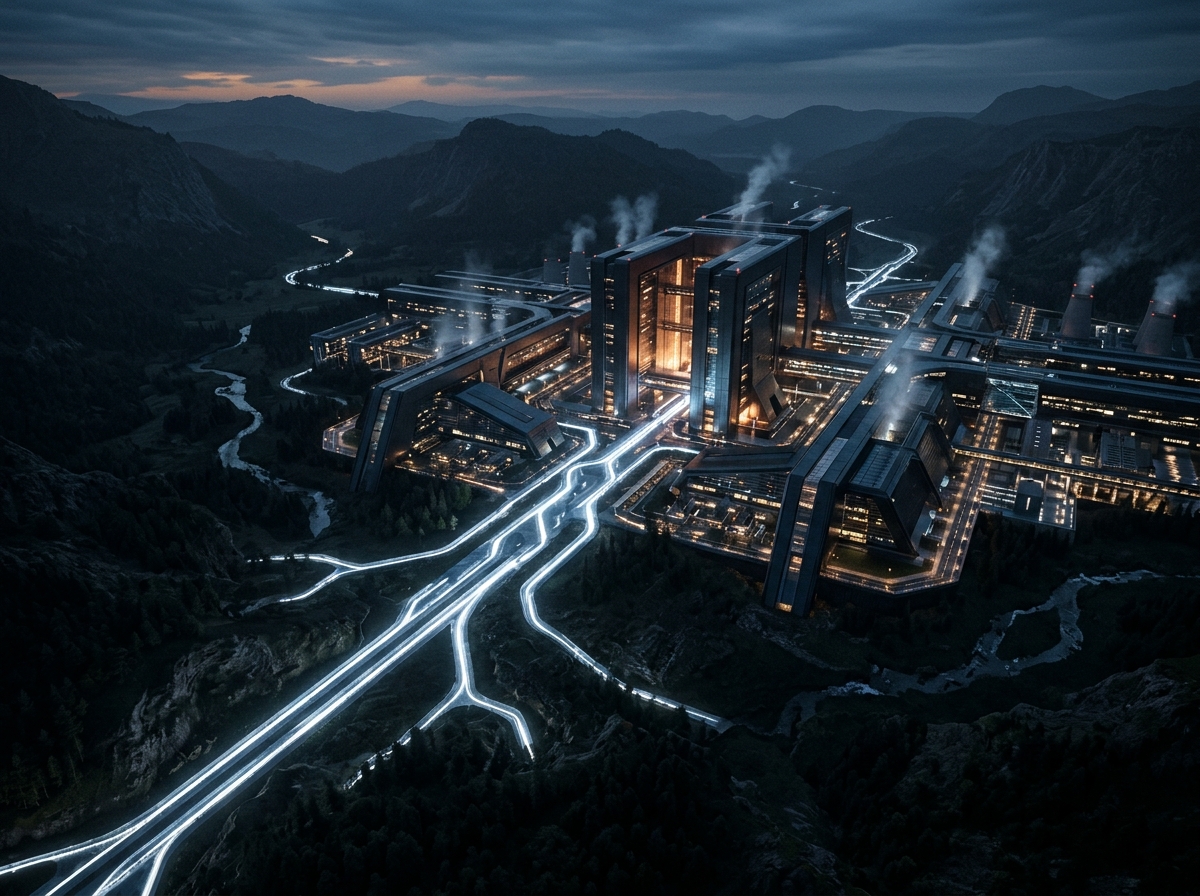
OpenAI’s proposed “AI compute campus” terminology does more than give data centers a new label. It reflects how AI infrastructure is becoming larger, denser, and more closely tied to energy policy, industrial development, and regional economics.
A conventional data center might support a broad mix of enterprise applications, cloud services, and storage. An AI compute campus is conceived around clusters of specialized accelerators used to train models and deliver AI services at scale. That changes the planning equation. Power availability, grid connections, cooling systems, network capacity, and access to specialized hardware can matter as much as the buildings themselves.
The numbers help explain the shift. Gartner forecasts that global data-center electricity consumption will increase from 448 TWh in 2025 to 980 TWh by 2030. AI-optimized servers are projected to account for 44% of that consumption by 2030, up from 21% in 2025.
That is not simply an infrastructure statistic. It puts AI developers into competition with industrial plants, housing growth, electric vehicles, and other large sources of demand for generation and transmission capacity. In markets with congested grids, a campus could face long interconnection timelines even when financing and land are already secured.
Chips are only one part of the build-out. A facility packed with accelerators also needs high-bandwidth memory, flash storage, networking equipment, cooling technology, backup systems, and a steady supply of electricity. HCLTech’s summary of 451 Research identifies power, cooling, memory, and flash-storage shortages as major constraints on large-scale deployments.
At the same time, 451 Research projects the AI-infrastructure market will grow from $337 billion in 2025 to $1.2 trillion in 2030, representing a 28% compound annual growth rate. That spending opportunity is substantial, but it also exposes providers to construction delays, equipment shortages, volatile energy prices, and the risk of building capacity faster than customers can use it.
OpenAI is not operating in isolation. Microsoft continues to invest in AI-oriented data-center infrastructure, while NVIDIA-powered AI factories are being developed by operators including Nebius and Mistral AI. Nebius’s planned Finnish AI factory could reach up to 310 MW, while Mistral AI has made a 44-MW capacity commitment. These projects illustrate why the campus, rather than the individual building, is becoming a more useful unit of comparison.
That said, raw megawatts reveal only part of the picture. Omdia tracks construction using facility location, floor area, IT load, planned projects, and long-term power forecasts. Buyers and investors will increasingly need to examine utilization, energy efficiency, water consumption, carbon intensity, and the amount of useful computing work produced by each site. A large power reservation does not automatically translate into productive AI capacity.
The terminology also carries political weight. If AI becomes a major issue for presidential candidates, compute campuses provide a tangible focus for debates that might otherwise remain abstract. How many jobs will a project create? Who pays for grid upgrades? Will electricity prices rise for nearby businesses and households? Those questions can influence permitting, tax incentives, and community support.
For enterprise technology leaders, the shift suggests that AI capacity planning may become less predictable. Access to models and cloud services could increasingly depend on physical infrastructure decisions made years earlier. Procurement teams may need clearer information about capacity availability, geographic concentration, energy exposure, and environmental performance when evaluating providers.
OpenAI’s language captures that broader reality. AI is becoming an industrial system with physical limits, not just a category of software. The companies that secure power, equipment, and suitable locations can gain an advantage, but their projects will also face closer examination from regulators, utilities, customers, and voters.