 ⬇️
⬇️
Key Takeaways
- Oracle is offering up to $1 million for research into capturing, transporting, and permanently storing carbon dioxide associated with Bloom Energy fuel cells.
- The work will assess technical feasibility, geology, environmental effects, regulation, and commercial economics at Project Jupiter and across New Mexico.
- Any deployment decision remains contingent on the research, while broader Project Jupiter projections assume approval of the planned air permit and pipeline.
Oracle is putting up to $1 million behind research that could determine whether carbon capture and sequestration, or CCS, can reduce emissions from Project Jupiter, its planned cloud infrastructure campus in New Mexico.
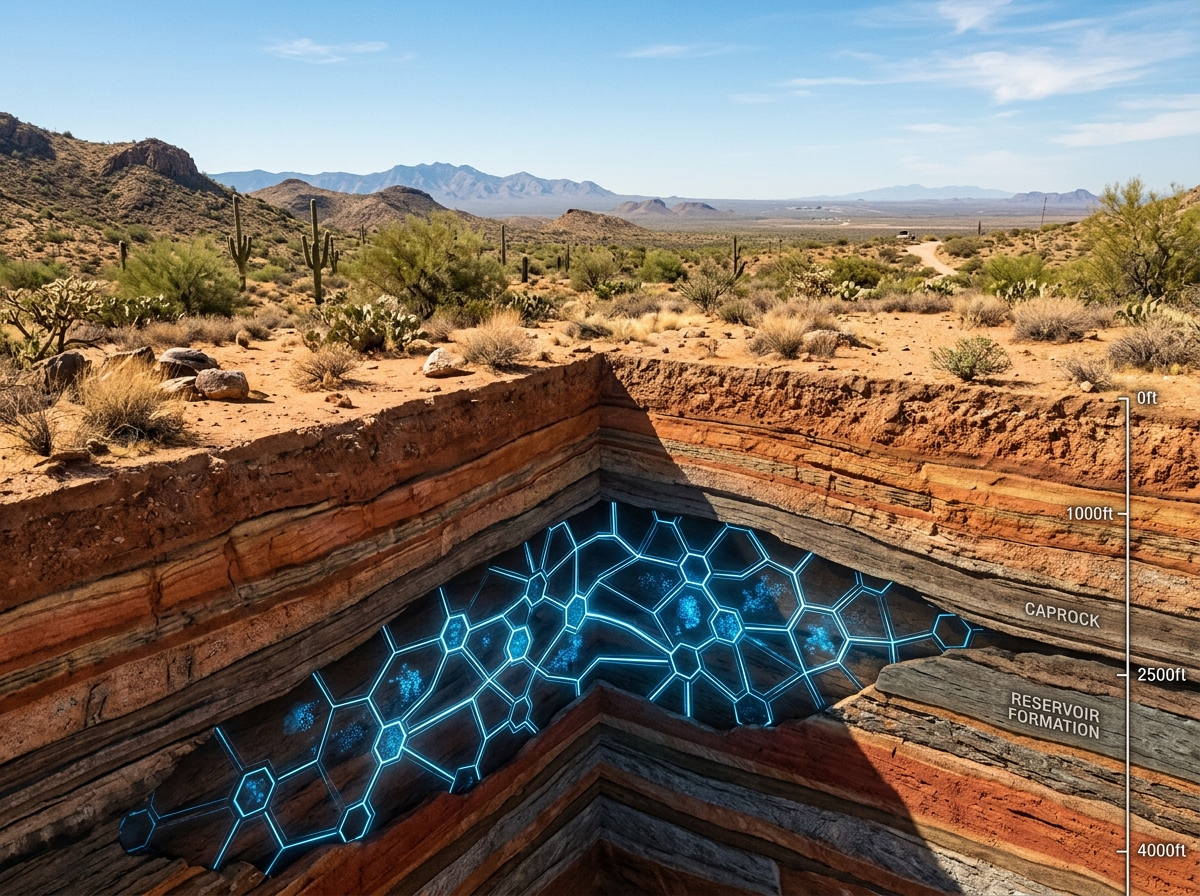
The grant is open to qualified academic institutions, nonprofit organizations, and other research partners. Oracle is seeking expertise spanning carbon capture, energy systems, geology, environmental policy, economics, and related disciplines. The aim is not simply to test capture equipment. Researchers will examine the chain from separating carbon dioxide at the site to transporting it, identifying permanent geological storage, and establishing a workable commercial model.
At the center of the study are Bloom Energy fuel cells. Oracle wants researchers to assess how carbon dioxide associated with those systems could be captured safely and efficiently, then either moved toward permanent storage or potentially supplied for industrial use.
That distinction matters. Capturing carbon at one facility is only one part of CCS. A practical project also needs compression and transportation infrastructure, suitable underground formations, monitoring, regulatory approval, liability arrangements, and economics that hold up over many years. If any element fails, the wider model becomes difficult to justify.
"Oracle is focused on powering Project Jupiter responsibly and reducing its emissions over time," said the executive vice president of Oracle Cloud Infrastructure. The executive noted the goal is to reach specific internal targets for carbon-free energy matching for Project Jupiter by 2031 and meet New Mexico's Energy Transition Act goals before 2045.
While a $1 million research commitment is modest beside the capital typically associated with industrial energy and carbon-management infrastructure, its value will depend on whether the resulting work produces site-specific findings that can support investment, permitting, and engineering decisions. The research must answer where the carbon dioxide could be stored, how it would get there, and who would carry the long-term liabilities of geological leakage or equipment failure.
The research arrives as commercial interest in CCS and carbon capture, utilization and storage, or CCUS, is rising. Market.us estimated the storage-focused CCS market at roughly $6.9 billion in 2025 and projected it could approach $32 billion by 2035, representing a 16.6% compound annual growth rate.
MarketsNXT placed the 2025 market at approximately $7.4 billion and projected growth to $28.8 billion by 2034, with a forecast compound annual growth rate ranging from 16.2% to 18.4%. Forecasts vary by methodology and by whether utilization, transportation, and storage services are included. Still, they point in the same direction: CCS is moving from isolated demonstration work toward a larger industrial ecosystem.
Accounting will be another important part of the equation. The IPCC Guidelines for National Greenhouse Gas Inventories, including the 2019 refinement, provide a basis for reporting captured and stored carbon dioxide. Any future Project Jupiter system would also need credible measurement and monitoring so that claimed emissions reductions reflect carbon that remains securely stored.
Oracle is positioning the research within a broader package of New Mexico commitments. Those include $50 million for local water-system repairs and improvements, undisclosed sums in direct support for schools, infrastructure, and local services, and additional funding for workforce development and community organizations.
The company is also working with Arable on real-time agricultural field data intended to improve irrigation efficiency. Oracle reports the program conserves about 21 million gallons annually in the Rio Grande-Bravo watershed, which is more than Project Jupiter's cooling and fuel-cell systems use. Nearly 1,000 New Mexico residents are working onsite to build the campus, which Oracle states has generated undisclosed amounts in state and local tax revenue.
That said, several outcomes remain conditional. Oracle's projections for jobs, tax revenue, investment, and billions of dollars in long-term economic impact for Doña Ana County and New Mexico assume approval of the air permit and pipeline as originally planned. The CCS grant does not amount to a deployment commitment either. It is an attempt to establish whether the technical, environmental, regulatory, and financial elements can form a credible project.