 ⬇️
⬇️
Key Takeaways
- Plan-S successfully deployed four new Connecta satellites via a SpaceX Transporter mission.
- The expansion targets the growing global demand for satellite-based IoT and M2M communication.
- This move reinforces Türkiye's strategic position as an emerging player in the commercial space sector.
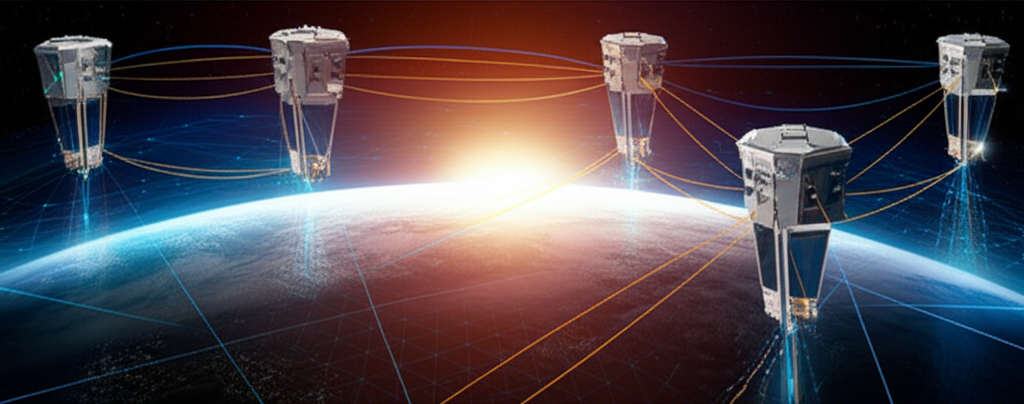
Plan-S, one of Türkiye's leading companies in the global space sector, has successfully launched four new Connecta Internet of Things (IoT) satellites, marking a significant step in the company's aggressive roadmap. Carried into orbit aboard SpaceX’s Transporter-11 mission, the deployment of Connecta T4.1, T4.2, T4.3, and T4.4 suggests that the company is moving past the experimental phase and deep into operational scaling.
While the challenges of space deployment are well-documented, the frequency of these launches indicates that Plan-S is effectively clearing the manufacturing and integration hurdles that frequently impede younger space startups. The consistent deployment schedule points to a maturation of their assembly and testing processes.
The primary mission for the Connecta series distinguishes itself from broadband internet initiatives. While mega-constellations like Starlink focus on high-speed consumer data, a significant industrial revolution in Low Earth Orbit (LEO) is occurring in narrowband. These satellites are designed to facilitate communication between devices, known as the Internet of Things (IoT). The technology targets shipping containers, oil pipelines, and agricultural sensors in remote areas where fiber optics are impractical and cell towers are nonexistent.
Terrestrial connectivity currently covers less than 20% of the Earth's surface. For logistics tracking across the Pacific or grid monitoring in desert environments, standard 5G networks are insufficient. Satellite IoT fills this massive coverage gap. By launching these four units, Plan-S is adding essential capacity to a network intended to serve unmatched global coverage needs.
In the context of LEO constellations, revisit time is a critical metric. A single satellite passes over a specific point on Earth quickly, creating gaps in coverage. To offer near real-time data monitoring, a train of satellites is required. While four satellites may seem like a small number compared to broadband mega-constellations, in the IoT sector, they provide a significant boost to data revisit rates. This allows the network to pick up pings from ground sensors more frequently, enhancing the utility of the data for end-users.
The ability of a regional player to compete with massive US and European incumbents is largely driven by vertical integration. Plan-S designs and develops these systems in-house at the Bilkent Cyberpark in Ankara. By controlling the technology stack, they manage costs differently than integrators who purchase off-the-shelf buses and attach sensors. This launch also serves as a testament to Türkiye's national space ambitions, as the country pours resources into becoming a producer of space technology rather than solely a consumer.
Technically, these satellites are equipped with software-defined radios (SDR). This capability is crucial as it means the hardware in orbit can be updated or repurposed to a degree from the ground. In an industry where hardware risks becoming obsolete shortly after launch, having software-defined flexibility is a massive asset for operational longevity.
The practical use cases for this technology are extensive. In sectors like smart farming, the technology's value is contingent on connectivity. Monitoring soil moisture levels via satellite link allows for precision irrigation that saves water and reduces operational costs. These satellites do not stream media; they move small packets of high-value data that drive industrial efficiency.
Newer generations of these satellites are also testing and rolling out "inter-satellite link" capabilities. If satellites can communicate directly with one another, data does not have to wait until the satellite flies over a ground station to be downloaded. Instead, data can be passed along the chain to a satellite currently over a station. This reduces latency, which is a critical selling point for B2B clients requiring timely data access.
The deployment of the Connecta T4 series demonstrates that Plan-S is adhering to a strict launch cadence. In the commercial space industry, reliability is paramount. By meeting this launch window, Plan-S signals to the market that its supply chain is robust and its operational teams are capable of managing multiple assets in orbit simultaneously.
With the market for satellite IoT projected to expand rapidly over the next five years, Plan-S is positioning itself to be a key infrastructure provider. This latest launch ensures they are actively participating in the sector's growth rather than merely observing it.