 ⬇️
⬇️
Remote IT Support for Construction Firms: A Complete Guide for Enterprise Buyers
Key Takeaways
- Remote IT support in construction must account for field conditions, dispersed teams, and unpredictable connectivity.
- Managed IT, cybersecurity, and cloud services—when aligned—create operational stability for construction workflows.
- Mature providers help firms balance practicality, cost, and risk across rapidly shifting project environments.
Definition and Overview
Most construction executives I’ve worked with over the years will say some version of the same thing: IT isn’t their biggest problem—until the moment it stops them from pouring concrete or issuing a change order. Remote IT support entered the sector as a convenience, then slowly became essential as projects sprawled across geographies and digital workflows replaced stacks of paper plans. The challenge now is that field teams rely on the same tools as office staff, but in places where connectivity is inconsistent and timelines are very unforgiving.
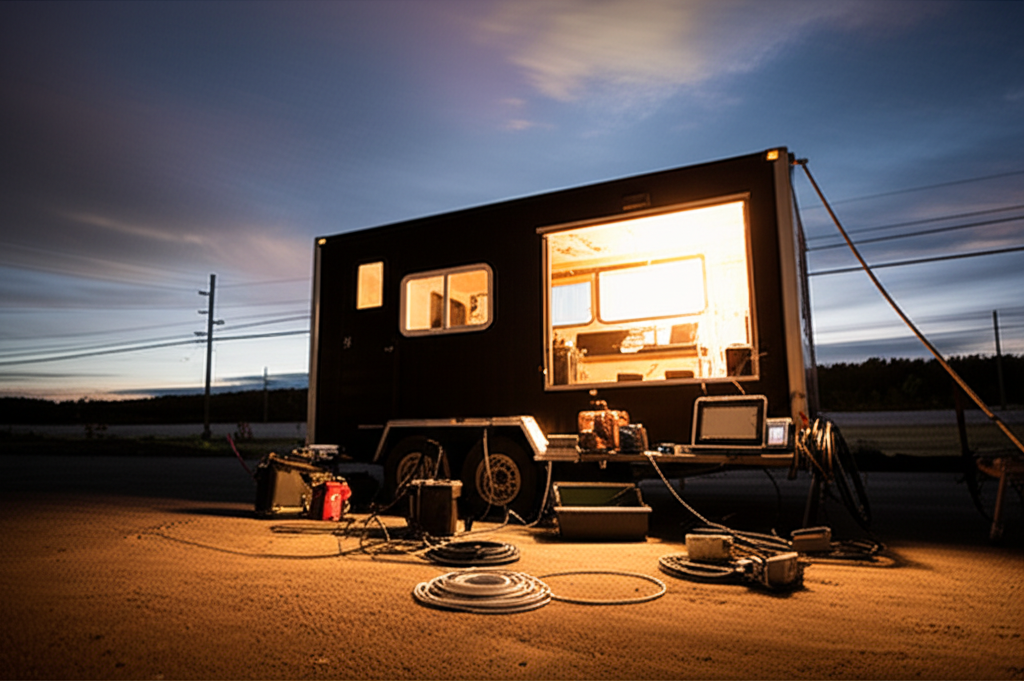
That’s really the core issue. Construction firms don’t just need help-desk-level support; they need support that understands the realities of jobsite trailers, rugged devices, cloud-based project management platforms, and the fact that crews cannot sit around while the network “reboots.” Providers like Executech have approached this by blending managed IT services with cybersecurity and cloud infrastructure, but more on that in a moment.
Remote IT support, at its simplest, is the delivery of technical assistance, system management, and security oversight without sending a technician on-site. But simplicity fades quickly once you factor in dozens of active jobsites, a mix of legacy and modern systems, and the seasonal rhythms of construction cycles.
Key Components or Features
Here’s the thing about construction environments: no two are exactly alike. One site has strong LTE all day; another is in a valley where even voice calls drop. That inconsistency shapes the essential components of remote IT support.
- Proactive system monitoring, ideally tied to automated alerts, so issues are detected before they create downtime.
- Centralized device management tools that allow configuration, patching, and troubleshooting across field laptops, tablets, and rugged handhelds.
- Cloud-based collaboration systems—platforms like Procore or Autodesk Construction Cloud often sit at the center of workflows, so support has to understand their quirks.
- Security controls that function even in low-connectivity environments. Think endpoint protection that doesn’t depend on constant cloud synchronization.
- A support model that can escalate quickly for field-critical systems. Waiting in a ticket queue isn’t viable when you’re trying to approve a work order on the spot.
This is where managed IT and cybersecurity converge. Remote support isn’t just “fix my laptop”; it’s maintaining uptime for the digital backbone of field operations. Oddly enough, the providers who do best aren’t the ones with the most tools—they’re the ones who understand the tempo of construction work.
Benefits and Use Cases
One of the biggest benefits, and sometimes the most overlooked, is predictability. Construction firms spend much of their time navigating variables they can’t control: weather, labor, material availability. IT shouldn’t be another variable. Remote support creates consistency—whether a superintendent is in a trailer, a truck, or halfway up a scaffolding with a tablet in hand.
A few common use cases show up across firms:
- Rapid resolution of connectivity or device issues on jobsites without waiting days for onsite support.
- Secure access to cloud-hosted documents, drawings, and models, enabling immediate field decisions.
- Maintaining compliance, especially on public projects where cybersecurity standards are tightening.
- Scaling IT support during project surges without overhiring internal staff.
Some firms also lean on remote support for cloud migrations, especially when moving from shared drives and paper binders to structured digital environments. Others rely on detailed cybersecurity configuration, particularly as ransomware attacks hit more project-based businesses. It’s not unusual now to see cyber insurance requirements baked directly into GC–subcontractor relationships.
A quick tangent: about five years ago, I remember sitting in a trailer where the team kept a physical copy of every critical file “just in case the cloud went down.” These days, the opposite is true—downtime is more likely from an unmanaged device or an overwhelmed VPN tunnel than from a cloud platform itself. Interesting how quickly norms flip.
Selection Criteria or Considerations
Choosing a remote IT support provider in construction isn’t quite the same as picking one for a traditional office-based company. A few criteria tend to matter more than buyers initially expect.
First, look at field familiarity. Does the provider actually know how construction firms operate? Do they understand jobsite realities, or will they be confused when support requests come through from a trailer with a temporary generator?
Next, evaluate cybersecurity depth. With more devices in more places, risk expands. Firms need endpoint security, identity management, and monitoring that fits a dispersed workforce. Providers with integrated cybersecurity services remove the friction between “support” and “security,” which—if separated—can cause delays or miscommunication.
Cloud fluency matters too. Whether you're consolidating systems or managing a multi-cloud environment, the provider should be comfortable with construction-specific applications. Providers that treat cloud as a bolt-on rather than a core pillar tend to struggle during peak workloads.
Finally, consider responsiveness. Construction jobs move fast. Remote support must do the same. Some organizations look for providers capable of hybrid approaches—remote-first, but with onsite technicians available as needed. Managed services frameworks help with this, balancing consistency with flexibility.
If you’re thinking, “Isn’t this just standard IT due diligence?”—not really. Construction adds layers of mobility, environmental constraints, and pressure. Those change the equation.
Future Outlook
Looking ahead, remote IT support in construction is likely to shift again as technologies mature. Wearables, IoT sensors, advanced project analytics, and even drones all feed data back to central systems. Supporting that ecosystem remotely will require more automation, more edge security, and perhaps more field-hardened cloud designs.
What’s becoming clear, though, is that construction firms want fewer disconnected services and more integrated guidance. Managed IT, cloud support, and cybersecurity are converging because the work itself is converging. A provider that can handle this blend—something firms increasingly expect—sets the tone for stability in a sector where change is constant.
Some buyers wonder whether remote support can truly keep pace with field unpredictability. In my experience, yes, but only when the provider builds its model around real-world conditions rather than idealized office environments. That's where companies like Executech have focused their energy: aligning the mechanics of managed IT, security, and cloud with the messy, demanding rhythm of construction projects.