 ⬇️
⬇️
Key Takeaways
- Industrial environments are increasingly relying on AI-driven translation layers to bridge the gap between 30-year-old machinery and modern cloud architecture.
- Next-generation Wi-Fi standards are moving beyond speed, focusing instead on the deterministic latency required for mission-critical IoT operations.
- The role of the developer has shifted from simple application building to complex protocol arbitrage, as highlighted in recent industry discussions.
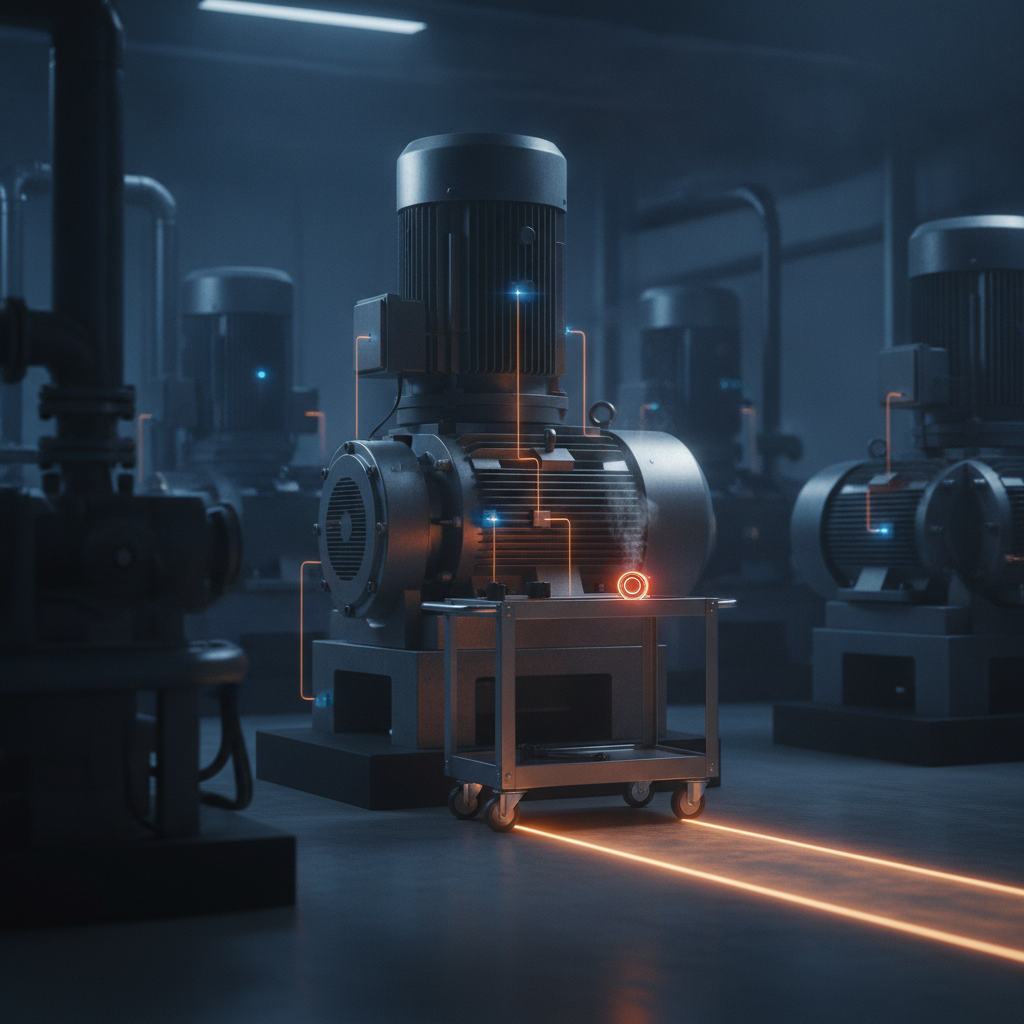
It is 2026, and the factory floor still looks remarkably like a museum in some sectors. While headlines often scream about the latest generative AI model or quantum breakthrough, the reality of the Industrial Internet of Things (IIoT) is grittier. It’s about making a stamping press manufactured during the Clinton administration talk to a cloud server via Wi-Fi 7.
This friction—the grinding gears between "legacy" and "next-gen"—was the focal point of a recent DevTalk session featuring Rich and Vin on January 8. The conversation highlighted a critical pivot point for the industry: we are done waiting for manufacturers to rip and replace their old hardware. They aren't going to do it. The capital expenditure is too high, and frankly, the old iron still works.
So, where does innovation go from here? It goes into the connectivity layer.
For years, Wi-Fi was the unreliable stepchild of industrial connectivity. You used it for email and maybe tracking inventory, but you never trusted it with the robotic arm. That has changed. The push toward next-generation Wi-Fi isn't just about downloading schematics faster; it’s about density and latency. In crowded spectral environments—think of a logistics hub with thousands of sensors chattering at once—older protocols simply choked.
Newer iterations, however, have introduced features that allow for "scheduled" traffic. This reduces the jitter that used to make wireless control dangerous for heavy machinery. It’s a game of milliseconds. If a safety sensor detects a human hand near a blade, the signal to stop can't wait for a video stream to buffer. It has to happen now.
But here is where things get messy.
Even with robust Wi-Fi, you still have the language barrier. That 1990s machine speaks a proprietary protocol over a serial port. The cloud speaks RESTful APIs and JSON.
This is where the AI and Machine Learning angle discussed by Rich and Vin becomes pragmatic rather than theoretical. We aren't just using AI to predict when a bearing will fail—though that’s useful. We are seeing the emergence of ML models designed specifically to act as dynamic translators. Instead of hard-coding drivers for every obscure piece of legacy equipment, developers are training models to interpret raw data streams from legacy ports and normalize them for modern networks.
It’s less "Terminator" and more "Universal Translator."
Why does this matter to the average CTO? Because the attack surface is changing. As we bridge these air-gapped relics to the open internet via next-gen wireless, security becomes a nightmare.
Legacy systems were designed with the assumption that physical access was the only threat. Connect them to a Wi-Fi network, and suddenly that assumption is a liability. The conversation in the developer community is shifting toward "security by design" at the edge, rather than relying on a firewall at the perimeter.
There is also a human element here that often gets ignored.
The skill set required to maintain this hybrid environment is rare. You need someone who understands 5G and Wi-Fi spectrum analysis, but who also knows what a PLC is. Finding a developer who can debug a Python script and also isn't afraid of a 480-volt cabinet is difficult.
The "DevTalk" session touched on this talent gap. As AI lowers the barrier for entry in coding, the value of the developer is shifting toward system architecture and physical integration. The code writes itself; the physical connection does not.
Is the future of IoT fully wireless? Probably not entirely. There will always be a place for a shielded copper cable in the noisiest electromagnetic environments. However, the tether is loosening. As we move deeper into 2026, the definition of "innovation" in IoT is less about the shiny new sensor and more about the invisible glue—the AI translation and the next-gen Wi-Fi—that finally allows the industrial world to join the digital age without bankruptcy.