 ⬇️
⬇️
SPhotonix pushes 5D memory crystal toward ultra‑long‑term data storage for the cold‑data era
Key Takeaways
- SPhotonix claims its 5D memory crystal can store up to 360TB on a five‑inch fused‑silica disc.
- Data stability is projected at 190°C for 13.8 billion years, though real‑world validation is necessarily theoretical.
- Current read/write speeds are far below tape, with a roadmap targeting 500 MBps within several years.
SPhotonix is putting a very different kind of storage medium on the table: a fused‑silica “5D memory crystal” that’s engineered for longevity above everything else. The company isn’t pitching it as a faster, cheaper alternative to SSDs or HDDs. Instead, the idea is to create a medium that can sit quietly in archives for enormous stretches of time without degrading, even under heat that would quickly destroy conventional formats.
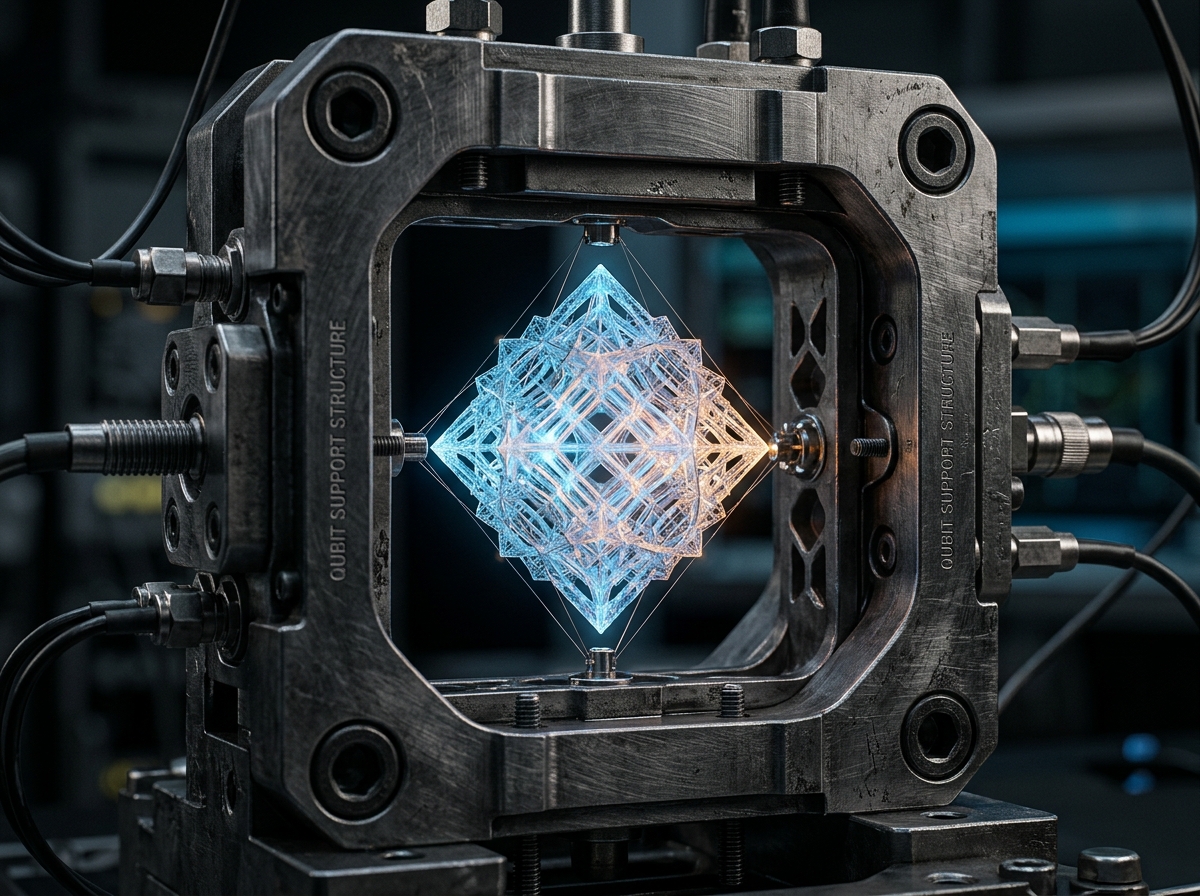
At the center of the system is a five‑inch glass disc designed to hold up to 360TB of data. The writing process uses femtosecond lasers to etch nanoscale voxels into the silica. Those voxels encode data using three spatial coordinates alongside orientation and intensity—hence the five dimensions. It’s not a new concept academically, but the commercial push matters. And here’s a small tangent: the phrase “femtosecond laser” pops up in research papers constantly, yet it rarely makes its way into product roadmaps. That tells you SPhotonix is trying to move beyond the lab stage.
The company claims that data embedded in this structure can survive temperatures up to 190 degrees Celsius while retaining integrity for roughly 13.8 billion years—the age of the universe. That number is more symbolic than empirical, built on material science projections rather than any real‑world aging, because of course nobody’s waited that long. Still, the durability pitch is core to SPhotonix’s framing, especially compared to optical discs measured in decades or the M‑DISC format that advertises a 1,000‑year lifespan.
For B2B buyers, the obvious question is simple: durability is great, but how fast is it? That’s where today’s prototype numbers feel constrained. Write speeds hover around 4 MB per second. Reads come in near 30 MB per second. Those rates won’t impress anyone running tape libraries or large object‑storage systems. Even modest archival tape formats surpass them.
SPhotonix, however, has a roadmap that aims for 500 MBps sustained read and write performance within the next three to four years. That’s a big jump. The company hasn’t demonstrated it outside controlled conditions, and making that leap in a real system tends to expose tricky engineering bottlenecks. It’s a small detail, but the technology’s current Technology Readiness Level (TRL 5) signals that only lab testing has been validated so far. The company is now working toward TRL 6, which implies testing in relevant operational environments, not just benchtop setups. Anyone who’s shepherded a hardware technology through TRLs knows that’s when surprises often show up.
Access latency expectations are equally modest. SPhotonix says 10 seconds or more for retrieval is acceptable. That’s consistent with the product’s positioning as a cold‑data medium rather than something for hot or even warm tiers. SSDs handle sub‑5ms response times. Warm and cool storage hit somewhere between 20ms and one second. The crystal sits far outside those expectations, but that’s the point—it’s built for archives that rarely move and almost never need immediate access.
Cold data is the focus because SPhotonix believes its growth is exploding. The company cites projections that by 2028, global data generation could reach nearly 400 zettabytes annually, with 60 to 80 percent qualifying as cold. The number is extreme, but not out of line with the kind of exponential estimates used in large‑scale data‑economy research. The framing supports the idea that data centers will need something denser, cheaper to maintain, and far more durable than what they use today.
That’s where cost enters the picture. Early pricing estimates put the writer device at around $30,000 and the reader near $6,000. That instantly rules out consumer adoption, which SPhotonix acknowledges by targeting data centers, enterprise archives, and institutions managing irreplaceable content. A field‑deployable reader is expected in about 18 months, which might open doors for digital preservation teams and some forensic applications. It’s a niche inside a niche, but it exists.
Co‑founder Ilya Kazansky ties the business case directly to the cost of keeping expanding data sets on HDDs and SSDs. Many organizations would prefer not to migrate cold data repeatedly or pay for spinning disks they rarely touch. His argument is straightforward: if the majority of stored data is cold and if its volume is surging thanks to AI workloads and shifting budgets, then finding a retention medium that doesn’t degrade or require constant power becomes attractive.
The claim that 5D memory crystals represent the only scalable path for cold storage is more aspirational than proven, but it captures the company’s view of the opportunity. And yet, even with those bold statements, SPhotonix isn’t pretending this is ready for broad deployment. It has raised $4.5 million to date—healthy for a deep‑tech early stage but small compared to what it will take to bring a new physical storage format into wide adoption.
There’s a quiet truth under all of this: archival storage rarely gets attention until something forces the issue. A major outage, a compliance failure, or a corrupted library can abruptly make extreme‑longevity media look far more appealing. Whether the 5D memory crystal becomes that medium depends on how quickly the company can validate durability claims, deliver performance improvements, and integrate into workflows that are already stretched. For now, it’s a provocative entry in a category that doesn’t see many new contenders.