 ⬇️
⬇️
Stanford team maps a precise insula–hippocampus pathway that helps the brain decide what to remember
Key Takeaways
- Stanford researchers identified two distinct neuron populations in the insula that separately handle emotional valence and memory encoding.
- Only the memory‑linked sites showed direct, rapid communication with the hippocampus, confirmed through electrical stimulation.
- The findings offer a microscopic look at how the brain tags salient information, with potential relevance for disorders involving emotion–memory dysregulation.
A new study from Stanford University School of Medicine pulls back the curtain on something neuroscientists have long suspected but struggled to capture: the moment the brain decides a piece of information is worth remembering. The work, published in Nature Neuroscience, identifies a direct pathway between specific neural clusters in the insula and the hippocampus—one that activates just before a new memory forms.
For a field that often describes brain regions in broad strokes—hippocampus for memory, amygdala for fear, insula for internal state—this level of resolution is unusual. And for B2B leaders who deal with emerging neurotech, AI systems inspired by biological computation, or clinical technology markets, it’s a reminder that the brain’s wiring isn’t organized like a tidy product roadmap. It’s messier, more modular, and sometimes surprisingly literal.
The research team, led by Weichen Huang and Josef Parvizi, had access to something rare: 16 epilepsy patients undergoing intracranial electroencephalography (iEEG), where electrodes are implanted directly into the brain to localize seizure sources. That clinical setup inadvertently provides researchers millisecond‑level visibility into regions like the insula and hippocampus—far more precise than fMRI and, frankly, impossible to replicate outside a medical context. It’s a small detail, but it tells you a lot about why these kinds of discoveries emerge slowly; the data simply isn’t easy to get.
Participants viewed a sequence of emotionally positive and negative words—“successful,” “loser,” and similar examples—rated their emotional intensity, completed a brief distraction task, and then tried to recall the words. This design let researchers separate neural activity tied to perception from the activity tied to whether a word would later be remembered.
Once the electrical data was analyzed, the insula looked far less like a single-purpose structure and far more like a mosaic. The team found interspersed neuron populations with distinct functions, even when they sat mere millimeters apart.
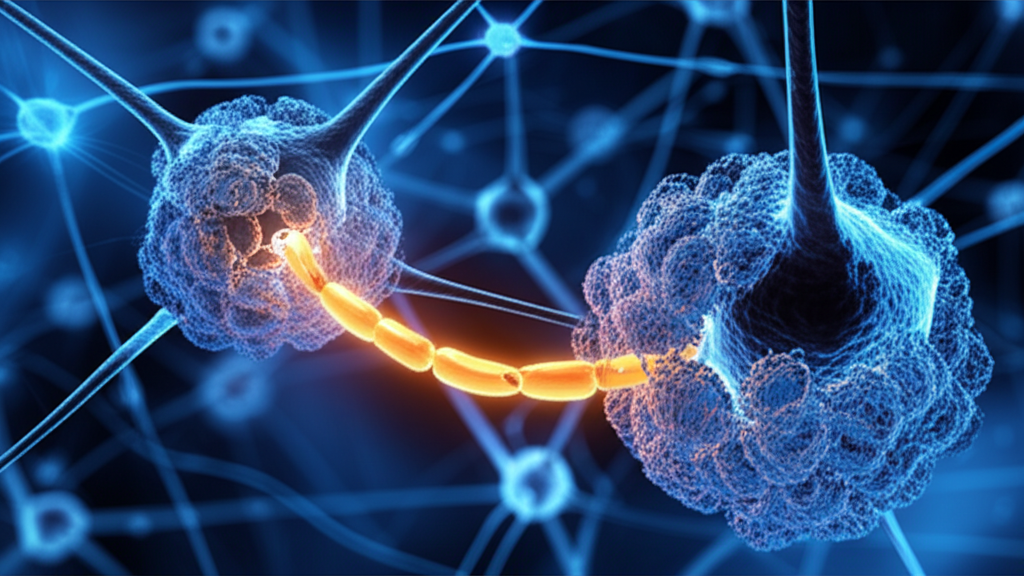
One group of sites, labeled INSDE (for “decreased exponent”), displayed changes in aperiodic exponent—essentially a shift in broadband background activity—that predicted memory formation. When the exponent dropped, participants were more likely to recall the word later. Perhaps more importantly, this shift occurred just before the hippocampus produced a high‑frequency ripple, a well‑established marker associated with consolidating new memories.
That timing matters. It implies a directional signal: the insula nudges the hippocampus, almost like saying “store this one.” For readers tracking the intersection of neuroscience and computation, there’s an intriguing micro‑tangent here. The brain isn’t just encoding information—it’s running a real-time prioritization layer. You could liken it loosely to event-based systems where upstream signals tell downstream processors which packets matter, though the biology is obviously more complex.
A neighboring set of sites did something else entirely. These INSIE (“increased exponent”) sites tracked whether a word was positive or negative. They lit up around emotional valence but didn’t predict memory performance at all. Emotion, in other words, wasn’t the deciding factor for storage—at least not through these circuits. And that’s where it gets tricky for anyone who assumed emotional intensity automatically strengthens memory. The study suggests that emotional processing and memory encoding happen in tight proximity but through distinct neural pathways.
To confirm directionality, the team used direct electrical stimulation. When they stimulated the memory‑related INSDE sites, the hippocampus fired back with a sharp, immediate electrical response—a causal connection, not just correlation. Stimulating the valence‑tracking INSIE sites, by contrast, produced no such response. Even though they’re part of the same anatomical structure, they don’t have a hard‑wired line to the hippocampus.
The researchers also stimulated the hippocampus directly. This time, all insula sites responded, but slowly. So the pathway is asymmetric: the hippocampus broadcasts broadly, while only specific insular nodes send rapid, targeted signals back. It’s a hierarchical communication pattern, though not in the neat top‑down way enterprise architects are used to modeling. Biological systems rarely cooperate with our diagrams.
The study’s authors point out several constraints. The dataset comes from epilepsy patients, whose neural physiology might not perfectly match the general population. The sample size is small. And the tasks involved single words rather than complex images or autobiographical memories. Still, the underlying discovery—a selective, fast pathway connecting insular memory sites to the hippocampus—sits on firm ground.
For companies working in clinical neurotechnology, cognitive therapeutics, or even neuromorphic computing, the implications are subtle but meaningful. The findings hint that the brain’s method for tagging salient information isn’t a diffuse, emotional cloud but a set of specific, tightly timed interactions. And yet the study doesn’t claim these mechanisms explain all forms of memory prioritization. The insula’s memory-linked sites might also respond to other emotional dimensions like arousal, which the experiment couldn’t fully isolate.
Stanford’s work also adds nuance to how researchers think about disorders that blend emotion and memory, such as PTSD. If only certain clusters in the insula trigger the hippocampus into storage mode, the idea of targeted interventions—neuromodulation, stimulation, or pharmacological approaches—starts to look slightly more grounded. It’s too early for commercial takeaways, but the circuit‑level understanding is improving.
Readers who want the underlying research can find it in Nature Neuroscience. The full study, “Direct interactions between the human insula and hippocampus during memory encoding,” was authored by Huang, Lyu, Stieger, Gotlib, Buch, Wagner, and Parvizi.
The team expects future work to map how these insular micro‑circuits connect with other brain networks and whether similar pathways operate during more complex, real‑world experiences. Even so, the current findings already reshape how neuroscientists think about the insula: not as one region with one job, but as a patchwork of specialized clusters coordinating different parts of emotional and cognitive life.