 ⬇️
⬇️
Key Takeaways
- Submer and Radian Arc partnered to develop infrastructure models for specialized AI data centers
- The collaboration reflects a shift from general cloud architectures toward purpose‑built “AI factories”
- Immersive cooling is becoming central to reducing power and water use as compute density rises
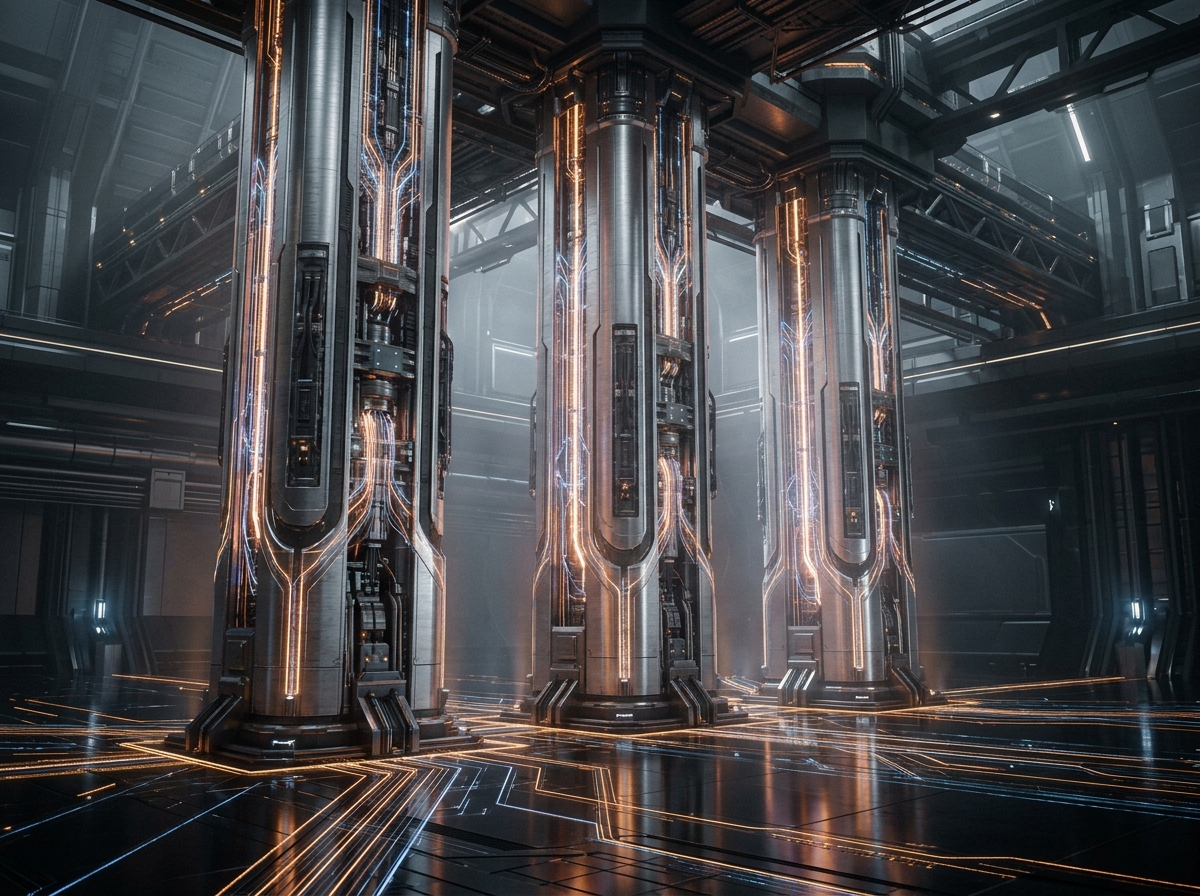
The data center world is changing fast. Instead of relying on broad, one‑size‑fits‑most cloud platforms, enterprises are shifting toward highly optimized environments engineered specifically for training and operating AI models. And in that shift, the recent alignment between Submer and Radian Arc has landed as a useful example of what next-generation infrastructure could look like.
Submer, known for immersion cooling systems, and Radian Arc, which focuses on GPU‑as‑a‑service architectures, are joining forces to develop a standardized approach for building AI‑centric facilities. It’s an interesting pairing. One handles the physical and thermal layer; the other shapes the computing layer that sits on top of it. The combination hints at a broader trend: AI infrastructure is no longer just about stacking more servers but about redesigning the entire pipeline from the chip outward.
Here’s the thing—AI models keep getting larger, and the required compute density keeps climbing with them. Anyone who has followed the rapid uptick in GPU power consumption understands why traditional cooling models feel increasingly strained. Air-cooled racks work, but they have limits, especially when power-hungry accelerators run near peak output for days or weeks at a time. So immersion cooling has moved from niche curiosity to pragmatic alternative. Some operators might still raise questions about cost or adoption speed, but few question the trajectory anymore.
This partnership arrives as enterprises wrestle with a bigger question: What should an “AI factory” actually look like? The term is tossed around frequently, but definitions vary. In some cases, the phrase refers to dedicated clusters of GPUs tuned for training. In others, it describes an end‑to‑end pipeline including data preparation, model iteration, inference deployment, and monitoring. Submer and Radian Arc are aiming for something closer to the latter—an integrated blueprint instead of a loose architectural idea.
Not every part of their design philosophy will land with every operator. That said, the emphasis on energy efficiency feels inevitable. Power and cooling costs are rising quickly, especially in regions where demand for data center capacity is already pressuring utility grids. Immersion cooling reduces water usage and often lowers the overall energy budget, particularly when deployed across dense AI clusters. Some early studies point to meaningful improvements, though numbers vary widely depending on configuration and region.
It’s also worth noting that the AI boom has exposed gaps in the traditional cloud model. General-purpose clouds were built for flexibility first, performance second. Enterprises loved that elasticity—still do, in fact. But training large models or running inference at scale puts a different kind of strain on hardware allocation. GPU shortages, instance variability, and cost unpredictability have pushed many organizations to build or lease more specialized infrastructure. The Submer–Radian Arc collaboration anticipates that tilt.
Oddly enough, one of the more overlooked aspects of this shift is operational simplicity. Immersion systems can sound exotic, but some operators report that once deployed, maintenance becomes more predictable because thermal fluctuations drop dramatically. Will every operator feel the same? Hard to say. Facilities with legacy layouts may face retrofitting challenges. Nonetheless, the operational narrative is shifting toward stability rather than novelty.
The partnership also touches on something less technical but just as important: standardization. Many AI infrastructure designs today are bespoke, curated for a specific workflow or data shape. That works for early adopters, but it does not scale easily. Vendors are realizing that enterprises want modular designs they can replicate across regions without endless customization cycles. By presenting a unified blueprint—however early-stage—it nudges the market toward repeatable patterns.
A brief side note here: sustainability teams will likely welcome the attention. As power usage effectiveness (PUE) metrics become more scrutinized, boards and regulators increasingly want evidence that AI build‑outs aren’t ballooning resource consumption unnecessarily. Specialized cooling, combined with GPU efficiency improvements, plays into a narrative of “AI without runaway energy.” Whether this narrative will hold long term is something analysts continue to debate.
One practical aspect of the Submer–Radian Arc model is the focus on distributed deployment. Radian Arc’s experience with edge‑aligned architectures could enable smaller, regionally placed AI clusters rather than mega‑facility concentration. That decentralization could reduce latency for inference-heavy applications and distribute power loads more evenly. Some telecom providers have already explored similar approaches, so the timing aligns with broader market interest.
At a higher level, this collaboration symbolizes a break from the early cloud era’s assumptions. The industry once believed generic compute abstraction was the future for everything. But AI has a way of bending infrastructure around its needs, not the other way around. As organizations realize that, partnerships like this one become more than tactical—they become strategic signals.
Will this blueprint become the standard? Too early to tell. The AI infrastructure landscape is noisy and crowded, full of ambitious designs and competing philosophies. Still, the move by Submer and Radian Arc illustrates how the market is converging on one idea: AI requires purpose-built environments, and those environments are taking shape faster than many expected.