 ⬇️
⬇️
Surf Internet Hits 250,000 Fiber Passings as Great Lakes Buildout Accelerates Toward 2026
Key Takeaways
- Surf Internet reaches 250,000 fiber passings across Indiana, Illinois, and Michigan following a record construction year.
- The company expanded into 40 new markets and added 90 employees in 2025 to support engineering, construction, and customer care.
- Current momentum positions Surf for BEAD‑funded expansion projects starting in 2026.
Surf Internet’s announcement that it has passed 250,000 homes with fiber across the Great Lakes region lands at an interesting moment for regional broadband providers. It is a tangible milestone, certainly, but it also signals a shift from steady expansion into what looks like an aggressive multi‑year growth phase.
The company stated that its 2025 construction run rate—more than 66,500 new homes and businesses passed through November, with expectations to surpass 75,000 by year‑end—marks its fastest buildout to date. That volume is notable largely because Surf isn’t operating in dense metros where every mile of plant yields thousands of passings. Much of its footprint spans rural and mid‑sized communities, where construction costs stretch quickly. Anyone who has ever walked a make‑ready backlog in a small township knows the difference.
The more interesting detail is Surf’s entry into 40 new markets during the same period. That is a significant jump in operational complexity. Expanding in rural zones almost always means negotiating disparate permitting processes, coordinating with multiple utilities, and educating local governments that haven’t seen this level of telecom construction before. Yet Surf appears to be leaning into that terrain, describing the expansion as part of a broader strategy to strengthen connectivity in underserved areas across Indiana, Illinois, and Michigan.
Gene Crusie, the company’s founder and CEO, framed the 250,000‑home mark not just as an internal metric but as a “transformation marker for the Great Lakes region.” It is a strong phrase, but in this context, it tracks. Many of the communities Surf targets have historically had limited access to high‑capacity infrastructure. While national broadband progress can feel slow, when a regional provider delivers tens of thousands of new fiber passings in a year, local economies feel the impact immediately.
Surf’s staffing growth underscores the operational load sitting behind this pace. The company added 90 employees in 2025 across engineering, construction, field service, and customer care. That is a significant investment for a regional ISP, and it hints at one of the quieter truths about fiber expansion: labor is often the limiter. A provider can secure grants, draft network plans, and purchase materials, but if it doesn’t have enough trained field technicians or drop‑installation crews, the schedule slips. It is a small detail, but it tells you a lot about how the rollout is unfolding.
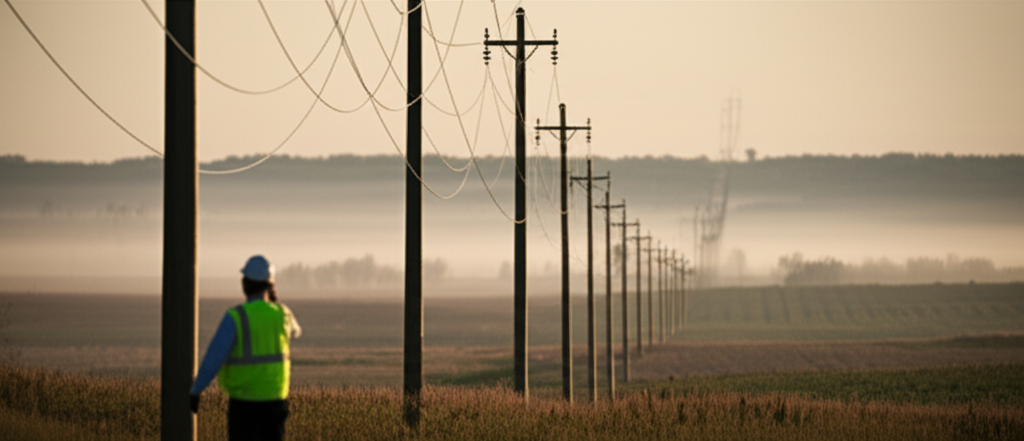
Brent Williams, Surf’s COO, highlighted the coordination required among field teams, contractors, and local partners—especially in communities with no prior fiber infrastructure. That line is easy to gloss over, but it hits a real operational challenge. Greenfield fiber work in rural areas often requires extensive pole replacement cycles, vegetation clearing, and construction sequencing that differs from urban builds. It is slow, labor‑intensive work that relies heavily on local buy‑in.
Recognition on Broadband Communities’ national Top 100 Fiber Providers list adds a touch of validation. While not necessarily a predictor of future success, appearing on industry lists tends to help mid‑sized operators build credibility with municipalities, community development groups, and capital partners. The list is widely referenced inside the broadband world, and local governments frequently cite it during partnership discussions.
The forward‑looking piece of the announcement carries the most weight for B2B readers: the company expects to lean into federal and state broadband grants in 2026, including BEAD‑funded projects. The BEAD program is enormous, but it is also heavily procedural and slow to move. Providers across the country have been waiting for states to finalize challenge processes, environmental reviews, and construction timelines. Surf appears positioned to strike when funds begin flowing into shovel‑ready projects.
It raises a practical question: how much more construction capacity can Surf absorb while maintaining service reliability? The answer depends on staffing, contractor relationships, and its ability to integrate grant‑funded builds with existing capital plans. Some regional ISPs have struggled with that balance, particularly when grant areas sit far outside their current footprint. Surf’s emphasis on being a local operator—its 300‑plus‑person team lives across the region—suggests the company sees this proximity as a strategic differentiator rather than a constraint.
A nuance worth acknowledging is that the Great Lakes region, unlike many coastal telecom markets, still has large pockets where fiber competition is limited or nonexistent. That creates both a business opportunity and a responsibility. Providers expanding into these areas tend to become the de facto infrastructure partner for municipalities, schools, and small businesses. Surf’s public framing around community partnerships reflects that dynamic. Whether it scales cleanly as the company enters more markets is something to watch.
On the operational side, Surf maintains headquarters in Elkhart, Indiana, with additional offices in La Porte, Byron Center, Fowlerville, Coal City, Naperville, and Rock Falls. Distributed offices are essential in rural markets—not just for response times, but because relationships with local governments and utilities often determine permitting speed. Broadband construction gets easier when the permitting office knows your field supervisor by name.
In a broader context, Surf’s momentum mirrors a trend noted by groups like the Fiber Broadband Association, which has pointed to accelerated fiber deployment across Tier 2 and Tier 3 communities. Surf isn’t positioning itself as a national player, nor does the source material imply that. But it is positioning itself as a regional operator capable of sustained expansion in a challenging geography.
Even so, 2026 will test how well Surf can scale under the structure of federal programs. Grant‑funded projects tend to come with extensive reporting requirements, environmental assessments, and construction sequencing tied to state rules rather than operator preferences. For a company celebrating its 25th anniversary, that is both a milestone year and a moment of operational pressure.
Still, the company’s message is clear: its 2025 momentum isn’t slowing. And for communities that have been waiting—sometimes for decades—for viable high‑speed infrastructure, Surf’s buildout represents something more practical than a round number. It is a new on‑ramp to the regional economy, delivered one mile of fiber at a time.