 ⬇️
⬇️
Key Takeaways
- TeraWulf has signed a 20-year lease with Anthropic to redevelop the former Century Aluminum site into a large-scale AI data center.
- Local residents welcome the projected jobs and economic boost but raise questions about noise, water use, and electricity demand.
- The project reflects national debates around hyperscale data center growth and community infrastructure impacts.
The transformation of the old Century Aluminum property in Hawesville has moved from speculation to commitment. With TeraWulf confirming a 20-year lease agreement with Anthropic, the groundwork is set for an AI data center expected to host about 401 megawatts of IT load and generate a projected $19 billion in revenue once fully built. That requires substantial power infrastructure for a rural community, and for Hawesville, it lands after four years of uncertainty following the closure of the aluminum plant that cost more than 600 jobs.
Jobs are on everyone's mind, partly because the promise of over 100 new positions arrives in a county that has been waiting for a major employer. Many residents see the opportunity, although they also want clarity. A WFIE report this week captured that tension. One resident described the mood as generally hopeful but still cautious. Another local summed up the expectation bluntly: people want industry to come in, but they want better information before construction ramps up.
Local interest in an AI data center is frequently accompanied by scrutiny. Concerns that have surfaced in Hawesville mirror those documented in other communities facing large-scale digital infrastructure proposals. A Yahoo News report highlighted similar worries in areas evaluating hyperscale data center sites. Noise from 24-hour operations, increased truck traffic, and a sense that land-use decisions are speeding forward faster than public communication are all common threads.
Water and electricity use drive much of the debate. Several residents cited these points specifically, questioning the expected utility demands of the new facility. National research offers some grounding here. McKinsey has projected steady growth in power demand tied to US data centers, expecting it to jump from 17 GW in 2022 to 35 GW by 2030. That trend has already influenced local and state infrastructure planning in multiple regions.
What stands out in this case is how the community reaction fits into a broader national conversation. Analysts at the Uptime Institute note that hyperscale campus development frequently requires transmission or substation upgrades, especially for facilities exceeding 50 megawatts. Hawesville's estimated 401-megawatt build clearly places it within that category. The scale is large enough that residents are asking how local infrastructure will adapt, and whether upgrades will be in place before operations begin.
The grid topic has become especially visible lately. The North American Electric Reliability Corporation (NERC) has listed rapid data center and AI load growth as a key emerging risk in its reliability assessments. Although Hawesville is far from the largest project in development, it lands in a part of the country that is already juggling industrial power needs, agricultural requirements, and residential growth.
A few months back, TeraWulf and local leaders held a town hall to address early questions. Attendees said afterward that they walked away with more questions than answers. That does not necessarily indicate opposition, but it does indicate that communication will likely need to improve as construction approaches. One attendee described the coming period as a learning process, which is a common assessment of early-stage data center projects.
Industry analysts often point out that community support tends to solidify once construction becomes visible and job hiring starts. There are also economic incentives in play, not specific to this project but tied to national trends. The Institute for Local Self-Reliance has documented more than $9 billion in state and local tax breaks provided to data centers since 2000. While no new incentives were detailed in the Hawesville announcement, the historical pattern offers context for how local governments consider long-term revenue potential.
The reuse of a former industrial site tends to be welcomed by economic development leaders, as it limits the need to convert new agricultural land. Additionally, the hyperscale category brings environmental and operational standards into the discussion. Organizations such as the US Green Building Council and ASHRAE have released guidelines that large data centers increasingly reference, including recommendations for energy-efficient thermal management. Whether TeraWulf and Anthropic pursue certifications like LEED remains an open question, but the national trend points in that direction.
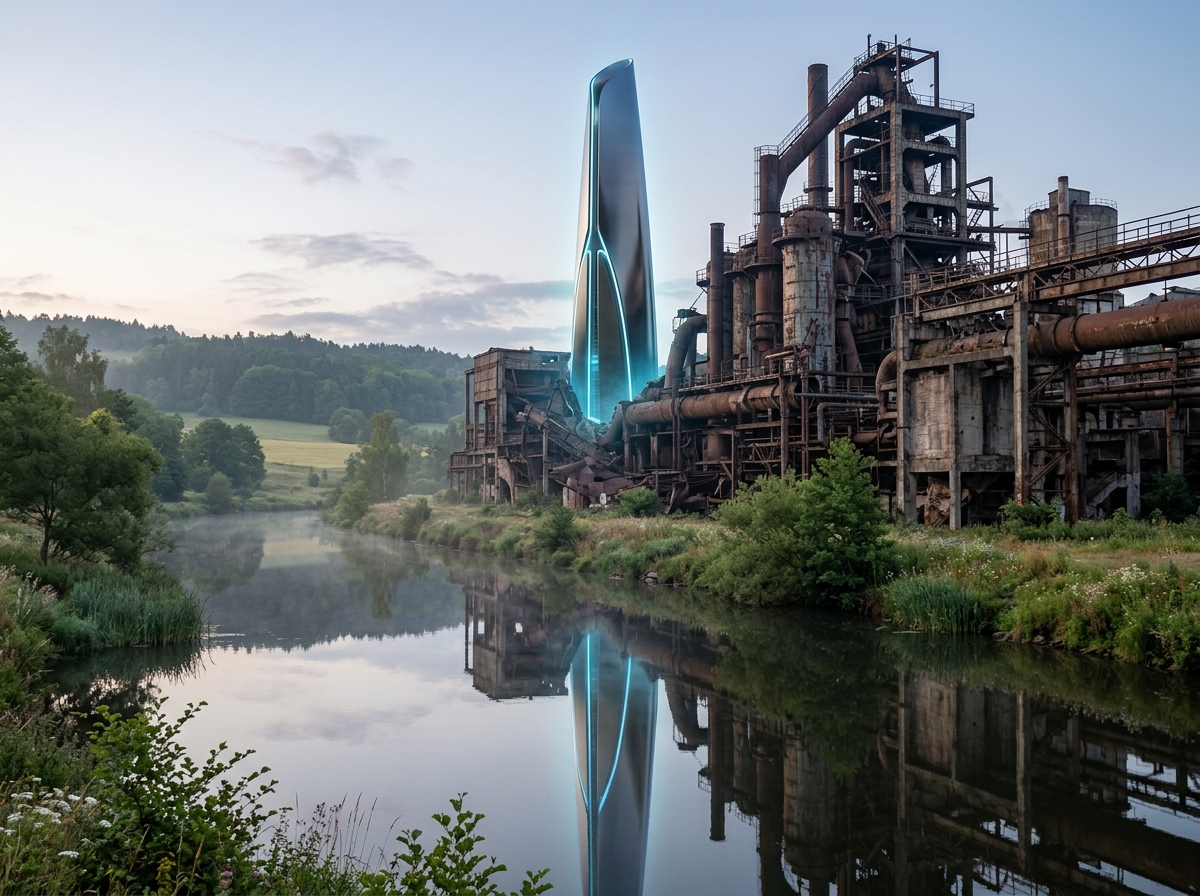
For a town that has watched an empty building sit on a major property for years, seeing it reactivated is generally preferred over letting it rust. One resident noted that it is a valuable piece of property and beneficial to see new commercial efforts utilizing it. Even so, locals want to understand what that use will mean for their daily lives.
One question floating in the background is how quickly construction will ramp up. The company has said initial construction is expected to finish by late next year. Even if that timeline holds, major electrical work and cooling systems likely extend well beyond that stage. In other communities, hyperscale campuses often develop in phases, with capacity coming online gradually.
Industry researchers at Gartner, Forrester, and McKinsey have written extensively about the shifting economics of AI infrastructure. Many point to the rapid demand spike as one of the fastest infrastructure expansions in recent memory, although they differ on timelines and regional impacts. The Hawesville project fits squarely into that landscape, acting as another example of AI-driven buildout in semi-rural areas.
The community seems prepared to see where things go next. The lease is signed, and several residents interviewed by local media acknowledged that the project is moving forward. With TeraWulf not yet responding to follow-up questions, some uncertainty lingers. Even so, the combination of job growth, infrastructure demands, and a national debate around AI capacity ensures that Hawesville will remain part of a much larger conversation.