 ⬇️
⬇️
Key Takeaways
- Hyundai's union has warned against deploying Atlas humanoid robots without worker approval, citing concerns about employment displacement and labor cost reductions.
- The automaker plans to deploy Atlas robots at its Georgia factory, with a production facility designed to manufacture robots at scale.
- Technical limitations, including battery life and AI integration challenges, may slow the pace of humanoid robot adoption in manufacturing environments.
The conversation around automation in manufacturing just got more concrete. Boston Dynamics has unveiled its fully electric Atlas humanoid robot, and Hyundai Motor's union isn't waiting to see how things play out. According to Reuters, union leadership has issued a warning: do not deploy these robots to factory floors without labor sign-off.
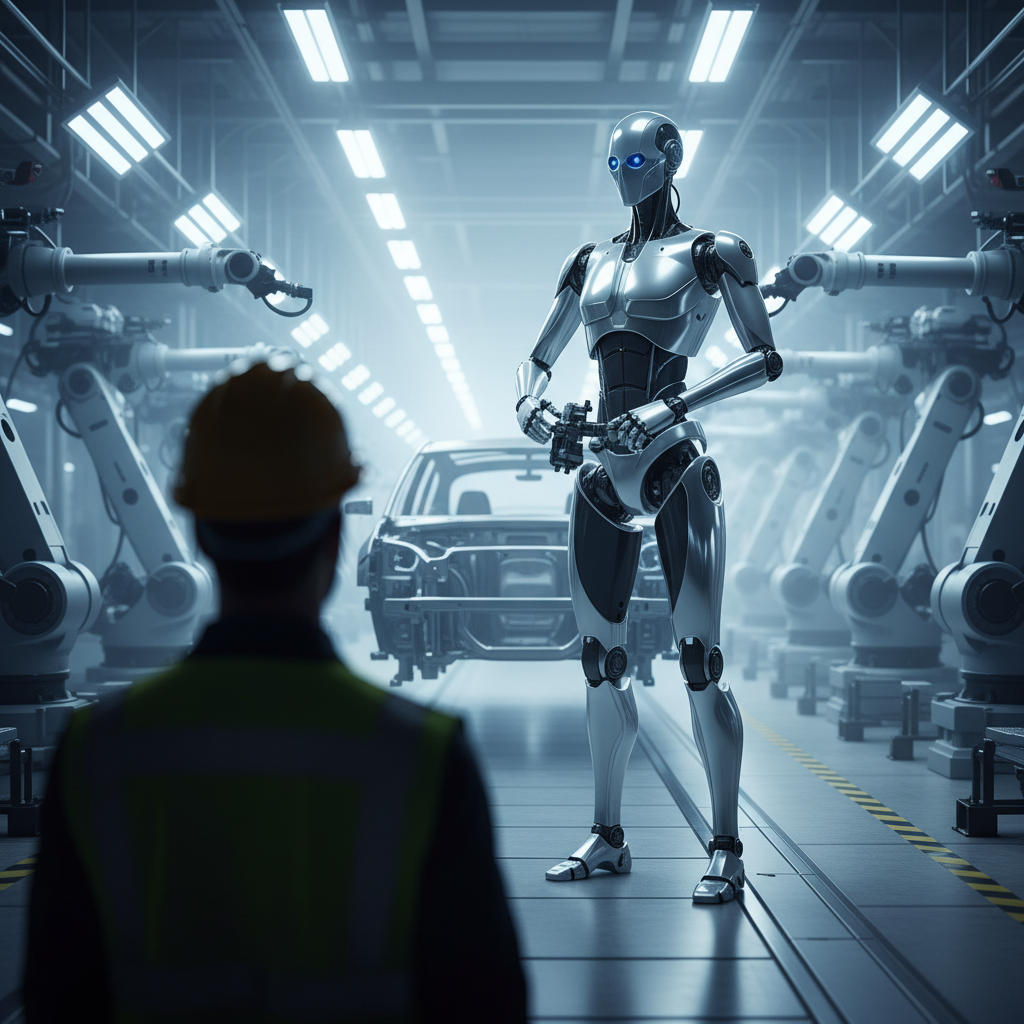
Humanoid robots in automotive plants are no longer science fiction. Hyundai announced that its Metaplant America facility in Savannah, Georgia, will employ a fleet of Atlas robots. The Korea JoongAng Daily reported that union leaders have openly criticized the investor excitement surrounding the announcement, viewing it as premature enthusiasm for what they see as an "employment shock" waiting to happen.
The scale of Hyundai's investment suggests this is a long-term strategy. The company has committed roughly $12.6 billion to its Georgia facilities, which includes advanced robotics manufacturing capabilities. The plant aims to produce thousands of robots per year, and Hyundai has connected those figures directly to the Atlas humanoid program. Boston Dynamics indicated that Hyundai would eventually deploy substantial numbers of robots across its factories, though the exact quantity allocated to Georgia remains dynamic.
Initial production of Atlas units will originate from Boston Dynamics's headquarters, with capacity reserved for Hyundai's Robotics Metaplant Application Center and Google DeepMind. The partnership with Google DeepMind is notable—they have developed Gemini AI models specifically for robotics applications, which will be critical for the complex task management these humanoids need to perform.
The Labor Economics Question
According to Korea JoongAng Daily, the union has laid out a straightforward cost comparison: matching one humanoid robot's 24-hour operation would require three human workers across three shifts. At an average salary of roughly 100 million won ($68,000), that equates to 300 million won in annual labor costs per position. In comparison, one Atlas robot working continuously would incur primarily maintenance and energy costs.
However, the precise operational costs of an Atlas unit at scale remain unverified. Battery life presents an operational challenge. If an Atlas unit runs for approximately four hours on battery power, the logistics of recharging become critical. While robots may eventually be able to swap batteries quickly, the cycle of operation versus charging time creates practical gaps in the "work without interruption" argument.
Technical Realities on the Factory Floor
Standing roughly 6 feet tall, the electric Atlas is designed for parts sequencing work initially. Hyundai plans to transition the robots to component assembly, with tasks involving repetitive motions and complex operations on the roadmap. Whether this timeline holds depends on how the first deployment performs.
The technical challenges go beyond battery life. Manufacturing environments demand contextual awareness and adaptability that current AI systems are still refining. The ability to distinguish between a misaligned part that needs adjustment versus a defective one is crucial. Handling unexpected variations in material delivery or upstream production changes are daily realities that human workers navigate instinctively.
Google DeepMind's involvement suggests Hyundai is prioritizing AI integration, but advanced models require extensive training on specific factory workflows. The gap between a robot that impresses in a controlled demo and one that reliably handles production line complexity remains a significant hurdle.
What Happens Next
Hyundai's phased approach—starting with parts sequencing before moving to assembly—demonstrates caution. The company has indicated it may scale Atlas adoption based on initial performance, effectively hedging against technical or operational problems. Union demands for approval before deployment add another layer of negotiation that could reshape the rollout.
The broader question for manufacturing is how quickly the technology matures beyond its current limitations and whether companies can navigate the labor relations challenges that come with large-scale automation. Hyundai's Georgia facility will provide one of the first real-world tests of that balance.