 ⬇️
⬇️
Key Takeaways
- Healthcare organizations are shifting toward managed services to stabilize operations, reduce risk, and free internal teams for clinical priorities.
- The most effective strategies balance security, interoperability, and patient experience—not just cost.
- Successful buyers focus on maturity, not just tools: governance, integration, and vendor collaboration often determine outcomes.
Definition and Overview
Healthcare IT used to revolve around a fairly predictable cycle: maintain EHR uptime, keep the network stable, and respond to tickets. That rhythm has vanished. Clinical systems are now deeply interconnected, patient engagement tools proliferate, and cyber threats seem to evolve faster than budget cycles. So it’s no surprise that managed services have become less of an optional convenience and more of a stabilizing force.
Managed services in healthcare typically refer to third-party support across infrastructure, cloud, voice, security, and clinical workflows. But the label alone doesn’t tell you much. What buyers really want is control without having to build everything themselves. The nuance lies in deciding which functions to delegate and how to structure the relationship so it actually reduces complexity rather than adding another vendor to wrangle.
And every organization approaches this differently. Some start small—managed network monitoring, for instance—while others take a broader route, such as unified cloud operations or full managed security. Companies like ITD Cloud often come into the picture when a health system needs reliable managed services tied closely to connectivity or voice, especially in distributed or hybrid-care environments.
Key Components or Features
One thing that stands out is how uneven the starting points can be. A regional clinic network might struggle with bandwidth constraints and endpoint sprawl, while a large hospital system fights integration debt across dozens of systems. But across those differences, five managed services strategies consistently show up:
1. Strengthening the Foundation: Managed Network and Connectivity
Everything depends on the network—EHR, telehealth, imaging transfers, even routine scheduling. Buyers increasingly seek partners who can manage bandwidth quality, redundancy planning, remote site connectivity, and real-time visibility. Without that, other modernization efforts stall. Here’s the thing: most internal teams know the issues but lack the time to tune and monitor 24/7. Managed connectivity has become the quiet hero that keeps the lights on.
2. Security as an Operational Discipline
Healthcare security is rarely about “big bang” fixes. Instead, it’s dozens of repetitive, unglamorous tasks—patching, log review, access management—that drain internal bandwidth. Many organizations now look for managed detection, vulnerability scanning, endpoint control, and sometimes full SOC services. A small tangent: not everyone needs the most sophisticated security stack. Sometimes what they need is consistency, and a partner who won’t forget the basics.
3. Cloud and Application Management
Most providers have some cloud footprint but run into friction with cost control, performance tuning, or legacy integration. Managed cloud operations give teams breathing room while preserving flexibility. The appeal is less about “cloud for cloud’s sake” and more about predictable performance, especially for apps that clinicians depend on. A lot of this comes down to governance. Who decides what gets migrated? Who tracks usage drift? Managed services bring guardrails where internal policies may be loose.
4. Unified Communications and Voice Reliability
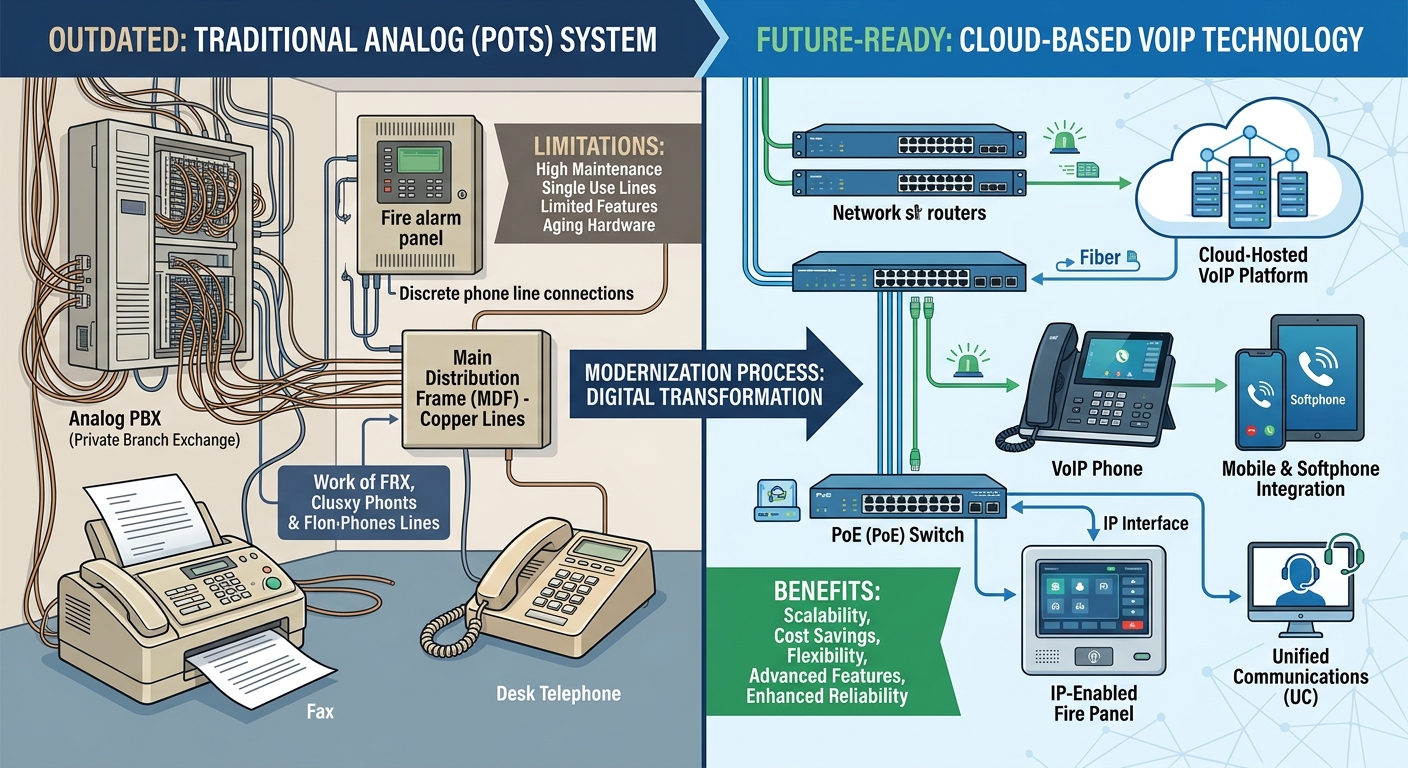
Voice is still a clinical tool. Even as collaboration apps grow, medical staff rely on dependable calling, paging, and on-call routing. Managed UCaaS or VoIP services help eliminate the patchwork of aging PBX systems still common in smaller facilities. It’s not glamorous but losing voice during a clinical incident isn’t an option. This is one area where buyers tend to act only after a scare—perhaps you’ve seen this too?
5. Workflow Support and End-User Management
A managed service that handles endpoint support, device lifecycle, and clinician help desk creates surprising leverage. Providers talk about burnout all the time; IT teams feel it too. Offloading basic but high-volume tasks gives internal staff time to focus on higher-impact improvements, such as care coordination workflows or data initiatives. This category varies widely in scope, but when done well, it acts like an extension of the internal team rather than a bolt-on.
Benefits and Use Cases
Healthcare organizations often pursue managed services to stabilize performance and mitigate risk, but the benefits are broader:
- Greater focus on clinical initiatives instead of infrastructure firefighting
- More resilient operations during staffing shortages or rapid growth
- Improved security posture, especially in smaller or distributed environments
- Better patient experience, indirectly, through fewer IT hiccups
- Predictable budgeting—a relief for teams dealing with volatile capital cycles
Use cases typically fall into two buckets. First, tactical relief: replacing overloaded internal functions with round-the-clock coverage. Second, strategic modernization: cloud transitions, network overhauls, or digital front-door initiatives where external expertise accelerates progress.
What’s interesting is how often both appear together. A health system might need to stabilize its WAN while simultaneously expanding telehealth. Or upgrade its voice infrastructure while ramping up security monitoring. This blend is becoming the norm.
Selection Criteria or Considerations
Buyers evaluating managed services partners usually focus on a handful of practical questions:
- Does the provider understand healthcare’s regulatory and uptime constraints?
- Do they support hybrid environments—both modern and older systems?
- How transparent is their monitoring, reporting, and escalation process?
- Can they scale across multiple sites without adding operational drag?
- Do they integrate well with other vendors already in place?
A less obvious but important factor: cultural compatibility. Healthcare operations involve many stakeholders—clinical leadership, compliance teams, finance, external auditors. A managed services partner must be comfortable navigating a complex, occasionally political environment. Flexibility matters. So does a willingness to co-own outcomes, not just SLAs.
And buyers increasingly expect consultative guidance, not just execution. They want to know what’s around the corner, especially with emerging digital care models, rising cyber threats, and bandwidth demands climbing in ways that were hard to imagine a decade ago.
Future Outlook
Looking ahead, managed services in healthcare will likely lean further into automation, predictive analytics, and more tightly integrated voice and data services. AI-driven monitoring and remediation are already influencing cost structures. At the same time, care delivery is becoming more distributed—home health, virtual clinics, remote diagnostics—which increases the need for reliable connectivity and managed endpoints.
In short, the category is shifting from a reactive support model to a proactive orchestration layer across infrastructure, security, and communications. And for many healthcare organizations, that shift can’t come soon enough.