 ⬇️
⬇️
U.S. Charges Multiple Defendants in Large-Scale GPU Smuggling Scheme Tied to China
Key Takeaways
- Federal prosecutors detailed a smuggling network accused of moving at least $160 million in export‑controlled Nvidia H100 and H200 GPUs to China, Hong Kong, and other restricted destinations.
- Three individuals and one U.S. company face charges or have pleaded guilty involving falsified paperwork, relabeling hardware, and misrepresenting end‑users to evade export controls.
- Authorities say more than $50 million in PRC-originating wire transfers helped fund the operation, which allegedly involved U.S., Hong Kong, and China-based participants.
The Justice Department’s latest export‑control case reads like a compliance officer’s worst-case scenario: high‑end AI chips, falsified labels, PRC wiring routes, and a logistics chain built specifically to evade U.S. restrictions. It is also an uncomfortable reminder that the global demand for advanced AI hardware is pressuring supply chains in ways many enterprises haven’t fully grappled with.
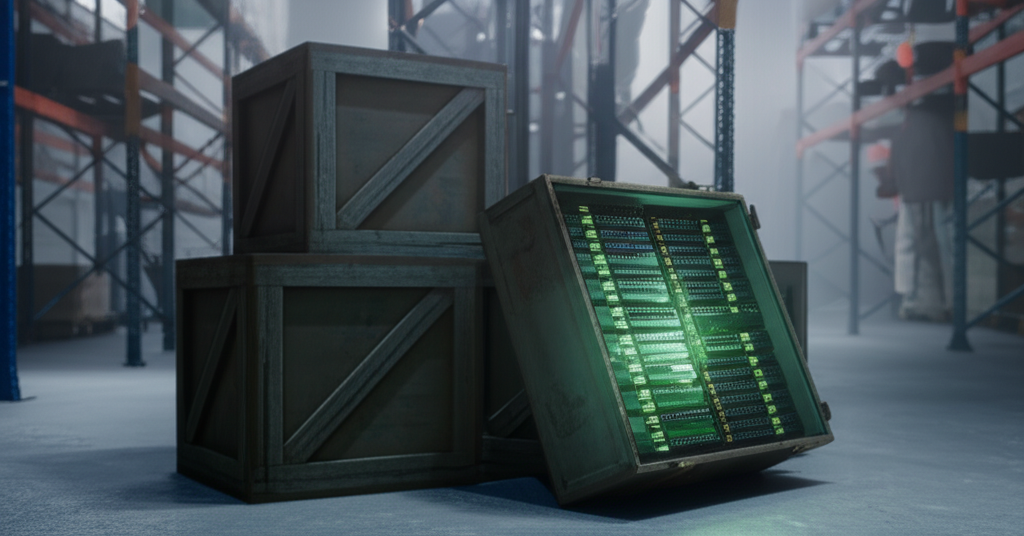
Prosecutors in the Southern District of Texas announced that Alan Hao Hsu, also known as Haochun Hsu, and his company Hao Global LLC have already pleaded guilty to smuggling and unlawful export activities. Hsu, a Missouri City resident, admitted to moving or attempting to move at least $160 million in Nvidia H100 and H200 Tensor Core GPUs over a seven-month period ending in early 2024. These are the same chips powering modern generative AI models and large‑scale scientific computing pipelines. Because of their strategic value, their export to the People’s Republic of China is strictly prohibited under current U.S. controls.
The case doesn’t hinge on a single slip‑up. According to unsealed court documents, Hsu and others allegedly falsified shipping paperwork, misclassified goods, hid the true recipients, and built a pipeline funded by more than $50 million in PRC‑originated wire transfers. The GPUs eventually made their way to China, Hong Kong, and other restricted locations. It is a small detail, but the fact that the financial flows originated in the PRC suggests a highly integrated—and intentional—network rather than a loose collection of opportunistic resellers.
Two other defendants, both PRC natives working from North American bases, now face charges for related conduct. Prosecutors say Fanyue “Tom” Gong, who resides in Brooklyn, and Benlin Yuan, a Canadian citizen living in Mississauga, each conspired independently with employees of a Hong Kong logistics firm and a China‑based AI technology company. Their alleged role involved securing GPUs through intermediaries, disguising shipments, and maneuvering around license requirements.
Gong’s charges outline a scheme involving straw purchasers, a patchwork of U.S. warehouses, and a surprisingly manual step: physically removing Nvidia labels and replacing them with branding from a fake company called “SANDKYAN.” That is where it gets tricky. Relabeling hardware may seem amateurish, but in practice, it can be enough to slip past initial classification checks if the supporting paperwork aligns with the story. Prosecutors say Gong’s associates also misclassified the GPUs as “generic computer parts,” a tactic export‑control teams at tech firms have long warned about but often struggle to monitor at scale.
Yuan’s charges focus on a different piece of the puzzle: coordinating inspectors tied to the Hong Kong logistics chain and encouraging them not to disclose that merchandise was bound for the PRC. Prosecutors also allege he helped craft narratives intended to mislead U.S. authorities after earlier shipments were detained. And yet, based on the complaint, these weren’t sophisticated geopolitical maneuvers—they were operational workarounds built to keep hardware flowing despite mounting regulatory pressure.
For enterprises watching U.S.-China tech tensions, this investigation puts a spotlight on something subtle but important. The DOJ isn’t just pursuing high-profile corporate violations; it is targeting the mid‑tier networks—small LLCs, regional warehouse operators, cross‑border logistics intermediaries—that create real operational risk for anyone shipping sensitive computing hardware.
Justice Department officials framed the case around protecting the U.S. innovation base, pointing to the “hard work and sacrifice” of engineers who built these chips. Federal agencies have repeated versions of that argument for years, but it lands differently when tied to specific seized shipments and individual defendants. The message aimed at channel partners and distributors is clear: if you are touching high‑performance GPUs, you are part of the national‑security perimeter whether you like it or not.
Export‑control compliance officers might find themselves rereading certain parts of the complaint—particularly the sections about straw purchasers and relabeling. These tactics aren’t hypothetical; they show up repeatedly in enforcement actions. A recent overview from the Bureau of Industry and Security notes that misdeclaring end‑users remains one of the top violations across multiple categories of restricted goods. As the value of high‑performance chips climbs, the incentives to bypass controls only grow.
Still, there is a practical layer here. Many B2B technology firms now operate with dense, multi‑country supply chains where components bounce across jurisdictions before final assembly or deployment. How confident are those companies that intermediaries won’t try to re‑route high‑value assets? It is a question compliance teams may need to ask more directly, not least because enforcement cases now regularly span several continents, multiple business entities, and a mix of legitimate and shell companies.
Hsu faces up to 10 years in federal prison when sentenced in February. Hao Global LLC could be fined up to twice the gross gain from the offense. Yuan faces up to 20 years if convicted, while Gong faces up to 10 years. Both remain in custody.
The investigation itself crossed several federal agencies, including the Department of Commerce’s Office of Export Enforcement, Homeland Security Investigations, and FBI field offices in New York and Washington, D.C. That kind of multi‑agency coordination sometimes feels bureaucratic, but here it seems central to piecing together a network spanning the U.S., Canada, Hong Kong, and mainland China.
For businesses working near high‑end compute, the message is straightforward even if the operational reality isn’t: enforcement isn’t slowing down, and the definition of “sensitive hardware” keeps expanding. The real challenge may be ensuring that every link in the chain—from warehouse handlers to overseas logistics partners—understands the stakes as clearly as the DOJ has laid them out here.