 ⬇️
⬇️
Key Takeaways
- Verse raised $54 million to expand Dispatch Intelligence and accelerate power access for AI facilities.
- The platform aims to help data centers bypass long grid interconnection queues through on-site batteries and flexible load orchestration.
- Integration with NVIDIA's DSX AI Factory and a partnership with Calibrant Energy position Verse to support rapid AI infrastructure growth.
Verse's latest funding round lands at a moment when the AI ecosystem is bumping into a new constraint that is not compute or capital, but power. The company closed an oversubscribed $54 million Series B, led by Bessemer Venture Partners with investors such as GV, NVIDIA, and Norrsken VC participating. That fresh capital anchors a strategy focused on making energy access faster for AI data centers, particularly those stuck in multi-year interconnection delays.
The central feature of this announcement is Dispatch Intelligence, a product designed to help developers present a more flexible load profile to utilities. Many data centers are waiting five to seven years for grid upgrades. Verse addresses this friction through orchestrated on-site storage, shifting some of the power burden to local batteries during stressed grid periods.
AI compute requirements are expanding at a rate that electric infrastructure was never designed to match. Analysts at the Uptime Institute have pointed out that power availability has become one of the most frequently cited risks in new data center projects. Meanwhile, research from the International Energy Agency shows global data centers and data transmission networks already account for 460 to 650 TWh annually, with AI acting as a key driver for future consumption.
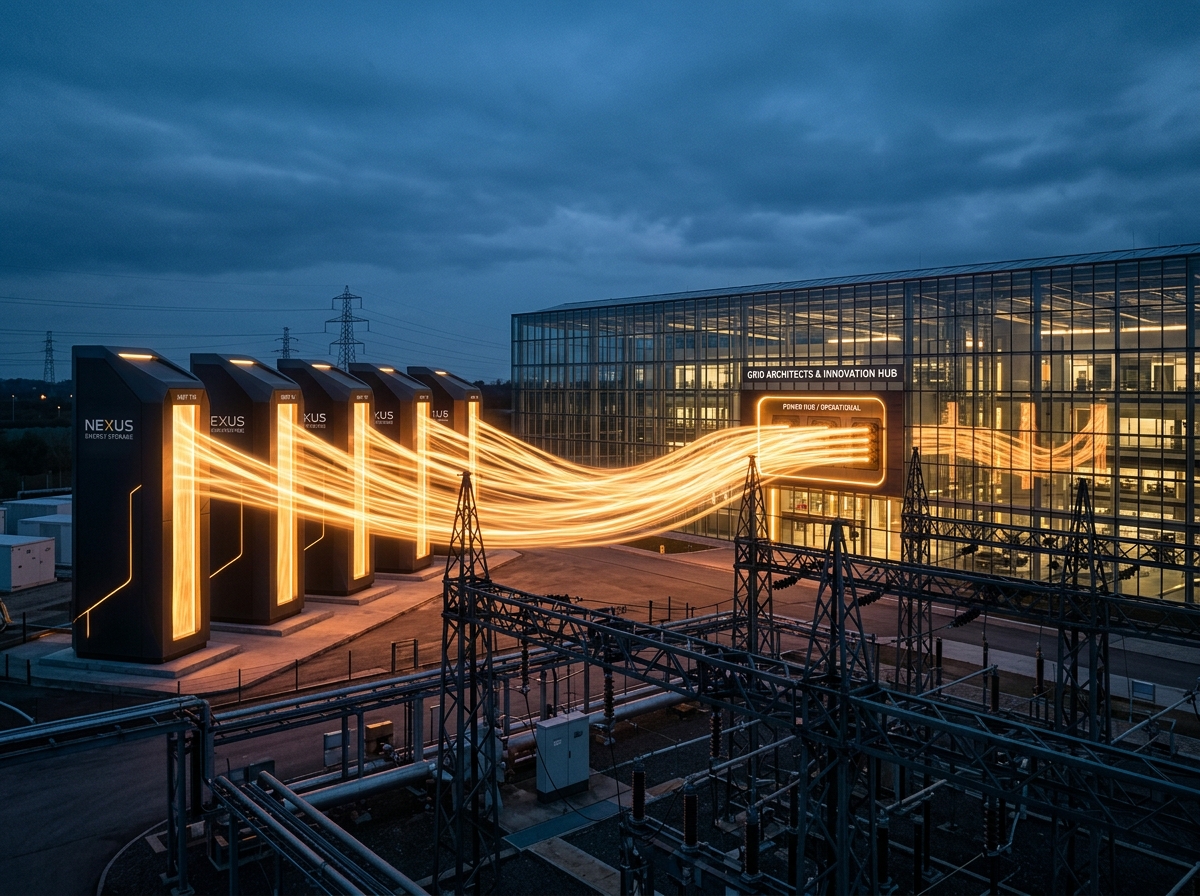
Dispatch Intelligence is designed to coordinate battery assets and other on-site resources so operators do not need to throttle workloads. Instead, the grid receives a flexible load profile while GPUs continue running at full performance. According to the company, this flexibility helps developers secure utility approvals faster by avoiding the rigid capacity requests that typically trigger lengthy grid studies.
The platform's capabilities are further supported by a partnership with Calibrant Energy, which specializes in on-site energy systems such as batteries, solar, and microgrids while offering zero-capex models for large power users. Paired with Verse's software, this model shifts some of the financial risk away from data center operators. Noting this shift, the CEO of Calibrant Energy emphasized that the limiting factor for AI scale is access to power, rather than the hardware itself.
Integration with NVIDIA's DSX AI Factory reference design embeds energy flexibility directly into facility planning. DSX is built to help developers simulate and operate gigascale AI data centers. By tying power delivery and battery orchestration into those design patterns, energy management becomes as central to AI facility infrastructure as liquid cooling or network fabrics.
Aria, Verse's foundational platform, continues to handle energy procurement, portfolio optimization, utility bill management, and forecasting for Fortune 500 enterprises. Large organizations routinely juggle thousands of utility accounts across multiple regions, and Aria consolidates those administrative workflows. Together, Aria and Dispatch Intelligence expand the company's capabilities from pure energy management into physical power access.
To address operator concerns regarding reliability, Verse isolates compute performance from grid interactions. On-site batteries take on the entire burden of load modulation. The company notes that long-term cost stability improves when battery dispatch reduces exposure to peak grid pricing, a dynamic that analysts at BloombergNEF have noted in broader studies on energy storage economics.
This funding arrives as data center developers race to match the pace of AI investment. Research from IEEE Spectrum has highlighted the challenge of scaling electrical infrastructure quickly enough to support next-generation computing clusters, illustrating why investors see opportunity in platforms that blend operational software with physical energy assets.
Verse expects to onboard more than 100 sites over the next year and expand the total volume of on-site battery capacity under its management. This growth trajectory suggests Dispatch Intelligence can be adopted broadly across the sector, serving hyperscale developers alongside colocation providers and enterprises building independent AI clusters.
Investors at Bessemer Venture Partners noted that the platform delivers technology that AI infrastructure companies increasingly require to navigate a power-constrained environment. For much of the past decade, efficiency metrics like Power Usage Effectiveness (PUE) primarily shaped data center strategy. The industry focus is now expanding to prioritize access, timing, and the ability to bring new capacity online without waiting for traditional electric grid upgrades.
There is growing market interest in hybrid models that combine grid supply with modular, on-site energy resources. As immediate pressure for compute capacity intensifies, Verse addresses the dual challenges of AI expansion and energy infrastructure strain by directly orchestrating flexible power access for future data centers.