 ⬇️
⬇️
Key Takeaways
- WiseTech Global entered a new partnership with a liner operator to integrate data from tracking devices across roughly two million containers.
- The move reflects rising demand for end-to-end visibility and real-time telemetry in maritime logistics.
- IoT-enabled containers are becoming a foundation for digital scheduling, exception management, and carbon reporting.
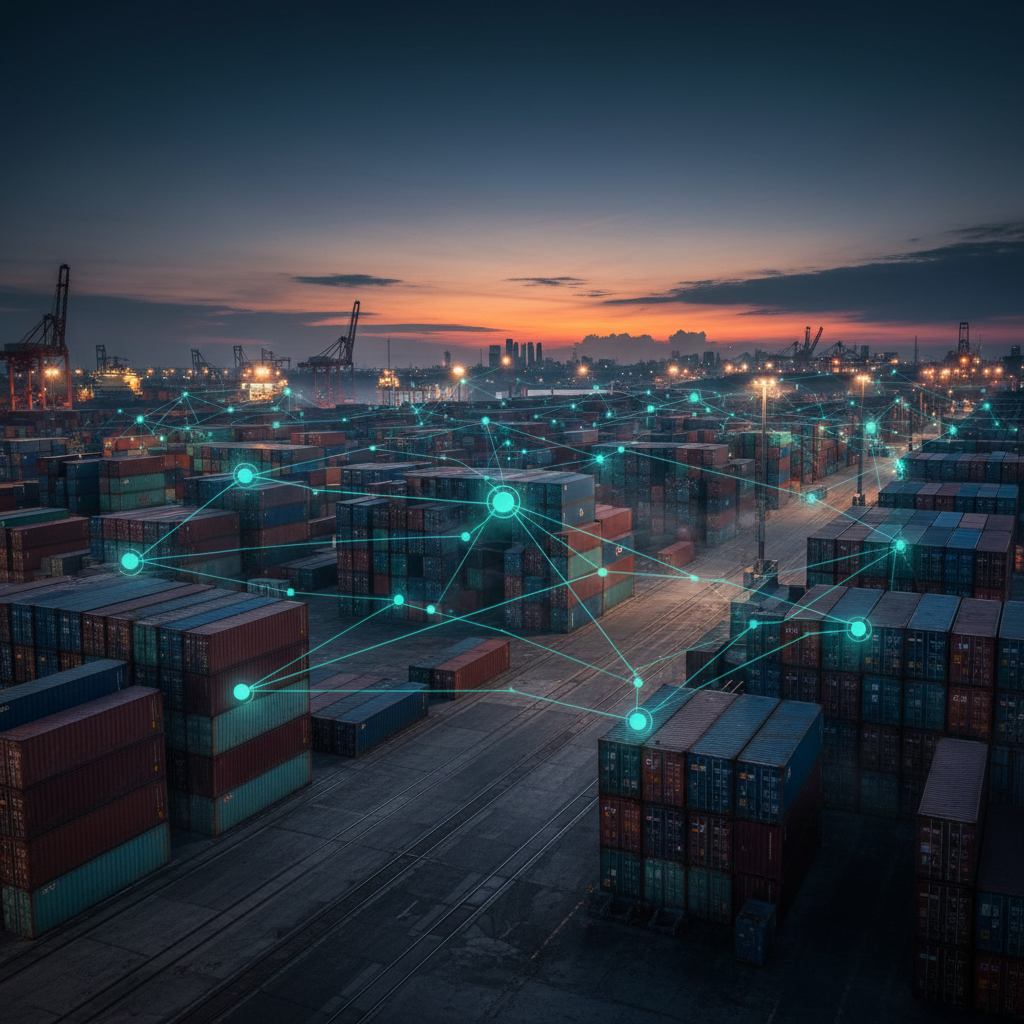
Supply chains have spent years talking about visibility, although the definition of that word keeps shifting. Sometimes it means sensor data. Other times it refers to workflow predictability. In the latest sign that the industry is still pushing toward more granular tracking, WiseTech Global announced a new partnership with a major liner operator to integrate data from about two million boxes equipped with IoT devices. The scale alone is notable, as few container fleets globally reach that volume of connected assets.
The company did not disclose every implementation detail, which is common for early-stage rollouts. Still, the direction is clear. Carriers are starting to treat IoT as a baseline capability rather than an add-on. Some might argue this shift was overdue, given the long-standing frustration around the "black box" nature of ocean transit. However, hardware costs, battery reliability, and data integration barriers have previously slowed adoption.
Here is the thing: the container itself is turning into a data asset. Temperature, shock, dwell time, and location are only the starting points. When tied into a system like CargoWise, this data can help automate handoffs between trucking, warehousing, and customs workflows. WiseTech has been steadily expanding its ecosystem to support that idea. A large infusion of IoT data fits naturally into that broader strategy, although the company emphasized the carrier partnership as the core event rather than a purely platform-centric play.
Not every stakeholder agrees on which data points matter most. Some manufacturers prioritize cycle time. Retailers, by contrast, want early warnings on delays so they can update digital shelf availability. Even ports see value in container-level data, since it can support yard optimization. The partnership illustrates how one deployment ends up serving multiple use cases, even if that was not the original intent.
One small tangent worth noting: battery-powered IoT devices on containers have quietly improved over the past few years. Earlier generations often struggled with connectivity around ports where signal congestion is common. Newer hardware tends to support multi-band networks and more efficient sensors. Those incremental gains make large fleet deployments more realistic than they were even three years ago.
The WiseTech announcement also lands inside a broader market trend. Several carriers have been piloting smart containers in limited volumes. Hapag-Lloyd, for example, has discussed its fleet-wide plans in past public briefings. Other carriers have experimented with reefer monitoring and reefer-to-dry container IoT convergence. The industry typically moves in cycles, so once a few players commit at scale, others start to follow. Whether this partnership triggers that response is still unclear, but the timing suggests it could.
Why does this matter for B2B buyers? Many shippers rely on fragmented data streams from forwarding partners, terminal operators, or internal systems. A single integrated source of container telemetry could reduce manual tracking workloads. Of course, data volume introduces new complexities. Organizations will need to decide how much of that information is operationally relevant. Do you really need a motion event when a box shifts slightly on a vessel? Sometimes yes, sometimes no.
There is also the regulatory angle. Environmental reporting requirements are tightening across multiple regions. Container-level visibility does not solve emissions calculations on its own, but it helps. Dwell time, route deviations, and dwell reduction in congested corridors can all influence carbon output. Several logistics technology vendors have been adding emissions modeling tools, and IoT data may be one of the missing ingredients for calibration. It is a small detail at first glance, yet it could be influential long term.
Another thread in this story is supply chain risk management. Over the past few years, disruptions ranging from port strikes to vessel incidents have highlighted the cost of blind spots. The ability to triangulate container locations during irregular operations becomes more valuable in those moments. WiseTech framed the partnership around operational efficiency, but risk-oriented teams may see equal value.
The partnership also reflects how software providers are repositioning themselves. Instead of being purely workflow platforms, they are becoming orchestration layers that merge physical data with digital processes. Some might call that a natural evolution. Others might ask whether the industry is ready to consume that volume of live telemetry. That question will unfold over the next few years.
Although not every detail of the deployment is public, the scale of two million IoT-enabled containers is hard to ignore. It signals a shift toward normalized tracking at the hardware layer. For an industry that long treated containers as passive steel assets, this is a meaningful step. If the rollout proceeds as planned, it will likely accelerate expectations for visibility across the rest of the maritime ecosystem.
And maybe that is the real takeaway. Global supply chains rarely change overnight. They shift in increments. Yet sometimes one large move, such as enabling a vast container fleet with IoT, resets the baseline for everyone else.