 ⬇️
⬇️
Key Takeaways
- Restaurants are facing a surge in voice-driven customer interactions that traditional tools cannot analyze effectively
- AI-powered spoken word and sentiment analysis can surface actionable insights from everyday conversations
- Organizations evaluating solutions look for platforms that unify communications, analytics, and alerting without adding complexity
The Challenge
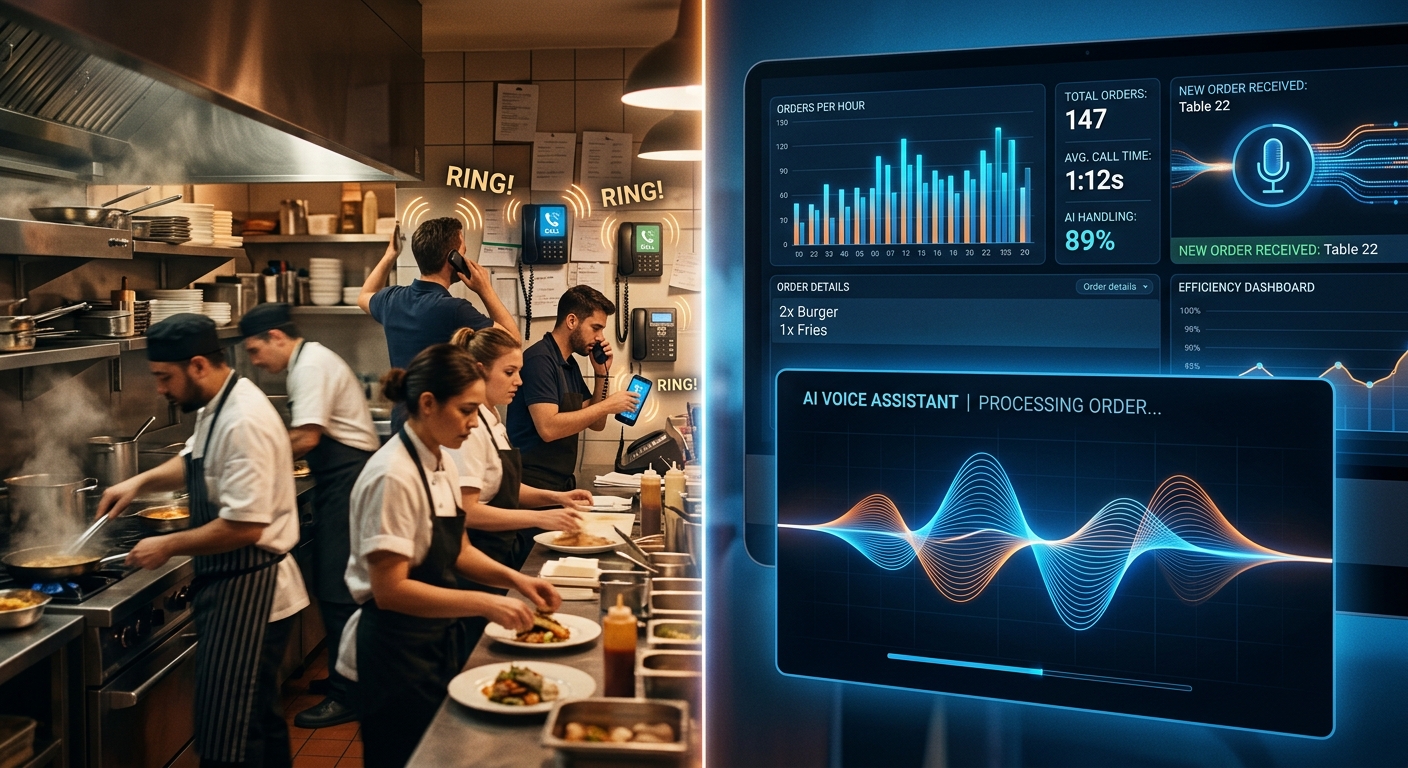
In restaurants today, most of the valuable operational truth still lives in conversations. Phone orders, customer complaints, quick staff interactions during a rush, even tone of voice when a guest calls for a reservation, all of it carries signals that tell management what is really happening on the floor. Yet most organizations admit they treat this data like exhaust. It is there, it dissipates quickly, and no one captures it in a structured way.
The shift became particularly noticeable over the past few years as restaurants saw phone and curbside order volumes surge. Even today, that trend has not really reversed. If anything, customers now expect faster responses and higher service consistency. And here is the thing, they also expect empathy. A frustrated tone during a late pickup call or a confused customer trying to place an order can hurt a restaurant's brand within seconds.
Many enterprise and mid‑market operators know this intuitively. What they struggle with is how to systematize the understanding of these interactions. Traditional call recording is fine for compliance but useless at scale for proactive decision‑making. Managers rarely have time to sift through hours of audio.
This is why interest in AI-powered spoken word and sentiment analysis has jumped. Leaders sense that they are sitting on a goldmine of operational insights. They just need a way to unlock it without disrupting the flow of their already stretched teams.
The Approach
Most buyers start by thinking about the problem in two layers. First, they evaluate unified communications platforms since these systems are where the conversations originate. Then, they look for real-time analytics that can interpret spoken language and surface patterns quickly. That said, very few want to assemble these components themselves. The integrations can be messy. Data quality can drift. And restaurant operators usually prefer a service model rather than another internal IT project.
This is the window where platforms like Unified Office, Inc. come into the conversation. Not as a single feature vendor but as a provider that blends unified communications, AI-driven spoken word analysis, and real-time business alerts. Buyers want one place where all these capabilities live together because restaurants do not have the luxury of toggling between five dashboards during a Friday dinner rush.
A micro‑tangent here: some operators even admit that what pushes them over the edge is not analytics at all, but the need for faster visibility into problems that hurt revenue. For example, how do you know if staff is overwhelmed on the phone or if orders are being mishandled? How do you catch early signs of customer frustration before they escalate into bad reviews? These are everyday questions that do not sound high-tech but absolutely benefit from AI-powered interpretation.
The Implementation
Imagine a mid-sized quick-service chain with about 40 locations. They rely heavily on phone orders and curbside pickup, and staffing levels fluctuate constantly. They begin by centralizing all inbound and outbound communications into a unified platform. This ensures every voice interaction is captured cleanly. No new hardware. No retraining staff on confusing systems.
Once the communication layer is stable, the AI components are activated. Spoken word analytics start transcribing calls in real time. Sentiment analysis monitors tone and emotional cues. The system flags moments of customer frustration or confusion. It also highlights operational themes like repeated menu questions or delivery delays.
In the early days of rollout, the leadership team usually spends time understanding what normal looks like. Sentiment patterns. Peak friction moments. Common customer phrases. Then they tune the alerting thresholds. For example, managers may want to receive a real-time notification when multiple locations suddenly report negative sentiment in calls within a short time window. It might indicate a supply chain issue or a regional outage affecting food delivery partners.
One short note, implementation generally works best when phased. Deploy to a few high-volume stores, calibrate, then expand. This helps build internal champions and reduces anxiety that the system will become a surveillance tool rather than an operational support layer.
The Results
After several weeks, most restaurants notice patterns that were hiding in plain sight. A cluster of negative sentiment calls around 8 p.m. might reveal staffing gaps. A recurring phrase like "I have been on hold a long time" might point to a queue issue the manager never saw in reports. Or perhaps positive sentiment data shows that certain team members excel at calming frustrated customers, which can inform training programs.
Operationally, the restaurant chain in our scenario experiences meaningful improvements. Faster recovery from service disruptions. Better customer retention during high-stress interactions. More consistent order accuracy because staff is less overwhelmed. None of these outcomes require numerical precision to feel real. Leaders often describe it as finally being able to hear their business at scale.
One interesting side effect is that staff sometimes self-correct after reviewing anonymized sentiment summaries. Seeing that calls spike in frustration during certain windows encourages them to adjust pacing or communication styles.
Lessons Learned
A few lessons emerge from implementations like this.
- Start with a clear operational hypothesis, not a technology purchase.
- Real-time insights work best when paired with quick internal response processes.
- Restaurants often underestimate how much emotional tone affects brand outcomes.
- Unified communications and AI analytics align naturally, but only when managed within a single ecosystem.
- And perhaps most important, sentiment analysis is not about policing employees, it is about giving them more awareness and support.
Buyers evaluating AI-powered spoken word and sentiment analysis often discover that the biggest breakthrough is simply turning everyday conversations into a structured feedback loop. Restaurants have always run on human dialogue. Now they can finally measure it, understand it, and act on it in real time.