 ⬇️
⬇️
Key Takeaways
- Chevron will supply dedicated natural gas power for Microsoft’s planned 2.67 GW datacenter campus in Pecos, Texas.
- The companies structured a 20-year power purchase agreement tied to Project Kilby, positioning it among the largest behind-the-meter energy deployments for U.S. AI facilities.
- The agreement highlights how energy security is becoming a central design factor for hyperscale AI infrastructure.
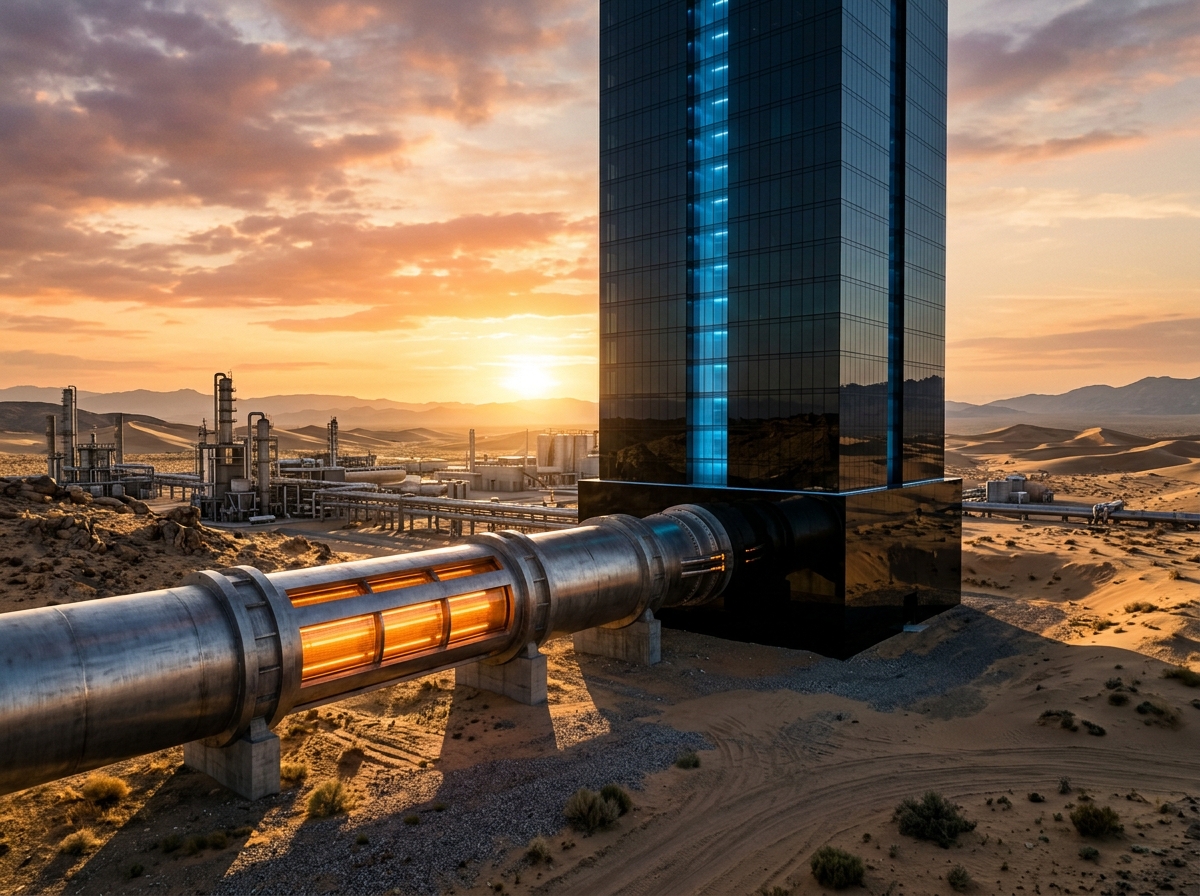
Chevron and Microsoft have formalized a large-scale energy and infrastructure collaboration that reflects how quickly artificial intelligence workloads are reshaping datacenter planning. Their new agreement builds around Project Kilby in West Texas, where Chevron intends to develop a 2.67 GW natural-gas-fired power facility alongside a co-located AI datacenter complex. The power arrangement, structured as a 20-year power purchase agreement, will directly support Microsoft’s expansion effort in Pecos, Texas.
According to Bloomberg, AI-related power procurement has become a defining constraint for hyperscale growth throughout the United States, particularly as operators search for reliability in regions with historically variable grid capacity. The Pecos plan illustrates how Microsoft aims to navigate that constraint by pairing datacenters with dedicated energy sources that can be built and activated on predictable timelines.
Instead of leaning heavily on grid interconnection from the outset, Microsoft will rely on onsite natural gas generation built to keep the facility operating at full load even before any grid tie-in occurs. The company framed this design choice as one that allows it to bring capacity online at the pace customers require.
Chevron is developing the project with investment firm Engine No. 1, seeing the effort as a strategic path into the growing market for AI-oriented power. The head of Chevron New Energies described the agreement as evidence of how the company can deliver power to AI customers with certainty and speed. Multiple analysts, including those cited by Reuters, have noted that natural gas remains a common bridge solution for large computing hubs while operators continue exploring lower-carbon and renewable alternatives.
Industry researchers are tracking the overall rise in AI-related power consumption. Omdia forecasted that global hyperscale datacenter capacity will more than double from 10.1 GW in 2023 to 25 GW by 2028, driven primarily by AI. Meanwhile, the International Energy Agency (IEA) has stated that AI datacenter demand could add roughly 160 TWh to global electricity use by 2030, a figure roughly equivalent to the electricity consumption of a medium-sized country.
Natural gas generation, when used to replace older coal facilities, can reduce average carbon intensity per kWh by roughly 50%, based on IEA assessments. Chevron and Microsoft have also referenced well-known standards such as ISO 50001 for energy management and the Greenhouse Gas Protocol for corporate emissions accounting, both of which inform how energy-intensive projects track performance over time.
Building a facility with its own dedicated generation allows datacenter operators to bypass multi-year queues that exist for grid interconnection. The U.S. market has seen grid projects wait several years for approval and build-out. With AI adoption accelerating, firms like Microsoft tend to select behind-the-meter strategies that keep deployment velocity high.
The Electric Power Research Institute found that U.S. datacenter energy use could reach 8% of total electricity demand by 2030 under high-AI scenarios. That projection creates pressure to identify power sources that are both scalable and relatively efficient. Natural gas plants offer the rapid ramp capability and availability that large AI clusters need, though operators often layer in renewable sources or grid interconnects as infrastructure matures.
In a report linked through sector analysis earlier this year, the International Energy Agency pointed out that hybrid energy and digital facilities often drive secondary investment in transmission lines, pipeline logistics, and local services.
Amazon Web Services, Google, and Equinix are each expanding their hyperscale footprints to support AI workloads. However, relatively few projects involve dedicated multi-gigawatt natural gas generation built adjacent to a datacenter, making Project Kilby a notable marker in how the industry is evolving.
As Microsoft builds toward first power by 2028 and Chevron pursues phased development into the 2030s, the Pecos site signals a shift toward closer integration between computing infrastructure and the dedicated energy sources required to sustain it.