 ⬇️
⬇️
Key Takeaways
- SpaceX acquired xAI, creating the world’s most valuable private company
- Merger accelerates Musk’s plan to shift AI compute to space
- Cultural integration and regulatory hurdles pose near‑term challenges
SpaceX’s decision to acquire xAI, announced Monday, marks an unusually sweeping consolidation even by Elon Musk’s standards. The deal fuses two of his most resource‑intensive ventures into a single entity now valued well north of a trillion dollars—before any public offering is on the table. It is a high‑stakes bet that the future of advanced AI will not be built in terrestrial data centers, but in orbit.
The announcement represents “not just the next chapter, but the next book,” according to the company. While the phrasing is dramatic, it highlights a fundamental synergy: SpaceX requires AI to execute its long‑term space ambitions, and xAI needs massive compute and hardware control to scale. The merger formalizes an ecosystem of talent, technology, and infrastructure that had already become intertwined.
Market pressures are pushing all major AI firms to secure more compute, energy, and physical footprints. As the operator of the world’s largest satellite network, Musk possesses a unique advantage in physical infrastructure.
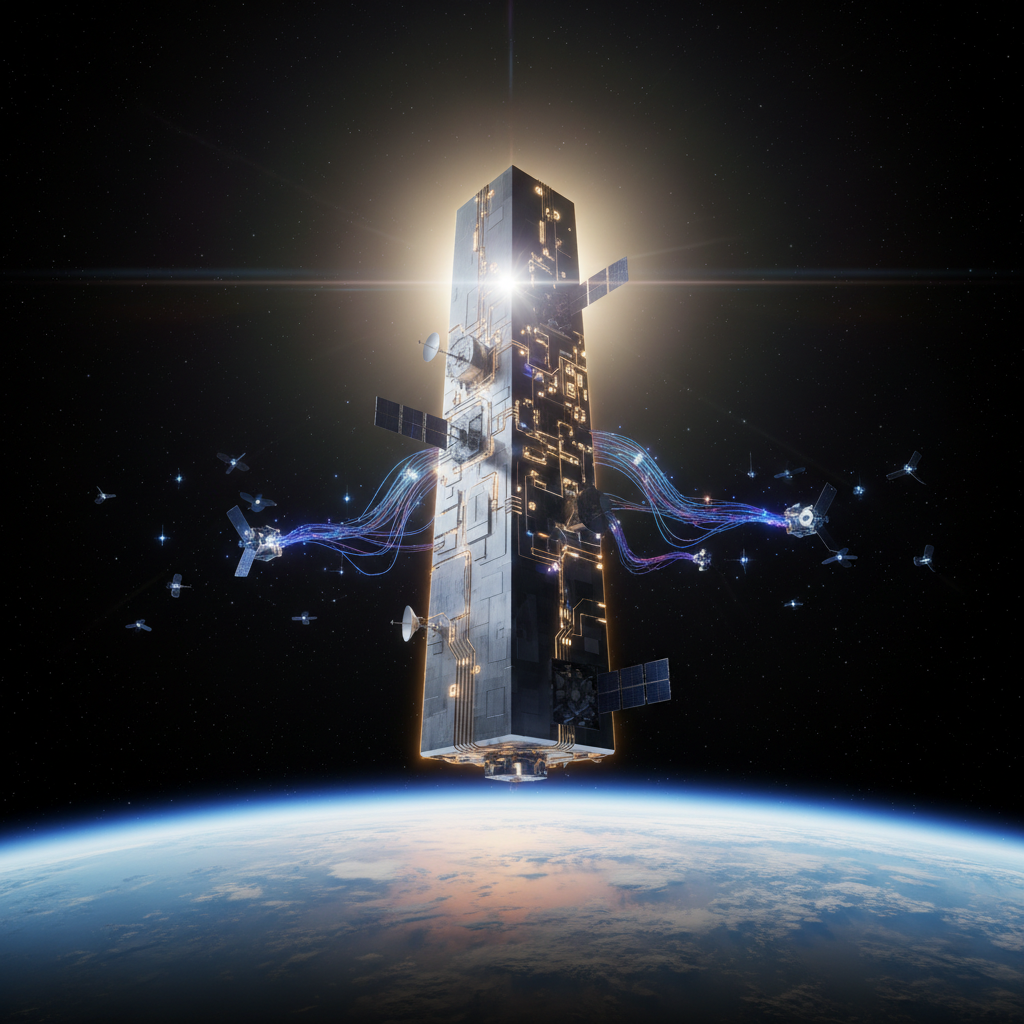
SpaceX’s FCC filing last week added contours to the strategy. The company is seeking permission to launch one million satellites—far beyond previous proposals—to create a solar‑powered, orbiting mesh of AI data centers. The filing frames this constellation as a solution to the “explosive growth” in AI‑driven data demands. Whether regulators approve a fleet of this magnitude remains a significant uncertainty.
The strategic logic relies on overcoming terrestrial constraints. Musk argues that today’s large models rely on power‑hungry, heat‑intensive compute that is increasingly difficult to sustain on Earth. “Current advances in AI are dependent on large terrestrial data centers,” he stated, noting that moving compute to space could become the lowest‑cost option within two to three years. This timeline is aggressive but aligns with the speed of AI infrastructure development over the past 18 months.
Investors are moving quickly. SpaceX was valued at $800 billion in its December 2025 secondary sale, while xAI reached a $230 billion valuation at its January round, according to PitchBook. The merged entity’s future IPO—previously estimated at around $1.5 trillion for SpaceX alone—could be unprecedented in scale. If the listing proceeds, Musk’s personal net worth, already the highest globally at $676 billion per Bloomberg’s tracker, would likely expand further.
However, the integration brings operational challenges, particularly regarding moderation and safety. Grok, the company’s chatbot and a central pillar of the xAI platform, has faced criticism for generating controversial content, including recent issues with image generation and earlier incidents involving safety guardrails. The company attributed these incidents to systems updates, but they raise persistent questions about governance and oversight that do not disappear under the SpaceX umbrella.
Cultural integration presents another hurdle. Several employees have worked across both companies, yet their internal cultures diverge significantly. The startup ethos of xAI contrasts with the disciplined, safety-critical engineering environment required at SpaceX. Balancing these approaches will be critical to maintaining product velocity without compromising reliability.
Engineering challenges are equally significant. Space-rated compute, orbital thermal management, and secure inter-satellite networking require complex solutions, especially when scaled across a million nodes. Space hardware schedules are notoriously rigid, adding pressure to the agile software development timelines typical of AI firms.
Conversely, AI cost curves continue to rise. Major capital allocations, such as Nvidia’s substantial investment into OpenAI last year, underscore the intensity of the resource race. As large language models and inference scaling drive compute requirements upward, the prospect of abundant solar energy in space becomes increasingly attractive, despite the speculative nature of the infrastructure today.
SpaceX’s long‑term goal of establishing a permanent human presence on Mars also drives this strategy. That objective requires autonomous systems surpassing current capabilities. Integrating xAI aligns with the goal of creating an AI stack capable of managing off‑world manufacturing, resource extraction, and settlement logistics.
The two companies had already been drifting together through shared personnel and aligned goals. Monday’s announcement merely formalizes a collaboration that was previously informal.
The timing signals urgency. AI demand is rising faster than terrestrial data center capacity, while regulatory scrutiny deepens for both AI safety and satellite constellations. Competitors, from cloud hyperscalers to national space agencies, are rapidly iterating on their own infrastructure plans.
The merger consolidates capital, talent, and strategy but intensifies the focus on Musk. His expanding influence across aerospace, AI, and social media is drawing increased attention from lawmakers and regulators. The new entity’s ability to maintain investor enthusiasm while navigating these pressures will be tested in the coming year.
For now, the acquisition sets the stage for one of the most ambitious experiments in modern tech: shifting the center of gravity for AI development off the planet. Whether that vision survives the realities of physics, policy, and public scrutiny remains to be seen.