 ⬇️
⬇️
Key Takeaways
- Equinix plans to build a $1 billion cloud computing data center in Saudi Arabia.
- The investment could expand local capacity for cloud services, artificial intelligence workloads, and data-intensive businesses.
- Saudi Arabia’s strong innovation inputs have yet to produce equally strong commercial outputs, making execution and customer adoption key tests.
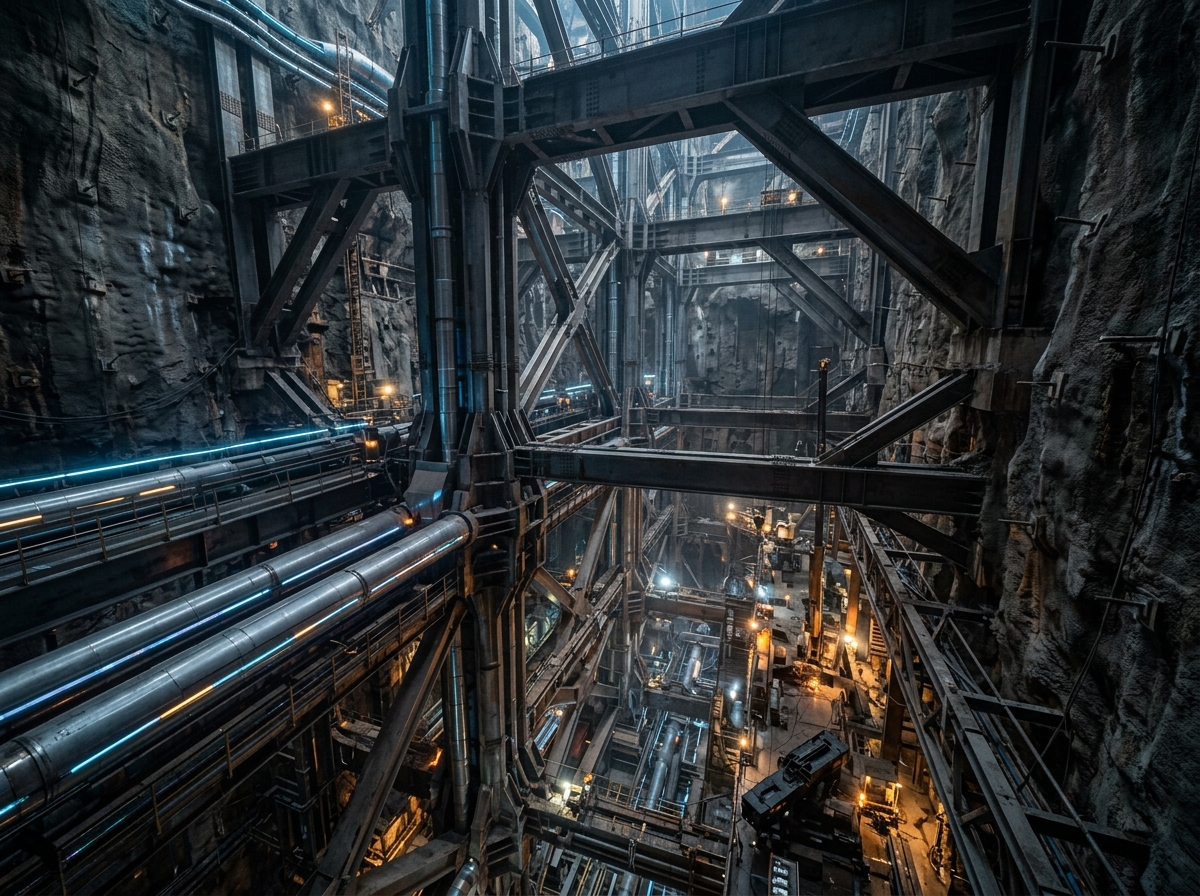
Equinix has announced plans to invest $1 billion in a cloud computing data center in Saudi Arabia, adding a major infrastructure commitment to the Kingdom’s push for a more diversified, digitally enabled economy.
The US-based data center provider’s planned facility would give enterprises another option for hosting cloud workloads inside Saudi Arabia. That matters for organizations considering latency, resilience, data governance, and access to international digital ecosystems. It could also support cloud providers and businesses deploying artificial intelligence, financial technology, digital-health, and other data-intensive services.
Precise details about the facility’s location, construction schedule, power capacity, and initial customers were not included in the available announcement. Those details will shape the project’s commercial impact. A $1 billion commitment is substantial, but data center value ultimately depends on usable capacity, connectivity, operating reliability, and the number of customers that build services around it.
Physical infrastructure is only part of the equation. Saudi Arabia has already built many of the conditions associated with innovation, yet converting those inputs into market-ready products remains a work in progress.
The World Intellectual Property Organization ranked Saudi Arabia 46th out of 139 economies in its Global Innovation Index 2025. The Kingdom placed 40th among high-income economies and fifth among 18 economies in Northern Africa and Western Asia. It also climbed from 66th in 2020 to 46th in 2025, making it one of the faster-moving innovation economies since the beginning of the decade.
The underlying scores reveal a more complicated picture. Saudi Arabia ranked 31st globally for innovation inputs but 61st for innovation outputs. Its strongest input pillars included Institutions at 26th, Market sophistication at 31st, Human capital and research at 35th, and Infrastructure at 36th. It ranked first globally for ICT use and market capitalization, while cluster development placed third.
That gap between inputs and outputs is where the Equinix project becomes especially relevant. More cloud and interconnection capacity can help companies test products, process data locally, and reach customers with lower latency. Yet infrastructure by itself does not create commercially successful services. Skills, procurement practices, venture financing, research partnerships, and customer demand still determine whether technical capacity turns into sustained business activity.
Could Equinix help narrow that gap? Potentially, particularly if the facility attracts cloud ecosystems, software companies, systems integrators, and enterprise customers rather than operating as an isolated computing site.
Saudi Arabia already has examples tied to its digital priorities, including digital-health company Sehhaty, fintech platform STC Bank, and technology-focused investment platform PIF. These illustrate where domestic demand could emerge. Healthcare workloads require dependable access to sensitive information, while financial platforms often need low-latency processing and robust operational controls. Government modernization and enterprise artificial intelligence could add further demand.
Power is another consideration. The International Energy Agency has highlighted the expanding relationship between artificial intelligence, data centers, and electricity demand. For Equinix, the eventual design will therefore be assessed not just by computing capacity, but also by energy sourcing, cooling, efficiency, and the ability to operate reliably in Saudi Arabia’s climate.
Connectivity will matter just as much. The International Telecommunication Union treats connectivity and digital infrastructure as central components of broader digital development. A facility with strong links to telecommunications networks, cloud regions, and international routes can deliver more business value than capacity without a rich interconnection ecosystem.
The timing also reflects a tougher global investment environment. Worldwide research and development growth slowed to 2.9% in 2024 from 4.4% in 2023, according to WIPO 2025. Large infrastructure commitments may consequently receive closer scrutiny over utilization, operating costs, and measurable economic returns.
For Saudi Vision 2030, Equinix’s announcement is another signal that international technology companies see long-term demand in the Kingdom. The bigger test comes next: whether the $1 billion facility helps Saudi businesses convert strong digital foundations into more products, services, and commercially sustainable innovation.