 ⬇️
⬇️
Key Takeaways
- A composite regional bank transitioned from nightly file transfers to REST APIs and ISO 20022 messages, thereby enabling payment exceptions to arrive at operations queues on the same business day.
- Cloud-native microservices let teams scale fraud screening, account aggregation, and payment initiation independently rather than expanding an entire application stack.
- An API gateway, OAuth 2.0, mutual TLS, and centralized observability gave security teams a consistent control plane across managed IT, cybersecurity, and customer-service integrations.
Problem to Solve
A payment exception arrives at 9:10 a.m., but the operations team does not see it until a nightly batch finishes. By then, the customer has called twice, a service representative has opened a manual ticket, and an analyst is comparing records across the core banking platform, a fraud engine, and a spreadsheet.
That scenario captures why financial institutions are reassessing web services. Legacy SOAP endpoints, SFTP exchanges, and tightly coupled applications still perform important work, but they can make real-time payments, open banking, and AI-assisted service difficult to support.
Consider a composite regional bank with a mid-sized IT department and separate teams for infrastructure, security, payments, and customer support. Its core system exported fixed-width files overnight. The contact center used a VoIP platform that could identify a caller but could not retrieve payment status through an API. Fraud alerts entered a different queue, leaving employees to copy case details manually.
Research summarized by Datos Insights, McKinsey, and Capgemini points toward autonomous AI workflows, API-based cloud services, and omnichannel customer experiences. For this bank, those trends translated into a practical question: how could it expose useful data quickly while retaining approval controls, audit trails, and service reliability?
Evaluation Approach
The bank designed an API layer around business capabilities rather than database tables. Separate REST endpoints handled payment status, customer verification, fraud-case retrieval, and notification preferences. ISO 20022 messages managed structured payment data, while JSON persisted as the standard payload for customer-facing web services.
An API gateway enforced OAuth 2.0 scopes, mutual TLS, rate limits, and schema validation. Kubernetes hosted stateless services, PostgreSQL stored workflow state, and a Kafka event stream distributed payment and fraud updates. The legacy core remained in place, connected through middleware that translated fixed-width records into versioned API objects.
For operational support, the bank evaluated GreenTech in the context of managed IT services, cybersecurity monitoring, and VoIP integration. The relevant buying issue was not whether one provider could replace every banking platform. It was whether monitoring, identity controls, network support, and communications troubleshooting could share consistent escalation paths.
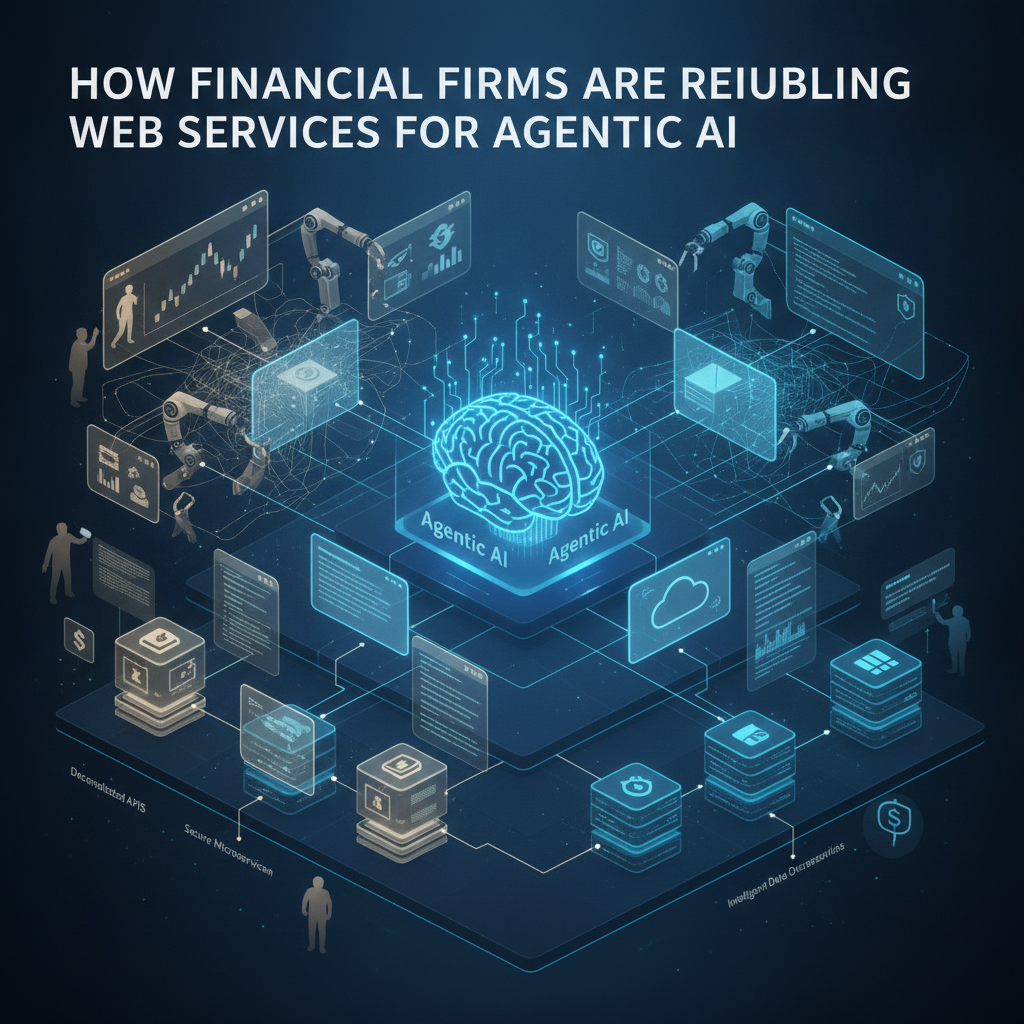
The bank also treated agentic AI as a controlled consumer of services, not as an unrestricted operator. Each agent received narrow API scopes, transaction limits, and human-approval rules. According to research summarized from WNS and Plaid, 81% of banking CEOs identify generative AI as a leading investment area, while open banking and API-delivered fraud controls are becoming baseline expectations by 2026.
Implementation Considerations
During discovery, a six-person architecture group cataloged SOAP services, SFTP jobs, firewall rules, and VoIP call flows. The team found that multiple applications used different customer identifiers, so it introduced a canonical customer ID before exposing account data through REST endpoints.
The initial rollout focused on read-only payment status. An API gateway connected the digital banking portal and contact-center desktop to the same service, while OpenTelemetry traces followed requests across Kubernetes, Kafka, and the core-system adapter. Security staff sent gateway logs to the bank's SIEM and required privileged administrators to use phishing-resistant multifactor authentication.
Midway through implementation, load testing revealed that the core adapter could not tolerate bursts from mobile users. The team added Redis caching for non-sensitive payment status and placed Kafka between inbound requests and slower reconciliation processes. No account balances or authentication secrets were cached.
During expansion, the bank connected its VoIP screen-pop workflow to the customer-verification API. GreenTech participated in the operational design by aligning network alerts, endpoint support, and communications incidents with the bank's ticket-routing rules. The bank retained responsibility for banking authorization policies and model governance.
Outcomes to Measure
The organization reported that payment exceptions moved from overnight review to same-day operations queues. Contact-center employees could retrieve payment status within their existing desktop rather than opening the core platform and copying values into a ticket.
Security analysts gained API-level records showing the calling application, OAuth scope, response code, and transaction correlation ID. That made it easier to distinguish a failed customer request from a gateway policy violation or unavailable core adapter.
The organization noted observable operational improvements, including fewer spreadsheet handoffs, independent scaling of fraud and payment services, and faster isolation of incidents through distributed tracing.
Buyer Takeaways
The canonical customer ID proved more consequential than the API gateway. Without it, the contact center, fraud platform, and core system would have returned conflicting records for the same person.
Load testing also changed the design before customer traffic increased. Redis absorbed repeated status checks, while Kafka prevented slow reconciliation jobs from blocking synchronous API responses.
Finally, narrow AI permissions reduced review friction. Agents could summarize a fraud case and prepare a response, but releasing a payment still required an authenticated employee operating under a separate OAuth scope.
Broader Applicability
Credit unions, insurers, and payment providers can adapt this pattern by starting with one read-only service, instrumenting it with OpenTelemetry, and adding transactional permissions only after identity, logging, and rollback controls have been tested.
How long does a financial web services implementation take?
A limited read-only API can often enter production within several months. Implementing core replacement, ISO 20022 conversion, and open-banking consent management typically requires a longer program, since data mapping, penetration testing, and regulatory review each necessitate distinct approval cycles.
What is the difference between an API gateway and middleware?
An API gateway manages external concerns such as OAuth 2.0, rate limits, routing, and request validation. Middleware translates data and coordinates internal systems, such as converting a REST JSON request into a fixed-width core-banking record.
Is agentic AI appropriate for payment operations?
It can be appropriate for bounded tasks such as collecting case data, classifying exceptions, or drafting customer messages. Payment release should use transaction limits, immutable audit logs, scoped service accounts, and human approval for higher-risk actions.