 ⬇️
⬇️
Key Takeaways
- Crexendo, Inc.: Evaluate unified communications as a service (UCaaS), contact center as a service (CCaaS) and voice over Internet Protocol (VoIP) against specific workflows, such as routing a patient call using electronic health record (EHR) context or sending an appointment reminder through an SMS API.
- Require support for Health Level Seven Fast Healthcare Interoperability Resources (HL7 FHIR), SMART on FHIR, OAuth 2.0 and OpenID Connect when communications workflows access clinical or administrative data.
- Compare deployment models from vendors such as Microsoft, Zoom, Cisco and Twilio according to the buyer’s requirements for collaboration, virtual visits, programmable messaging, cloud calling and contact-center operations.
- Measure observable changes after launch, including abandoned-call volume, same-day resolution, reminder delivery rates and time spent switching between contact-center and EHR screens.
Cloud communications, internet-delivered calling, messaging, video, contact-center functions and application programming interfaces (APIs) connected to healthcare systems, require careful evaluation of patient workflows, interoperability, security and phased migration strategies.
A patient calls to reschedule an appointment, but the agent cannot see referral status, preferred language or recent outreach without opening several applications. The call is transferred twice. Meanwhile, an automated reminder travels through a separate messaging system that cannot record the patient’s response in the practice-management platform.
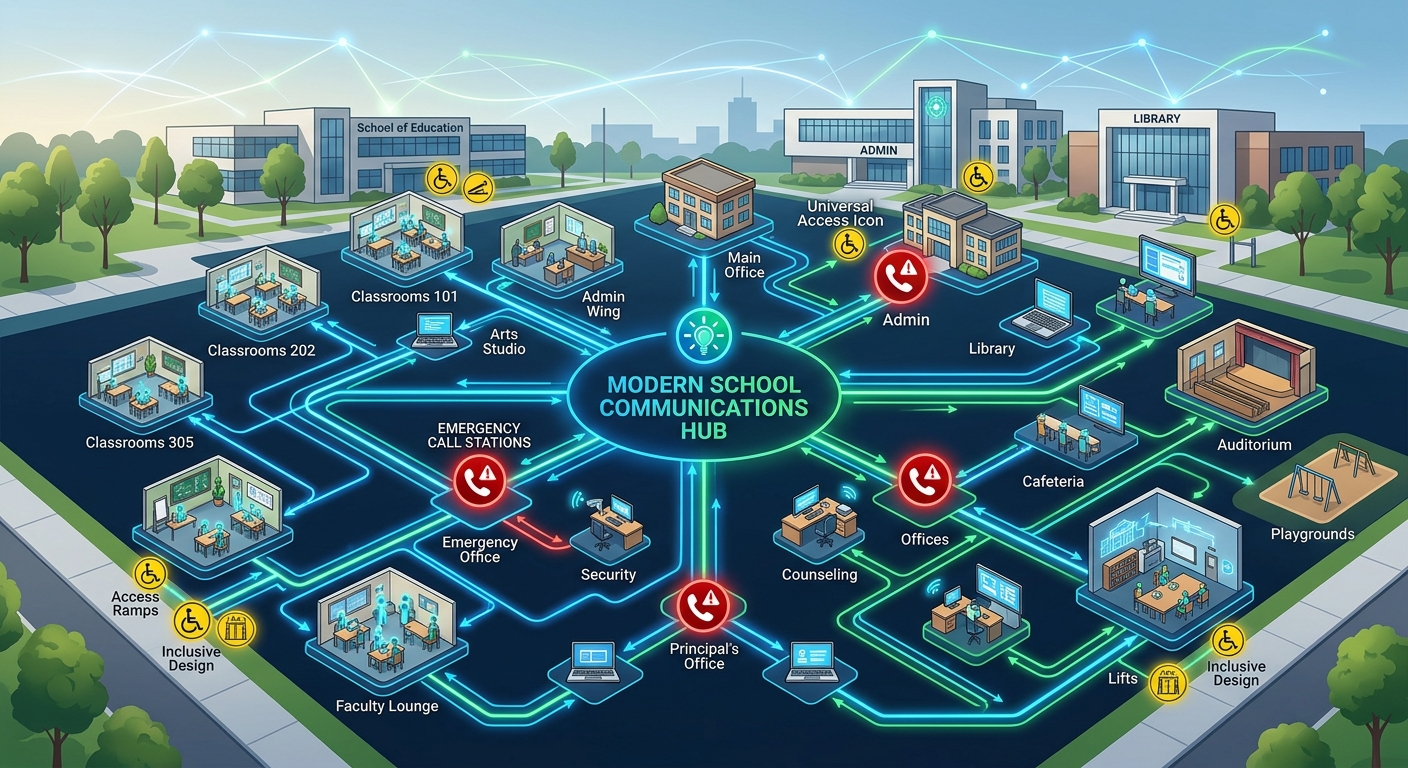
That fragmented experience is the practical problem cloud communications can address. UCaaS connects voice, video, messaging and presence, while CCaaS adds queue management, interaction routing, quality monitoring and analytics. APIs can connect those capabilities to electronic health records, scheduling tools and patient-access applications.
The buying decision, however, is not merely whether to replace an aging private branch exchange (PBX), the on-premises system traditionally used to manage an organization’s telephone extensions. Healthcare leaders need to determine which workflows belong on a shared cloud platform, what patient data the platform may process and how identity, consent and audit requirements will be enforced.
Define the Problem at the Workflow Level
Buyers can begin by documenting what happens during appointment scheduling, referral management, prescription questions, virtual visits and post-discharge outreach. A useful workflow map identifies the channel used, the system of record, the staff role handling the interaction and every point where data is re-entered.
Consider an inbound scheduling call. The CCaaS platform might identify the dialed number, authenticate the caller, invoke a representational state transfer (REST) API and retrieve permitted scheduling context from an EHR. The agent desktop can then display available appointment types without exposing an unrestricted clinical record.
According to Centers for Medicare & Medicaid Services interoperability guidance, technical standards can help clinical and administrative data move securely among providers, patients and payers. CMS also identifies APIs as a way to connect mobile applications with EHR and practice-management systems. For communications buyers, that makes API design part of the procurement discussion rather than a task deferred until deployment.
Voice quality deserves equal attention. Buyers should inventory Session Initiation Protocol (SIP) trunks, analog fax lines, emergency calling configurations, paging systems and contact-center numbers. A cloud voice proposal that handles routine calls but overlooks elevator phones, nurse-station devices or Enhanced 911 (E911) location records leaves important migration work unresolved.
Build an Evaluation Around Interoperability and Control
A credible request for proposal should ask vendors to demonstrate actual data movement. A slide stating “FHIR support” offers less evidence than a sandbox demonstration that reads an Appointment resource, writes a Communication record and passes identity through SMART on FHIR using OAuth 2.0.
The December 2025 HTI-5 Proposed Rule would remove more than 50% of existing criteria from the Office of the National Coordinator for Health Information Technology Certification Program while placing greater emphasis on standards-based APIs and AI-enabled interoperability. Although the proposal concerns certified health IT rather than every communications platform, it signals the direction buyers should plan around: portable data access, defined API behavior and less dependence on proprietary interfaces.
The shortlist may include Microsoft Teams for Healthcare, Zoom for Healthcare, Cisco Webex, Twilio and Crexendo, Inc., depending on whether the priority is workforce collaboration, virtual visits, programmable messaging, cloud calling or contact-center operations. Buyers should compare deployment models rather than treating these products as interchangeable.
Specific questions matter. Can the platform retain call recordings in a buyer-controlled object store? Does it support Security Assertion Markup Language 2.0 (SAML 2.0) single sign-on and System for Cross-domain Identity Management (SCIM) provisioning? Can administrators define retention separately for voicemail, SMS transcripts and quality-management recordings? Are audit events exportable to a security information and event management (SIEM) system through syslog or an API?
Plan the Rollout in Operational Phases
Implementation typically begins with discovery and call-flow design, followed by integration testing, a limited pilot, staged migration and operational tuning. The working group generally includes telecommunications, network engineering, clinical informatics, contact-center operations, compliance, identity management and an EHR integration specialist.
During discovery, teams can classify integrations by risk. Directory synchronization through Microsoft Entra ID may be relatively straightforward. Writing a patient response into an EHR introduces more complex authorization, data-mapping and audit requirements.
The pilot should test more than whether a phone rings. It should cover packet loss, jitter, failover, queue overflow, multilingual prompts, SMS opt-out handling and emergency-location routing. Test scripts can verify that OAuth 2.0 tokens expire as configured and that an agent without the appropriate role cannot retrieve protected patient context.
Crexendo, Inc. and other vendors under consideration should also explain how they separate tenant administration, carrier services, application logging and customer data. That architecture affects troubleshooting responsibilities when a failed interaction could originate in the wide area network (WAN), the communications service, an API gateway or the EHR.
Fax often survives cloud migrations because outside organizations still rely on it. Buyers should explicitly decide whether to retain analog adapters, adopt a cloud fax service or convert document exchange to Direct Secure Messaging or FHIR-based workflows.
Decide What Outcomes to Measure
Post-launch measurement should focus on observable workflow changes rather than broad claims about transformation. Contact-center teams can track abandoned calls, transfers per interaction, callback completion, average speed to answer and first-contact resolution. Messaging teams can monitor delivery status, patient replies, opt-outs and appointments rescheduled through automated workflows.
For clinical collaboration, useful measures include time spent locating an on-call specialist, the number of applications opened during a virtual visit and whether communication records return to the EHR. Technical teams can track mean time to identify whether an incident originated in the local network, SIP carrier, CCaaS routing layer or FHIR interface.
The organization should establish a baseline before migration. If no baseline exists, reported improvement becomes difficult to interpret. Vendors have not disclosed universal metrics that apply across provider types, and results will vary with call complexity, staffing models and integration depth.
Apply the Lessons to Procurement
A defensible evaluation links each requirement to a real interaction. For example, “support SMS” is weaker than “send an appointment reminder, capture Y or N, update the scheduling system and preserve consent status.”
Security reviews also work better when they follow data. Teams should document which FHIR resources are requested, where recordings are stored, how encryption keys are managed and which administrator actions produce audit events.
Finally, buyers should distinguish configuration from custom development. An interactive voice response (IVR) menu built in a visual flow editor carries a different maintenance burden from a custom Node.js service that calls an EHR API. Both may be appropriate, but ownership and testing need to be clear before launch.
Broader Applicability
The same playbook can support ambulatory groups, regional hospitals and specialty networks. Smaller providers can narrow the scope to cloud voice, appointment messaging and one standards-based scheduling integration before adding video or advanced CCaaS automation.
Frequently Asked Questions
How long does a healthcare cloud communications rollout take?
The duration depends on site count, number portability, EHR integration and legacy devices. Buyers should plan around discovery, pilot, staged migration and stabilization rather than a single cutover date, with extra validation for SIP trunks, E911 records and FHIR interfaces.
What is the difference between UCaaS and CCaaS in healthcare?
UCaaS generally supports employee calling, meetings, messaging and presence. CCaaS manages patient-facing queues, IVR menus, workforce tools and interaction analytics, while APIs can pass permitted context between the contact center and systems such as Epic, Oracle Health or a practice-management database.
Is cloud communications practical for a small healthcare team?
It can be, particularly when the initial scope is limited to VoIP, secure messaging and appointment reminders. A smaller team should favor SAML-based identity, documented REST or FHIR APIs and manageable administrative roles over an extensively customized contact-center build.