 ⬇️
⬇️
NREL researchers map distribution‑grid weak spots to help utilities harden systems against extreme weather
Key Takeaways
- NREL’s Grid Planning and Analysis Center is using high‑resolution outage and weather data to pinpoint where distribution networks fail during disasters.
- The lab is evaluating options such as undergrounding, reinforced poles, microgrids, and switching operations to help utilities match solutions to local conditions.
- The work focuses on cost‑effective resilience decisions as utilities face more severe storms, wildfire risk, and growing demand from sectors like data centers.
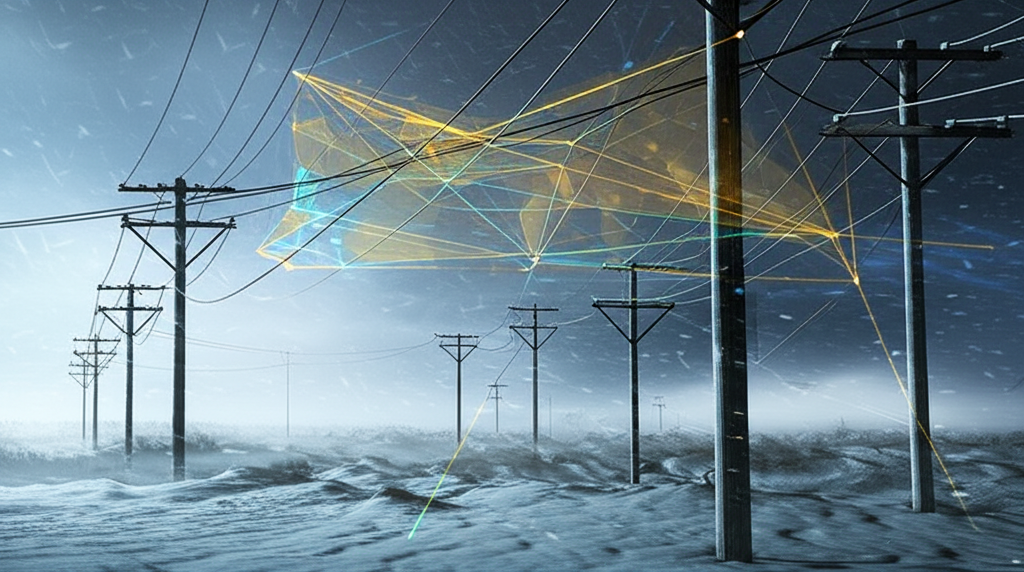
Most utilities don’t need reminders that a single storm can reshape a year’s plan. Still, the scale of recent events offers a kind of shorthand for how exposed the grid remains. Winter Storm Uri, for example, pushed Texas into record‑low temperatures in February 2021 and left millions without power, some for days. That same year, Hurricane Ida ripped through key distribution components—transformers, poles, wires—and more than 1 million customers went dark.
Those incidents sit at the center of the National Renewable Energy Laboratory’s (NREL) latest work on distribution‑grid resilience. NREL has been digging deeply into how the distribution system behaves when the weather turns destructive. And they’re explicit about the stakes. When outages stretch on, communities lose heating and cooling, hospitals struggle with life‑sustaining equipment, and even basic services like water treatment and communications can fall offline. It’s not a new story, but the confluence of rare, severe events and rising expectations for reliability is forcing utilities and regulators to rethink what “resilient enough” means.
A research engineer at NREL’s Grid Planning and Analysis Center (GPAC) frames the challenge in practical terms: ensuring critical services stay powered during major storms, wildfires, or hurricanes; and when they can’t, figuring out how to restore power faster and prioritize the most affected customers. It’s a deceptively simple set of questions. But as weather patterns shift and load profiles change—data centers are the quiet subtext here—the solutions need to flex rather than remain locked into plans written for a different era.
More than 90 percent of electrical interruptions occur in the distribution system. That’s the low‑voltage network of lines, poles, and transformers carrying power the last mile to homes and businesses. It’s also the part of the grid most likely to be struck by falling branches, heavy snow, or 60–70 mph wind gusts. One small tangent: many outside the industry assume transmission failures are the big culprits during storms. In reality, distribution networks take the brunt simply because they’re exposed and ubiquitous.
NREL’s team has been combing through performance data from past disasters to understand exactly what broke and why. They’re not just reviewing summary statistics—they’re zooming into feeder‑level behavior. One example in rural Minnesota stands out: a single feeder experienced more than nine cumulative weeks of outages in a single year due to wind‑related events, with gusts approaching 70 miles per hour. That sort of micro‑pattern is easily missed at the system level, yet it can shape where utilities should invest next.
Once vulnerabilities are mapped, NREL evaluates which interventions make sense. Some are physical, such as undergrounding power lines or reinforcing poles. Others hinge on technology, including remote sensors that detect hazards early or distributed energy resources that help maintain service even if parts of the network go down. Undergrounding often draws the most attention—understandably, because it dramatically reduces exposure to wind and vegetation impacts. But in regions with substantial bedrock, costs can climb quickly. That’s where the lab’s cost‑benefit analysis helps utilities avoid expensive missteps.
Urban and suburban networks add another wrinkle. Because their grids often have multiple pathways to deliver electricity to the same location, operators can use switching operations to reroute power when an asset must be deenergized. It’s a useful tool, even if it can feel unglamorous compared with battery storage or microgrids. In rural areas, however, where customers sit far apart and feeders stretch for miles, switching may not be feasible. It’s a good reminder that resilience isn’t a single technology but a set of choices tailored to geography, density, and risk.
NREL’s focus on high‑resolution data is part of a broader trend. Utilities have been investing in outage analytics and weather‑correlated modeling for years, but the lab is pushing toward more granular views of component‑level performance. A quick comparison point: the North American Electric Reliability Corporation maintains systemwide reliability metrics, but they tend to be aggregated. By contrast, NREL’s approach digs into how specific distribution assets behave under specific stressors, similar to the kind of situational modeling described by the U.S. Department of Energy in its resilience reports. That’s not a criticism—just a sign of how planning disciplines are maturing.
The goal isn’t to create academic models; it’s to offer clarity. Utilities, regulators, and state energy offices need to decide where to put dollars so that restoration is faster and the most critical assets stay online during the next storm. And yet, as any grid planner will admit, even the best models don’t eliminate uncertainty. The trick is determining which vulnerabilities matter most and which interventions will meaningfully reduce risk without overwhelming budgets.
One question lingers for business leaders watching these trends: how do you plan when risk itself keeps shifting? Load growth from electrification, climate‑driven weather changes, and political pressure around reliability all collide in distribution planning. NREL’s work doesn’t answer all of that, but it does give utilities a more precise way to see where their distribution networks are weakest—and which upgrades deliver value under the conditions they’re likely to face.
That sort of clarity won’t prevent the next Uri or Ida. But it may change what happens in the hours and days after the storm, when customers judge utilities not on forecasts but on how quickly they can bring the lights back.