 ⬇️
⬇️
Key Takeaways
- Vertical integration strategy allows for greater control over operational costs and deployment speed compared to asset-light competitors.
- Energy management strategies, particularly in the ERCOT market, have become a secondary revenue stream that stabilizes balance sheets during market volatility.
- The shift toward owning large-scale infrastructure signals a maturation of the sector from speculative mining to industrial-grade data center operations.
Riot Platforms (NASDAQ: RIOT) (“Riot” or “the Company”), a Bitcoin-driven industry leader in the development of large-scale data centers and bitcoin mining, finds itself at the forefront of a significant pivot in the digital asset sector. While the headlines often chase the volatile price of the underlying asset, the real story for B2B observers is happening on the ground—literally in the dirt of rural Texas—where the physical infrastructure of the blockchain is being poured in concrete and steel.
It is easy to look at a ticker symbol and assume the business model is simply "solve puzzle, get reward." But that view is increasingly outdated.
Here's the thing about the current state of industrial mining: it has morphed into an infrastructure play. Riot’s strategic emphasis has shifted aggressively toward vertical integration. By controlling the supply chain from the electrical transformer down to the mining rig, the Company attempts to insulate itself from the hosting dependencies that plague asset-light competitors. When you rely on third-party hosting, you are at the mercy of their uptime, their rates, and their operational competence. Riot, conversely, builds the facility.
Why does this distinction matter?
In a high-stakes environment where margins are compressed by network difficulty adjustments and "halving" events, cost control is paramount. The development of the Corsicana facility, alongside the existing Rockdale operations, highlights a commitment to scale that few peers can match. These aren't just server rooms; they are industrial power plants that happen to compute.
Speaking of power, let’s look at the energy strategy. This is where the narrative gets a bit more complex—and interesting. Operating within the ERCOT (Electric Reliability Council of Texas) grid allows for a unique symbiosis between grid stability and power consumption. Through demand response programs, large-scale data centers can curtail power usage during peak demand—think of those blistering Texas summer afternoons when everyone blasts the AC—and sell that capacity back to the grid.
Occasionally, this results in a scenario where a miner might make more money not mining for a few hours than they would have by running the machines. It is a hedge. A financial buffer against the unpredictability of Bitcoin's market price.
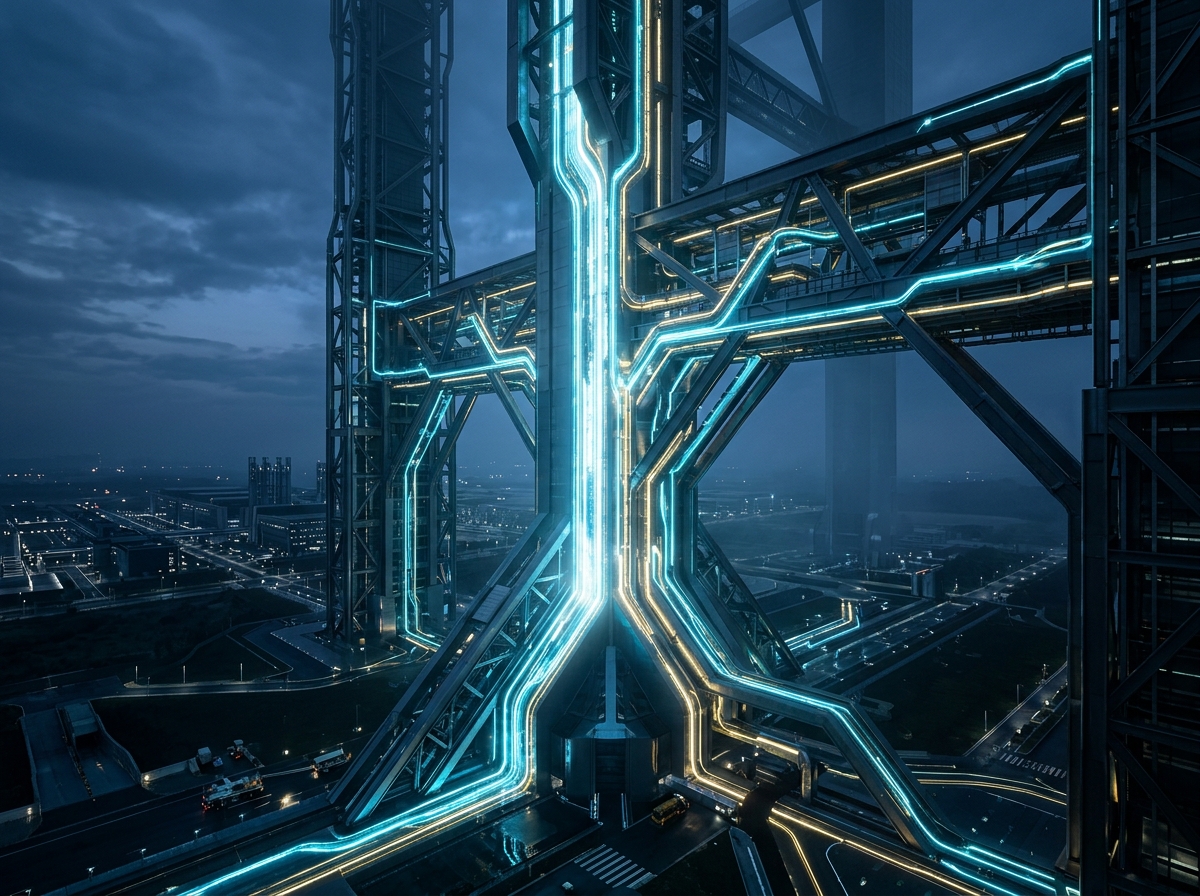
There is a tangible, heavy-industry aspect to this that often gets lost in the digital hype. We are talking about immersion cooling systems, massive transformers, and miles of cabling. It’s loud, it’s hot, and it requires legitimate engineering prowess. This isn't software development; it's facility management on steroids.
That said, the push for capacity is not without risks. Building infrastructure is capital intensive. It requires massive upfront liquidity and long lead times for construction. If the market takes a prolonged downturn, that expensive infrastructure still requires maintenance and security. However, having "power on the wall"—industry speak for energized capacity ready for deployment—is becoming the most valuable asset in the sector.
The broader tech landscape is watching this closely for another reason: High-Performance Computing (HPC).
While Riot is explicitly "Bitcoin-driven," the physical shell of a 400-megawatt data center doesn't strictly care what calculations are being performed inside. As AI and machine learning demand skyrockets, the availability of energized, cooled rack space is at a premium. While the hardware requirements for AI training differ from SHA-256 mining (GPUs vs. ASICs), the power and cooling infrastructure is the bottleneck for both industries.
Riot’s trajectory suggests that the future of mining belongs to the utilities-adjacent giants. The era of the garage hobbyist ended years ago, but we are now likely seeing the end of the mid-tier, hosting-dependent miner as well. Scale, specifically scale combined with low-cost power access, acts as a moat.
Efficiency is the name of the game now. By owning the land, the substations, and the buildings, the Company positions itself to survive the cyclical winters that flush out less robust operators. It is a bet on longevity over short-term hashrate gains. Ultimately, the winners in this space likely won't just be the ones who can solve the most blocks, but the ones who can keep the lights on—and the costs down—when the margins get thin.