 ⬇️
⬇️
Key Takeaways
- Emergency services in the New York City metro area are under pressure to modernize connectivity without compromising reliability
- Cloud PBX, Unified Communications, and Contact Center platforms play a larger role in 911 operations than many leaders realize
- The path forward requires secure, redundant, and interoperable communication layers that fit real city operations, not theoretical ones
The Challenge
Every city deals with emergency response demands, but New York City is in its own category. The density, the vertical environment, the traffic patterns, the aging infrastructure, the extreme weather events that seem to show up more often now, it all stacks up. Emergency services in this region cannot tolerate dropped calls or delayed routing. Even one glitch can have real consequences.
Over the last few years, a big shift has occurred. Agencies and supporting organizations have been pushed toward cloud communication systems. Some of this is due to state-driven modernization initiatives, some due to the practical realities of supporting hybrid work, and some because legacy PBX gear is simply timing out. But here is the thing that often gets overlooked. When emergency response systems begin relying on cloud connectivity even indirectly, the stakes for secure, always-on transport rise sharply.
You can see it in mid-market hospitals, transit agencies, university public safety teams, and even large property managers with on-site security teams. They know that they need Cloud PBX or Unified Communications for operational efficiency, but they also know that any shift introduces new failure points. What if an internet circuit degrades at the wrong moment? What if the routing logic for an emergency escalates through a cloud system that hiccups under load?
Those questions linger, and rightfully so.
The Approach
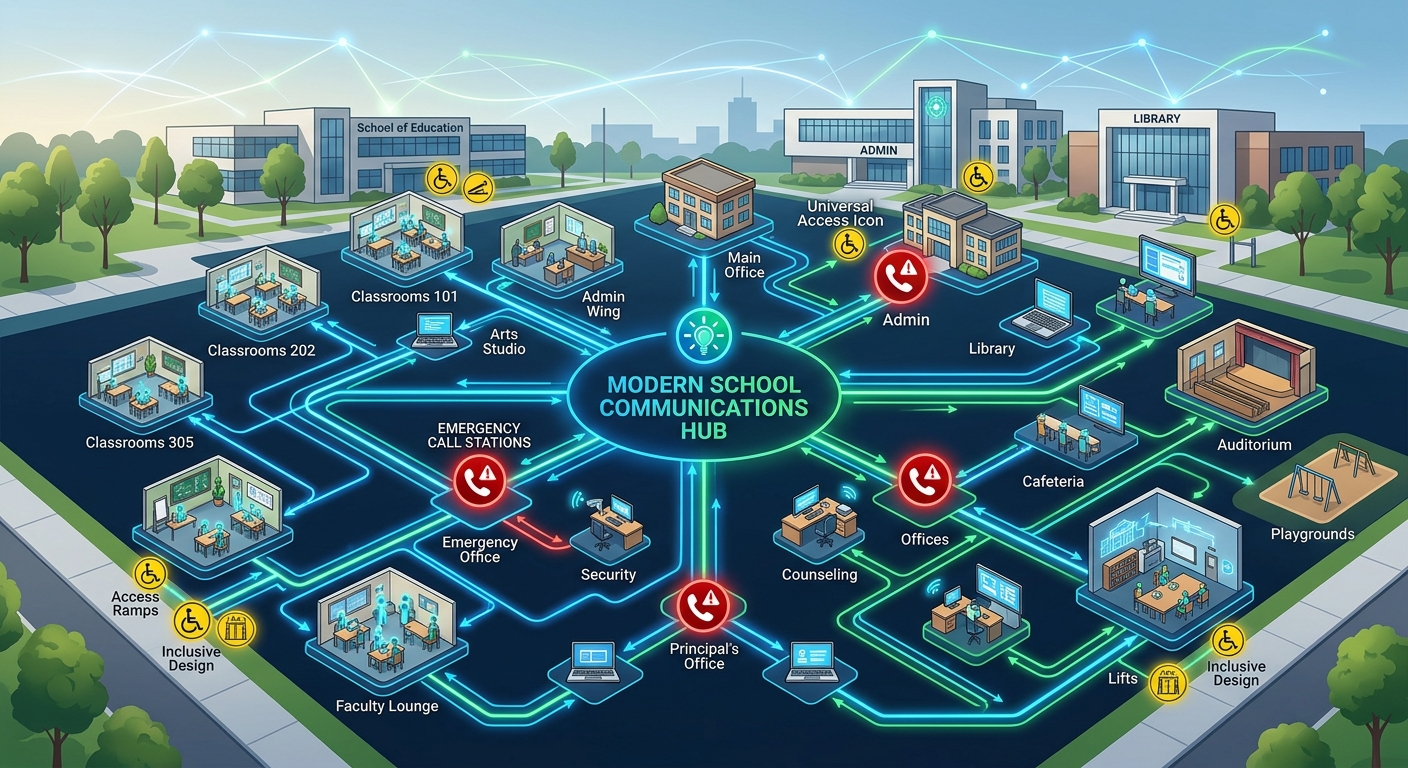
In practice, decision-makers in the NYC metro area approach this problem with a layered mindset, not looking for one magic solution. They want redundancy, interoperability, and security controls that fit the city's operational tempo. For many, the starting point is building a hardened connectivity foundation that supports both day-to-day communications and emergency escalation paths.
This typically involves:
- Dedicated circuits with prioritized routing for emergency workflows
- Physically diverse paths to avoid common NYC fiber cuts or building-level outages
- Cloud PBX systems that can withstand regional disruption
- Integration between Unified Communications and Contact Center tools so critical calls are never siloed
Some organizations also explore SD-WAN for failover, although the realities of tall-building RF congestion and crowded last-mile networks mean that SD-WAN works best as a complement, not the core.
Within this broader context, providers such as 101VOICE emerge in the conversation because buyers want a partner that understands both regulated communication environments and the messy, on-the-ground realities of emergency workflows. Platforms get judged not only by their cloud features but by how they behave when the pressure is on.
The Implementation
Take an anonymized example from a large New York metro healthcare provider. Its emergency operations center served a network of clinics and urgent care facilities. The team had decent systems, but their underlying voice circuits and contact center software were scattered across older platforms. During one particularly hectic summer storm season, the organization saw several instances where call rollover failed or where call tracking into critical incident channels lagged.
Their implementation journey started with mapping out every communication touchpoint used during a code alert or citywide advisory. This included PBX paths, mobile devices, overhead paging, and even telehealth escalation lines. That step alone revealed a surprising number of hidden dependencies.
The next phase focused on connectivity hardening. They introduced diverse fiber circuits and a reserved secondary backup path that operated independently from the main facility network. They also transitioned to a cloud-based UC platform that supported emergency rerouting without relying on local hardware.
Not everything rolled out perfectly. In one building, a conduit issue delayed the secondary fiber installation for weeks. In another, training on new contact center dashboards took longer than expected because staff were used to old shortcuts. These hiccups, while frustrating, are incredibly common and worth acknowledging.
What helped was a pilot-first mindset. The organization tested routing scenarios in off-peak hours, simulated outage events, and validated call flows across multiple clinics before going live across the entire network. This type of iterative rollout tends to reduce surprises later.
The Results
Once the full implementation settled, the healthcare provider saw noticeable stability improvements. Emergency alerts reached the right teams more consistently. Key lines experienced far fewer disruptions, even during localized network events. Frontline staff also commented that communication felt more unified because the UC system tied together what used to be disjointed channels.
It is worth noting that results in this space are often quiet. You do not get dramatic before-and-after charts. Instead, you see fewer panicked help desk tickets during storms, smoother coordination between dispatch teams and clinical leaders, and more confidence that calls will get through. In emergency communications, that quiet is the real outcome.
Lessons Learned
A few lessons stand out from projects like this across the NYC metro area.
First, organizations often underestimate the number of systems that indirectly affect emergency communications. A contact center for appointment scheduling might seem unrelated, but during a crisis, overflow traffic may hit it unexpectedly.
Second, physical network diversity matters more in New York City than almost anywhere else. A single construction accident or building fire can disrupt multiple providers that share underground routes.
Third, leadership teams should plan for human factors. Staff training takes time, especially when new UC tools fundamentally change how calls are handled.
And finally, no organization should wait for a negative incident to spark action. Secure connectivity for emergency services is one of those areas where preparedness pays dividends quietly and continuously.
For buyers evaluating modernization paths today, the real goal is a communication architecture that handles chaos gracefully. When the unexpected happens, the systems behind the scenes need to perform without hesitation. Technology that supports that, even in small ways, makes all the difference.