 ⬇️
Key Takeaways
- Shanghai Lin-gang UDC is designed for 24 MW, with an initial 192 racks operating at 2.3 MW.
- Project-reported figures point to lower cooling-related energy use, but independent performance audits remain limited.
- Thermal pollution, difficult maintenance and seabed impacts could shape whether underwater facilities become commercially viable.
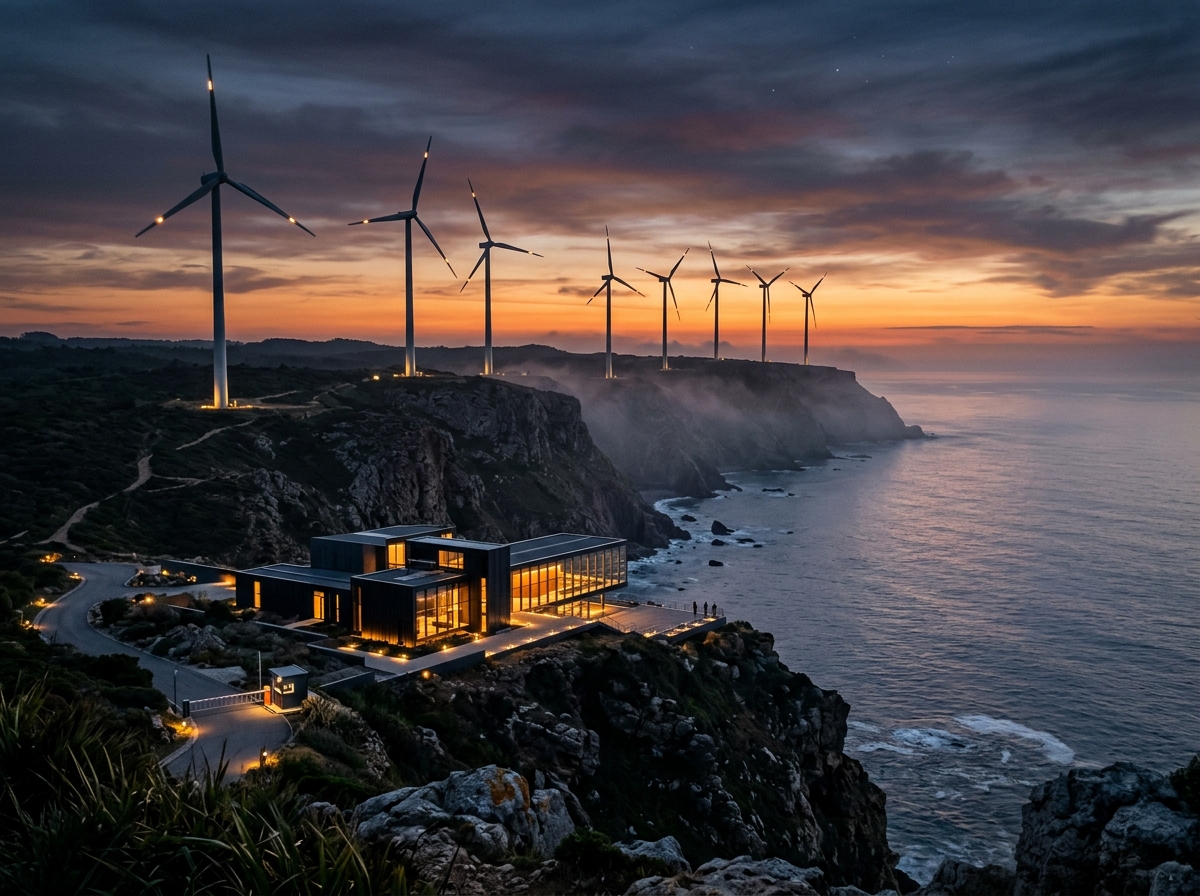
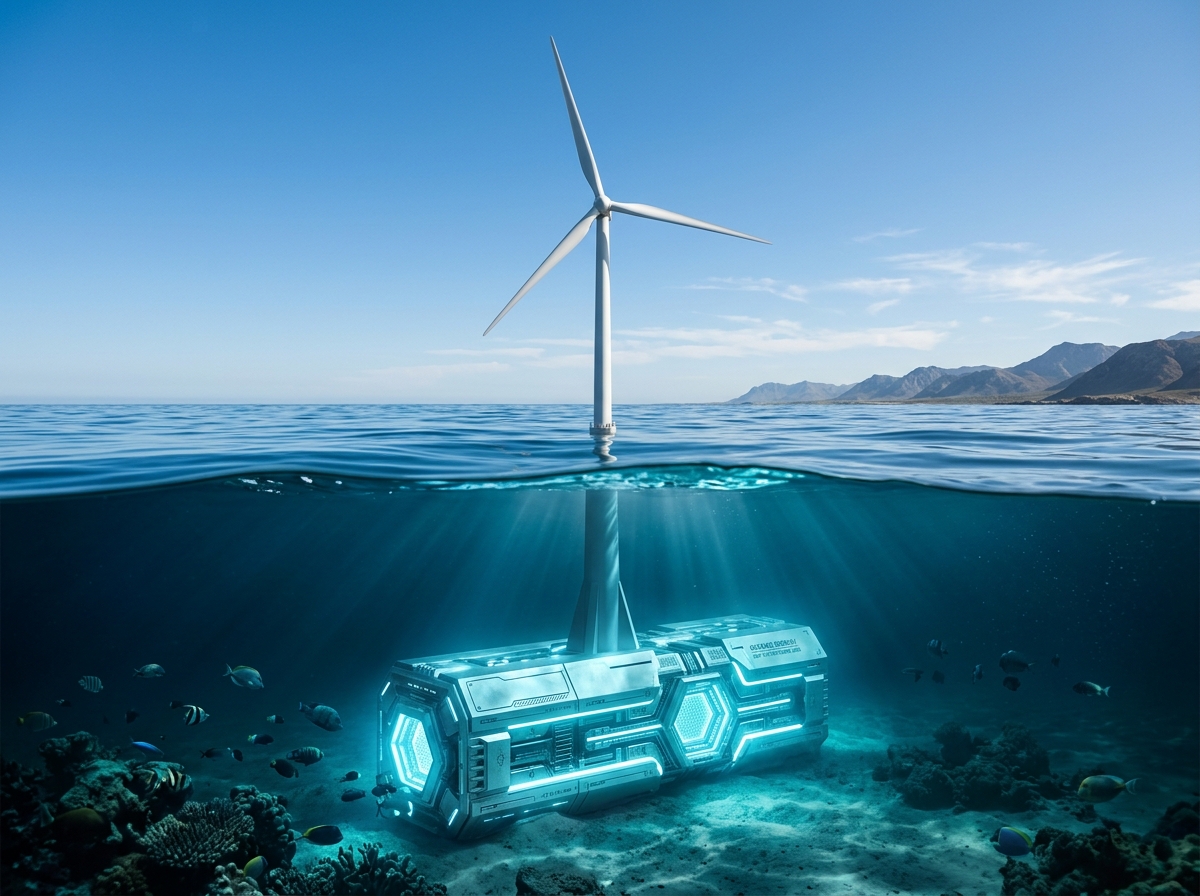
Shanghai Lin-gang UDC is testing a different answer to one of computing's most stubborn problems: how to remove heat without consuming large amounts of electricity and freshwater. Instead of relying on conventional cooling infrastructure, the project places sealed computing equipment beneath the sea and connects it directly to nearby offshore wind generation.
The facility is designed for 24 MW of capacity. Its initial deployment comprises 192 server racks operating at 2.3 MW, according to New Atlas. Reported electricity savings are 22.8% compared with comparable land-based facilities, while more than 95% of the project's electricity reportedly comes directly from an adjacent offshore wind farm.
That combination matters. Data centres increasingly compete for grid capacity, water and suitable development sites, particularly as artificial intelligence workloads raise rack densities. Locating computing infrastructure near offshore generation could reduce dependence on long-distance grid transmission while shifting some physical infrastructure away from congested urban areas.
Lower cooling demand does not automatically make an underwater data centre environmentally benign.
Shanghai Lin-gang UDC reportedly achieves a Power Usage Effectiveness rating below 1.15, compared with roughly 1.5 for conventional facilities, according to Newsday. PUE measures total facility energy against the energy used by computing equipment. A result closer to 1 indicates that less power is being consumed by cooling, lighting and other supporting systems.
Those figures are encouraging, but they are project-reported rather than independently audited. Comparisons can also depend on climate, workload, utilisation and what equipment is included within the measurement boundary. Applying ISO/IEC 30134-2:2016 consistently would make it easier for enterprise customers, investors and regulators to judge whether the apparent efficiency advantage persists during year-round operations.
Water use presents another potential benefit. Many land-based facilities consume water through evaporative cooling, an increasingly sensitive issue in water-stressed regions. A sealed underwater module can transfer heat to the surrounding sea without drawing on municipal freshwater supplies. Yet it still moves heat into the environment. The destination changes; the underlying thermodynamics do not.
Could continuous heat discharge alter conditions around a deployment? Researchers and environmental groups have raised concerns about localised thermal pollution, along with underwater noise, vibration, corrosion, anti-fouling coatings and disturbance during installation. The effects will likely depend on water depth, currents, temperature, module density and local marine ecology. Small pilot projects may not reveal what happens when capacity expands substantially.
Operational resilience is another open question. On land, technicians can replace failed drives, power supplies or networking equipment relatively quickly. A sealed subsea module is different. Hardware may be designed to run without routine human intervention, but a serious failure could require recovery of an entire unit.
Cable damage or severe weather could stretch that process from days into weeks, Eco-Business reported. For latency-sensitive enterprise services, that recovery model changes redundancy planning. Operators may need additional modules, spare capacity on land and carefully distributed workloads to preserve service during retrieval and repair.
Microsoft's Project Natick demonstrated that sealed underwater computing could operate for extended periods, but Microsoft ended it as a commercial project in 2024. China is now extending the concept through Shanghai Lin-gang UDC and HiCloud's Hainan underwater facility. Even so, technical operation is not the same as a repeatable business case.
Procurement teams will want evidence covering failure rates, module lifespan, recovery costs, network availability and decommissioning. Environmental governance will matter too. ISO 14001:2015 offers a structure for managing impacts, although credible monitoring would still require transparent baseline data and ongoing measurement around deployment sites.
For now, Shanghai Lin-gang UDC is better viewed as an important infrastructure experiment than a settled replacement for terrestrial facilities. Its reported efficiency and offshore wind integration address genuine constraints. Whether the model scales will depend on independent audits, long-term ecological evidence and proof that maintenance savings outweigh the complications of putting critical computing hardware beneath the sea.