 ⬇️
⬇️
Key Takeaways
- Masayoshi Son explicitly frames the acquisition as a move to secure the "foundation" of AI infrastructure rather than just intellectual property.
- The deal targets the specific compute requirements of next-generation data centers, looking beyond current GPU architectures.
- SoftBank is moving to verticalize the AI stack, integrating proprietary silicon into its broader data center strategy.
The narrative around artificial intelligence usually centers on models—who has the biggest parameters or the most human-like reasoning. But for SoftBank CEO and Chairman Masayoshi Son, the focus has shifted decidedly to the concrete and silicon reality of where those models live.
Following the acquisition of British chipmaker Graphcore, Son has made the company’s strategic intent clear. This isn't merely a portfolio expansion; it is an infrastructure play. Son stated that the acquisition "will strengthen the foundation for next-generation AI data centers."
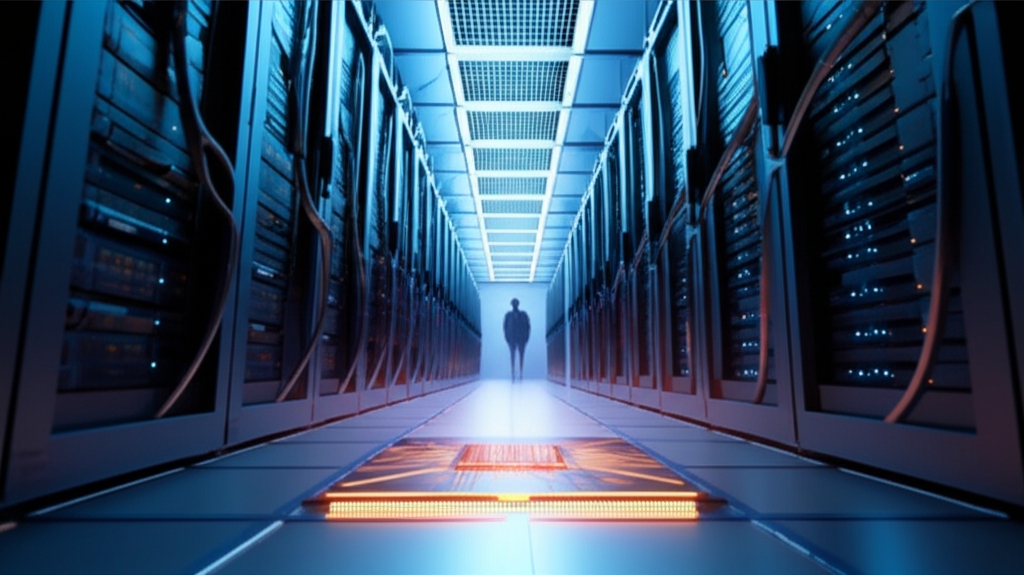
That phrasing is deliberate. By invoking the "foundation," Son is signaling that SoftBank sees the current bottleneck not in software, but in the physical capability of data centers to handle the next wave of compute loads.
The Move Beyond General Purpose Compute
For years, the B2B conversation regarding data center build-outs has been dominated by the scarcity of Nvidia GPUs. It’s a supply chain choke point that has dictated rollouts for hyperscalers and enterprises alike.
SoftBank’s move suggests a desire to sidestep that queue entirely.
By acquiring an AI chip architect directly, SoftBank is betting that the "next-generation" of data centers mentioned by Son won’t look like the current ones. Today’s facilities are largely homogeneous, packed with general-purpose GPUs that handle everything from training to inference. But as models become more specialized, the hardware efficiency gap begins to widen.
Graphcore, known for its Intelligence Processing Units (IPUs), offers a different architectural approach. Unlike GPUs, which were originally designed for graphics and later adapted for parallel processing, IPUs are designed specifically for the sparse, high-dimensional data structures typical of machine learning.
It’s a small detail, but it tells you a lot about how the rollout is unfolding. Son isn't just buying chips; he is buying architectural control.
If SoftBank can deploy proprietary silicon optimized for specific AI workloads within its own data centers, it gains a margin and efficiency advantage that off-the-shelf hardware cannot provide.
Vertical Integration in the Data Center
The acquisition aligns with a broader trend of verticalization in the tech sector. Apple did it with mobile silicon; AWS and Google are doing it with Trainium and TPUs. Now, SoftBank is applying that logic to the independent data center market.
What does that mean for teams already struggling with integration debt?
For SoftBank’s partners and portfolio companies, it likely means a push toward a more closed, optimized ecosystem. Son’s comment about strengthening the "foundation" implies that the future data center isn't a neutral box where you plug in any server you want. Instead, it becomes a highly integrated appliance where the building, the cooling, and the silicon are designed in concert.
This integration is critical because the energy demands of next-generation AI are unsustainable with current hardware. "Next-generation" in this context is code for "energy-efficient." By controlling the chip design via Graphcore, SoftBank can potentially tune power consumption at the silicon level to match the thermal envelopes of its physical data centers.
The Challenge of Deployment
Still, owning the technology is different from scaling it.
The history of the semiconductor industry is littered with superior architectures that failed because the software ecosystem was too difficult to navigate. Nvidia’s moat isn't just its H100 chips; it’s CUDA, the software layer that developers live in.
For this acquisition to actually "strengthen the foundation" as Son claims, SoftBank will need to drive adoption of the underlying software stack that runs on these new processors. A data center filled with powerful chips is useless if developers have to rewrite their codebases to utilize them.
This is likely why Son emphasizes the "data center" aspect over the "chip" aspect. If SoftBank controls the facility, they can offer the compute as a service—masking the complexity of the underlying hardware behind an API. This allows enterprise customers to benefit from the performance of the proprietary silicon without necessarily needing to manage the bare metal themselves.
A Long-Term Capital Play
Masayoshi Son has always operated with a longer time horizon than public markets generally tolerate. His "ASI" (Artificial Super Intelligence) vision requires compute power orders of magnitude greater than what exists today.
By securing a dedicated silicon pipeline now, SoftBank is hedging against future supply shocks. If the foundation of the AI economy is indeed the data center, then the raw material of that foundation is the processor.
It is a risky bet. The semiconductor market is unforgiving, and the R&D costs required to keep a chip designer competitive with Nvidia or AMD are astronomical. However, the alternative—remaining a passive buyer of other people’s chips—leaves SoftBank vulnerable to the pricing power and allocation whims of third-party vendors.
That’s where it gets tricky. SoftBank must now balance the capitalization of a hardware division with the massive capex requirements of building physical data centers.
The Foundation Is Set
Son’s statement cuts through the hype of "AI revolution" and lands on the operational reality. The revolution requires power, cooling, and processors.
The acquisition is a signal that SoftBank is done waiting for the supply chain to normalize. By bringing the chip design in-house, they are attempting to engineer their own supply chain. For the broader technology market, this reinforces the reality that the next phase of AI won't be defined by who has the best algorithm, but by who has the infrastructure to run it at scale.
SoftBank has laid its foundation. The question now is how quickly they can build on it.