 ⬇️
⬇️
Key Takeaways
- Power is the New Real Estate: In the modern data center market, access to secured, scalable power infrastructure is more valuable than square footage.
- The Shift to Secondary Markets: Constraints in Tier 1 markets are driving major developments in areas like Little Rock, offering better sustainability profiles and lower costs.
- Hubs vs. Facilities: Enterprises are moving away from isolated colocation halls toward integrated "hubs" that combine massive scale with direct grid access.
Definition and Overview: What is a Power Hub?
For decades, the data center industry operated on a simple premise: build a box, fill it with servers, and plug it into the wall. That approach does not work anymore.
The sheer density of modern compute workloads—driven by AI, machine learning, and high-frequency trading—has broken the old model. We are not just looking for server space; we are looking for energy. This has given rise to the "Data Center Power Hub."
So, what is it?
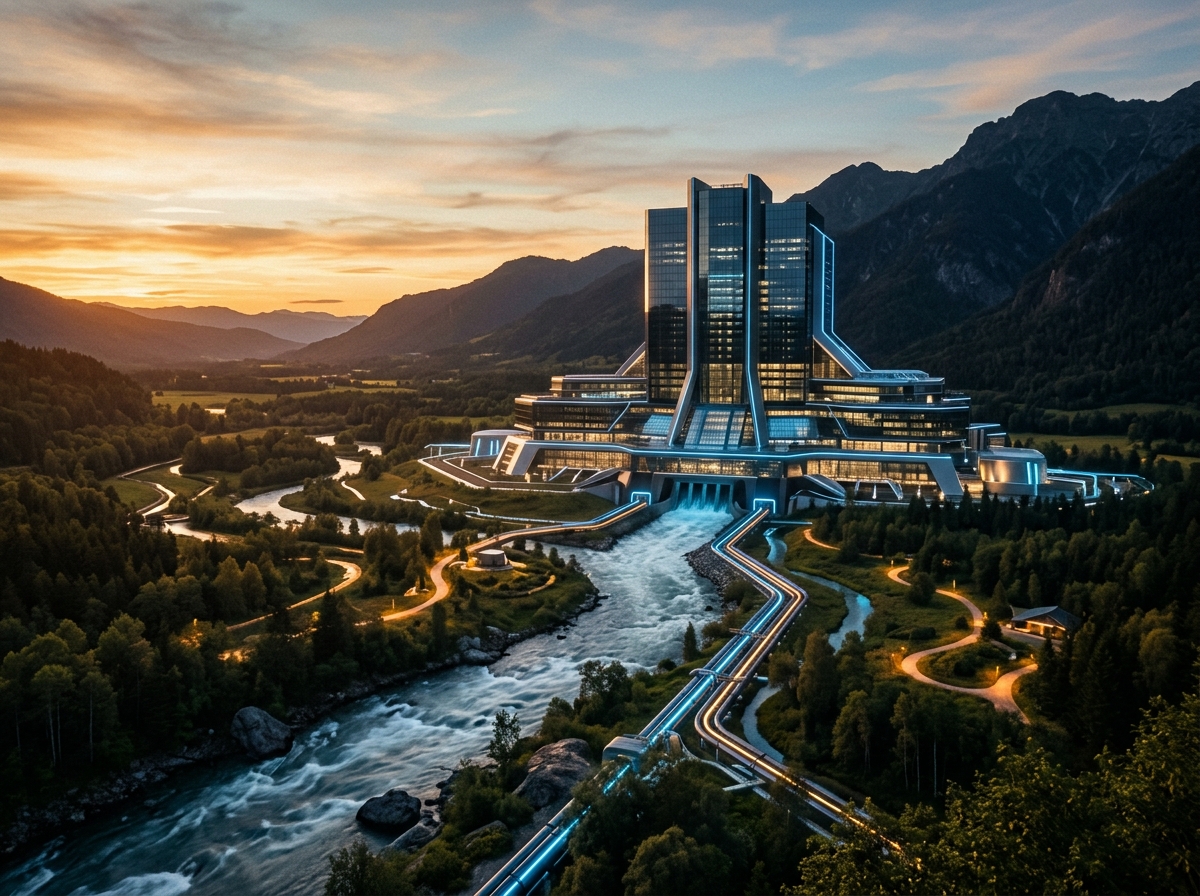
Unlike a standard colocation facility, which might sit in a business park sharing a grid connection with a shopping mall, a Data Center Power Hub is an infrastructure-first development. It is defined by its relationship to the electrical grid. These are large-scale campuses developed specifically around robust power availability, often bypassing local distribution bottlenecks to connect directly to high-voltage transmission lines.
Take the recent news from AVAIO Digital. Recently, they announced plans to build a data center and power hub near Little Rock. This is not just a warehouse for servers. It is a strategic infrastructure play that prioritizes energy access and scalability from day one.
It is a shift in thinking. You are not buying space. You are securing a lifeline to the grid.
Key Components: The Anatomy of a Hub
When evaluating this category, you will notice the specs look different than they did five years ago.
The Power Shell
In a hub environment, the electrical infrastructure often predates the buildings. We are talking about on-site substations. The AVAIO Digital project, for example, highlights the convergence of "data center" and "power hub." This means the developer handles the heavy lifting of utility negotiations, transmission line access, and substation construction before a single server rack is bolted to the floor.
Geographic Diversity
Why Little Rock? Why not Ashburn or Santa Clara?
The Tier 1 markets are full. Physically, yes, but more importantly, electrically. Transmission lines in Northern Virginia are congested. A key component of the modern Power Hub is its location in a "secondary" market where the grid has capacity, land is available, and renewable energy options are plentiful.
Sustainability Integration
This is the messy part of the industry right now. Everyone wants net-zero, but few know how to get there.
Power Hubs are designed with green energy in mind. By building in locations like Arkansas, developers like AVAIO can tap into energy mixes that allow for sustainable scaling. It is easier to integrate solar or wind farms into a campus design when you have hundreds of acres and direct grid cooperation, rather than trying to retrofit a building in a dense urban core.
Benefits and Use Cases
Why should a CTO or infrastructure VP care about a hub in Little Rock?
Future-Proofing for AI
Artificial Intelligence is not just a buzzword; it is a power vampire. A standard rack might draw 5-10kW. An AI training cluster can demand 50kW to 100kW per rack. Traditional facilities simply cannot cool or power that density without massive retrofits.
A purpose-built hub handles this density natively.
Speed to Market
This might sound counterintuitive. Building a massive campus takes time, right?
Well, yes and no.
If you try to build your own facility, you are looking at 3-5 years just for power provisioning in some markets. However, by partnering with a specialized developer like AVAIO Digital, the "heavy lifting" regarding zoning, land acquisition, and power interconnects is already in motion. The release notes regarding their Little Rock project indicate a forward-looking approach that significantly shortens the timeline for tenants who need capacity now, not in 2030.
Risk Mitigation
Spreading infrastructure across different power grids (like SPP or MISO) reduces the risk of a regional blackout taking down your entire operation. Decentralization is security.
Selection Criteria: Buying Intelligence
If you are in the market for wholesale capacity or a build-to-suit footprint, the criteria have changed.
1. Validated Power vs. Promised Power
There is a lot of "ghost power" in marketing brochures. A developer might say they have "access" to 100MW. Do they have a signed interconnect agreement? Do they have a substation?
Look for partners who treat the power component as the primary product. The AVAIO model of designating the site a "power hub" suggests a prioritization of the electrical reality over the real estate fantasy.
2. The Partner Ecosystem
Who is building the site? You want a developer that understands the intersection of construction and utility regulation. It is a niche skill set.
3. Connectivity
Power is king, but latency is queen. A hub must sit on major fiber routes. The Little Rock area, for instance, serves as a strong transit point for data moving between the East Coast and the Texas markets. It is a sweet spot.
Here is the thing about connectivity: It is easier to pull fiber to a site with power than it is to pull power to a site with fiber. Prioritize the power.
Future Outlook
The data center industry is currently undergoing its biggest transformation since the invention of the cloud.
We are moving toward a bifurcated market. On one side, edge computing in cities for ultra-low latency. On the other, massive "Gigawatt Scale" campuses in rural or secondary markets handling the heavy compute loads of AI and simulation.
Projects like AVAIO Digital’s hub in Little Rock are the tip of the spear. They represent the new normal where data centers are viewed as critical infrastructure, akin to power plants themselves.
For the enterprise buyer, the message is clear: Stop looking for space in congested markets where power is scarce and expensive. Look to the hubs. Look to the developers who are solving the power equation first.
Because in the next decade, the company with the most secured power wins.