 ⬇️
⬇️
Key Takeaways
- New research suggests thermodynamic computing could cut AI image generation energy use by up to ten billionfold.
- Early prototypes show potential but remain far less capable than digital neural networks.
- Hardware limitations, not the underlying physics, are likely to determine near‑term progress.
AI image generation has become one of the most power‑hungry areas of modern computing, and not by a small margin. Diffusion models such as those powering DALL‑E, Midjourney, or Stable Diffusion depend on an intensive dance of adding noise, then removing it through deep neural networks trained on massive datasets. It works beautifully, but it burns through energy. So when a pair of recent studies argued that a physics‑powered alternative could slash energy consumption by a factor of up to ten billion, people in both AI and semiconductor circles took notice.
The idea at the center of this emerging field is thermodynamic computing. Instead of pushing electrons through rigid digital circuits, these systems rely on physical components that naturally fluctuate because of ambient thermal noise. That noise, which normally wreaks havoc in digital electronics, becomes the computational fuel. It’s almost counterintuitive. But researchers have long known that nature itself is exceptionally good at exploring random states, far more efficiently than the pseudorandom number generators running on today's chips.
Here’s the thing: the timing feels relevant. As generative AI adoption grows across industries, questions about power draw and sustainability aren’t going away. Data‑center operators know this better than anyone. And while thermodynamic computing is nowhere near deployment, the underlying promise raises a question worth asking: could the next breakthroughs in AI efficiency come from new physics rather than new algorithms?
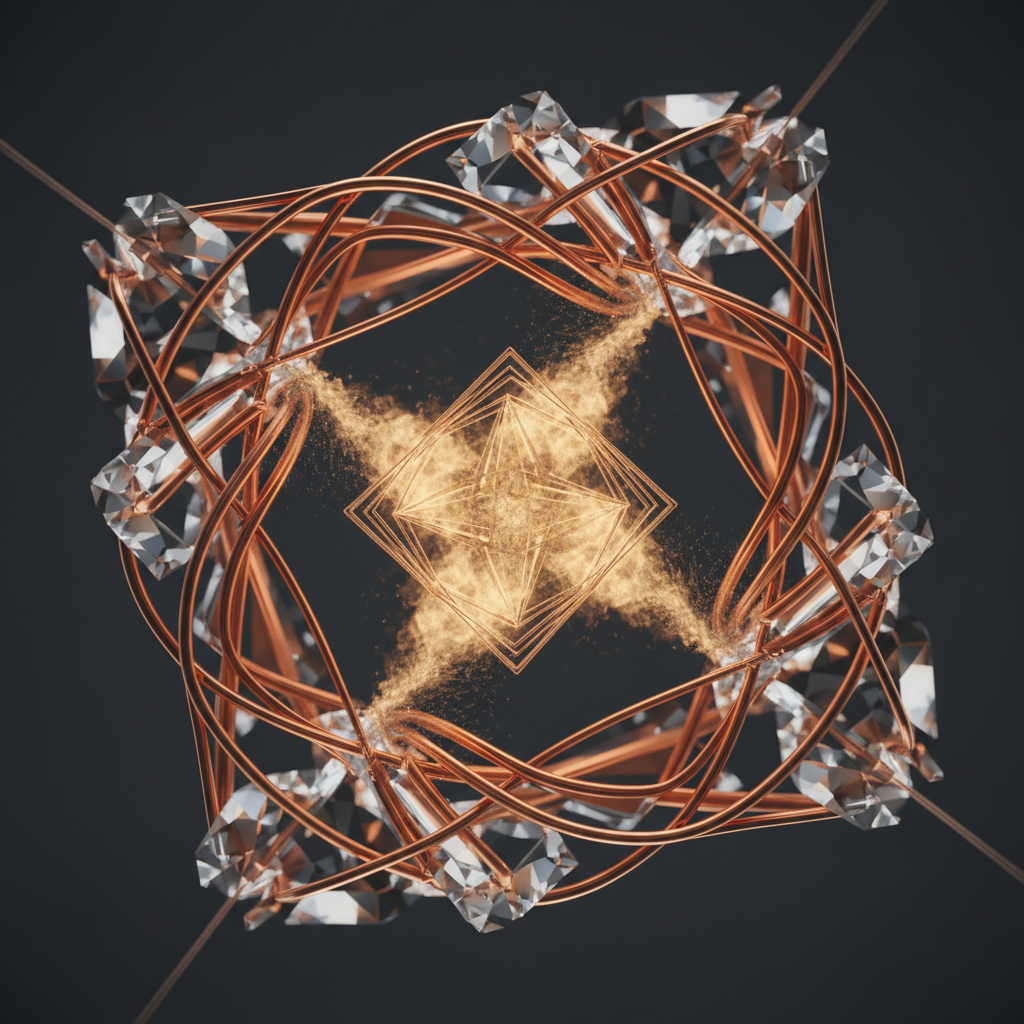
One of the more eye‑catching examples comes from Normal Computing, a New York City–based startup developing prototype chips built around eight interlinked resonators. Each resonator couples with the others via configurable connectors, forming a sort of programmable analog calculator. When engineers excite the resonators—the researchers describe this as “plucking” them—the system undergoes a series of natural fluctuations. After settling into equilibrium, the final state can be read out as the solution to the target problem. It’s a hyper‑condensed description of what is, under the hood, a very different computing paradigm.
A recent study from Stephen Whitelam and a colleague at Lawrence Berkeley National Laboratory takes this a step further. Their work shows that you can construct a thermodynamic equivalent of a neural network. Not one that simply imitates the equations digitally, but one that relies on the physics of noise and equilibration. This is where the concept becomes particularly interesting for image generation.
Instead of forcing a model to add noise digitally, Whitelam proposes letting the noise arise naturally from interactions between the system’s components. A thermodynamic computer, supplied with a set of training images, would allow them to degrade through random fluctuations. Over time, the couplings among the components settle into equilibrium states that reflect this degradation process. The next step—and arguably the clever part—is to compute the probability that a given coupling pattern can reverse the degradation. The system then adjusts those couplings to increase that probability.
It’s striking that this entire sequence, in Whitelam’s simulations, allowed the system to generate handwritten digit images without digital neural networks or pseudorandom number generators. The training was performed on conventional hardware, but the method is designed for eventual physical systems powered by thermodynamics rather than silicon logic.
That said, the research is still early. Whitelam is straightforward about the limitations: thermodynamic computers today are primitive compared with digital neural networks. They don’t scale, they don’t produce high‑fidelity imagery, and no one yet knows how to build a full system that could compete with production‑grade AI models. It’s not even clear what the right hardware architecture will look like. And scaling analog or physics‑based systems is notoriously difficult—companies working in optical computing or neuromorphic chips are well aware of that reality.
Still, the potential energy savings are hard to ignore. If the physics holds, and if hardware can be developed close to the theoretical ideal, the efficiency gap would be enormous. But those are big ifs. Most analysts expect early‑stage thermodynamic computers to land somewhere between current digital hardware and the ideal theoretical limit. That’s not a dismissal, just a reminder that physics offers permission, not guarantees.
Where does this leave enterprise leaders or technology strategists? Probably in a familiar place: monitoring the space, waiting for hardware that can move from lab demos to reproducible components, and assessing whether future versions could slot into AI pipelines. It wouldn’t replace GPUs or accelerators anytime soon. More likely, if this technology matures, it could complement existing systems by offloading specific types of probabilistic or sampling‑heavy tasks. Diffusion‑model noise steps are one obvious target.
For now, Whitelam’s research adds momentum to a broader trend: the search for post‑digital computing paradigms capable of breaking through current energy and scaling walls. Whether thermodynamic systems become a meaningful part of that future remains to be seen. But the work does suggest something quietly radical: sometimes the fastest way forward isn’t more silicon, but better use of the noise that’s been around us all along.