 ⬇️
⬇️
Key Takeaways
- WatchGuard has launched Rai, an AI-driven system aimed at supporting managed service providers with automated security investigations
- The rollout reflects growing pressure on MSPs to handle rising alert volumes without expanding headcount
- The launch underscores a broader industry shift toward practical, workflow-focused AI rather than experimental tools
WatchGuard is pushing deeper into automation with the debut of Rai, an AI-oriented workforce designed to help managed service providers manage incident investigations more efficiently. The move lands at a moment when security teams are struggling to keep up with threat telemetry. Some MSPs say alerts have multiplied faster than they can realistically staff. Others admit they are experimenting with AI but still lack a solution that fits cleanly into their day-to-day operations.
Here is the thing. Much of the industry has been flooded with AI-branded features, yet relatively few have been packaged as actual labor-saving tools for MSP teams. WatchGuard is arguing that Rai is not simply a chatbot. Instead, the company frames it as a set of automated capabilities that augment security analysts and accelerate decisions that normally take longer than they should.
The company has not released additional hard numbers tied to performance gains, so readers looking for strict metrics will not find them here. But it is worth noting that WatchGuard has been building toward this for a while. Anyone who has followed the firm's previous work around unified threat management or endpoint protection might see Rai as a natural extension of that stack. It fits neatly with broader efforts in AI-driven security response discussed by various vendors at recent industry events, including those covered by Cybersecurity Dive, which highlighted that MSPs are demanding tools that bridge the gap between raw alerts and actionable context.
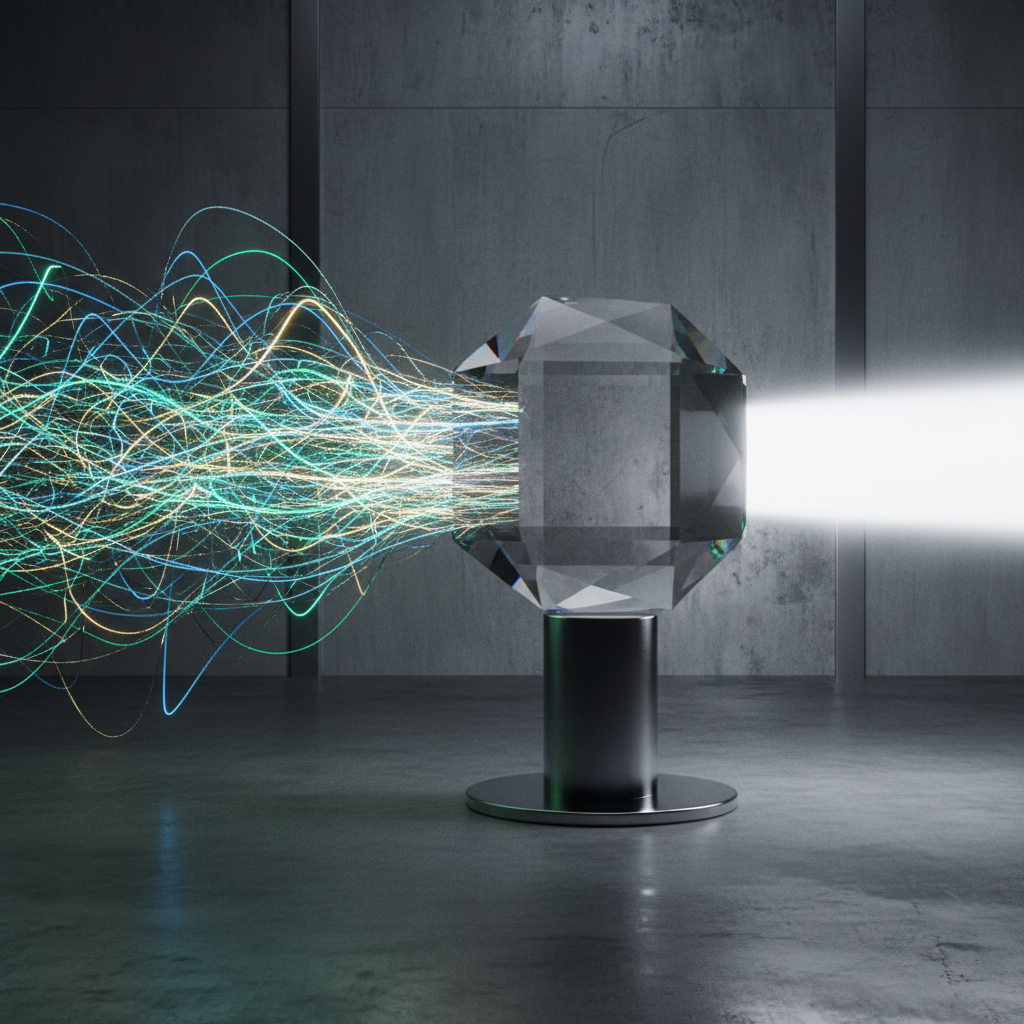
On a practical level, Rai focuses on investigation automation. That may sound technical, though the idea is simple enough. MSPs receive thousands of signals across firewalls, endpoints, identity systems, and cloud services. Sorting them manually takes time. Rai is meant to ingest those signals, correlate them, and present analysts with clearer summaries so they can decide what to do next. The goal is not to replace humans. It is to speed up the tasks that drain most of a technician's day.
Still, the timing is interesting. Generative AI hype has cooled a bit since late 2023 and early 2024. Buyers are now asking which tools integrate cleanly into existing workflows. That shift gives companies like WatchGuard an opening to highlight focused automation instead of catch-all AI platforms that promise too much. Some analysts have noted similar moves at other security providers, such as those documented in industry commentary from Forrester, which has increasingly emphasized workflow-level AI improvements rather than broad end-to-end replacement. That comparison helps explain why WatchGuard is positioning Rai as a workforce concept rather than a single feature.
Stepping back for a moment, MSPs are in a complicated spot. Their customers expect them to protect increasingly complex environments. But margins remain tight, hiring is competitive, and the threat landscape does not slow down. So the question becomes: how do they scale without dramatically increasing cost? Tools like Rai are being marketed as a partial answer. Whether MSPs embrace it widely is something we will have to watch over the next few quarters.
There is also an interesting cultural dimension here. Many smaller MSPs are cautious about AI because they do not want autonomous systems making decisions that could inadvertently block legitimate activity. WatchGuard appears to be addressing this indirectly by focusing Rai on investigations rather than enforcement. Analysts still make the final call. In other words, Rai behaves more like an assistant than an automated security officer. That distinction might matter more than the technology itself.
Another point worth noting is that WatchGuard tends to design products with channel partners in mind. The MSP community has long been central to its distribution strategy. Framing Rai as a workforce rather than a feature helps the company reinforce that alignment. Some readers might find parallels with the company's previous consolidation of firewall, identity, and endpoint controls into unified licensing bundles. This new AI layer continues that trend toward integration.
All of this raises one lingering question. Will MSPs trust AI systems enough to place them at the center of their investigation workflows? The industry has been moving in that direction, but trust is still earned gradually. WatchGuard might have an advantage because many MSPs already rely on its platform for security infrastructure. Adding AI to an existing system can be less intimidating than adopting a standalone AI product from a newer vendor.
Ultimately, Rai reflects where the security market is heading. Practical automation is no longer optional, especially for resource-constrained MSPs. While enthusiasm varies, the core idea behind Rai, that investigation time should shrink and analyst attention should shift to decisions that matter, seems aligned with the realities MSPs face today.
For now, WatchGuard has put its stake in the ground. Rai is out, and the company clearly wants to position itself as a leader in AI-assisted security operations. How quickly MSPs adopt it will depend on trust, usability, and whether the system genuinely reduces their workload.