 ⬇️
⬇️
Key Takeaways
- Scale equates to stability: Massive investments, like recent projects in Northern Virginia, signal long-term infrastructure reliability for enterprise clients.
- Phased scalability: Modern data center campuses are built in stages, allowing capacity to grow alongside customer demand without service interruption.
- Economic and technical impact: Beyond simple storage, these facilities drive regional economic growth and reduce latency for high-performance computing.
Definition and Overview
When you see a headline about a capital project hitting the multi-billion dollar mark, it’s easy to gloss over the zeros. But in the world of B2B technology, those zeros represent a fundamental shift in how the internet works. We aren't talking about a server room in the basement of an office building anymore.
We are talking about hyperscale.
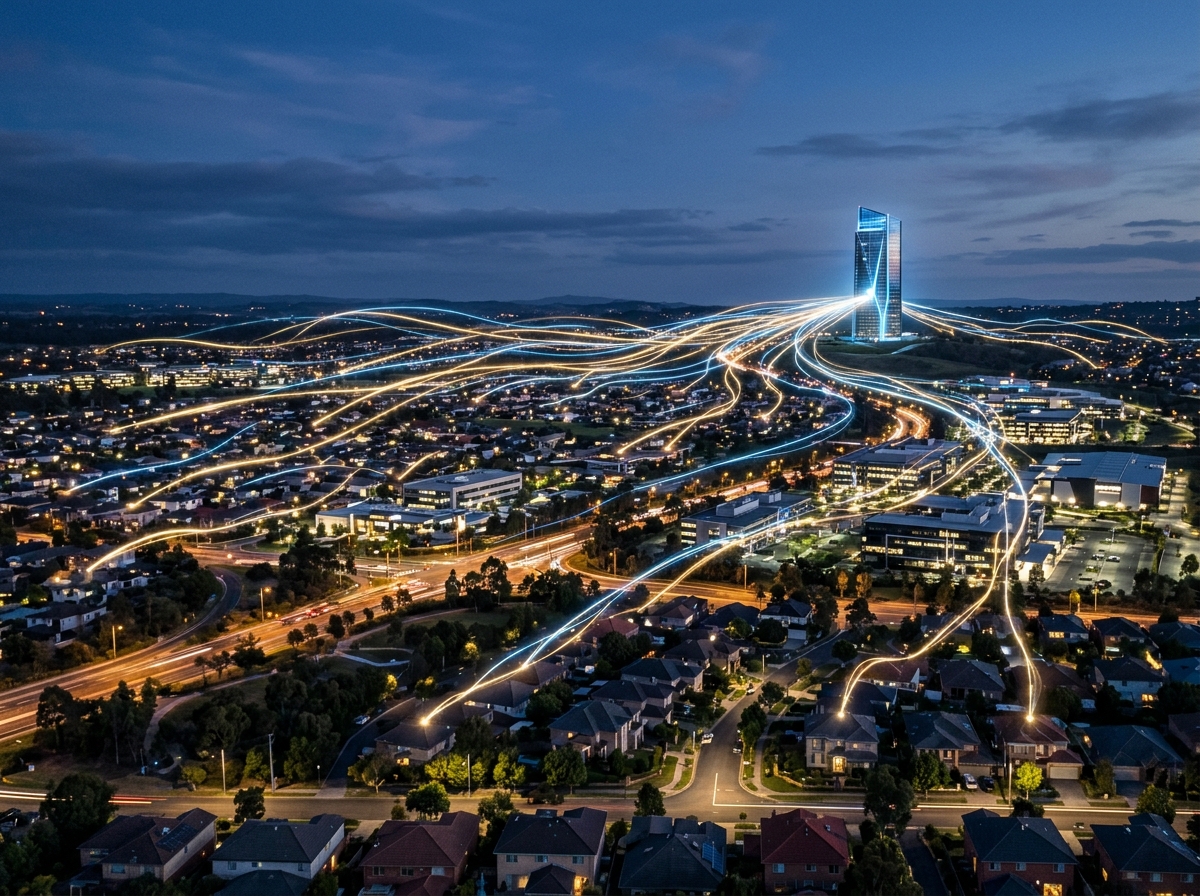
To understand the modern landscape, look at the recent developments in Virginia. New data center campuses are being constructed during multiple phases, utilizing massive multi-billion dollar investments. These projects encapsulate exactly what "infrastructure" means in the 2020s. It’s a dedicated campus designed to support cloud computing, big data analytics, and the exploding demand for AI.
So, what is a hyperscale data center? It is a facility owned and operated by the company it supports—usually a major cloud provider or tech giant—designed to scale up to millions of servers. They are the physical manifestation of "The Cloud."
Here's the thing. Companies don't spend $6 billion on a whim. They do it because the digital economy has transitioned from a "nice to have" utility to a critical survival mechanism for global business.
Key Components or Features
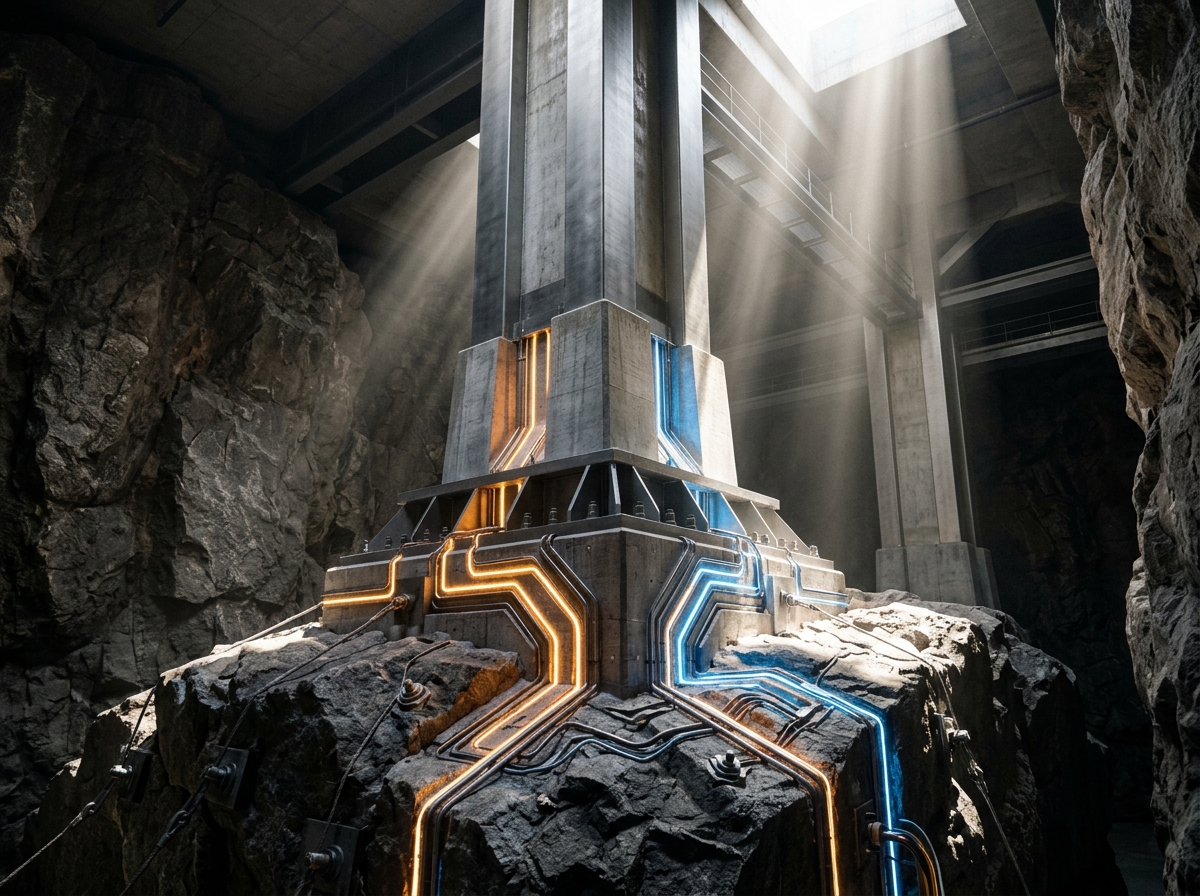
A facility of this magnitude is more like a small city than a warehouse. It requires a convergence of three critical utilities: massive power, diverse connectivity, and advanced cooling.
The Phased Approach
Standard operating procedure dictates that these projects be constructed during "multiple phases." This is standard for Tier 1 infrastructure. You don't build the whole thing at once. You build a core, fill it with capacity, and then expand.
- Phase 1: Site prep, power substation construction, and the first data hall.
- Subsequent Phases: Additional halls brought online as demand spikes.
This modularity is crucial. It allows the operator to upgrade hardware in later phases without touching the legacy systems in the earlier ones. It’s smart engineering.
Power and Cooling
You can't just plug these things into a wall outlet. These facilities often require their own substations. Then there is the heat. Servers generate immense amounts of thermal energy. Getting rid of that heat is an art form. Liquid cooling, hot aisle containment, and free-air cooling (using outside air) are standard features.
Tangentially, have you ever thought about the sheer amount of copper wire involved in a $6 billion project? It’s enough to wrap around the planet. Twice.
Benefits and Use Cases
Why should a CIO or CTO care that a provider is dropping billions in a strategic region?
Unshakable Reliability
When a provider invests this heavily, they are building redundancy upon redundancy. If you are an enterprise buyer, you want to know that your cloud provider isn't going to run out of space or power. A multi-billion dollar commitment is the ultimate assurance of longevity.
Reduced Latency
Location is everything. Data travels at the speed of light, but fiber optic cables have drag. By positioning massive compute power in strategic locations like Northern Virginia—which sits near key fiber backbones—providers reduce the milliseconds it takes for data to travel to end-users. For high-frequency trading or real-time data analytics, those milliseconds are money.
Security at Scale
Small data centers struggle to maintain military-grade security. Hyperscale campuses operate with perimeter fencing, biometric access, and 24/7 armed security. It’s easier to secure one massive fortress than fifty small outposts.
Selection Criteria or Considerations
If you are in the market for colocation or cloud services, you need to vet your provider’s infrastructure. Not all data centers are created equal.
Investment Volume
Follow the money. Is the provider maintaining old facilities, or are they breaking ground on new ones? New campus construction is a green flag. It shows the operator is solvent, forward-looking, and ready for the AI boom.
Sustainability Strategy
This is the elephant in the room. Data centers consume energy. However, modern campuses are often the most efficient.
Look for:
- PUE (Power Usage Effectiveness) ratings closer to 1.0.
- Commitments to renewable energy sourcing.
- Water conservation technologies for cooling.
Ecosystem Access
A data center shouldn't be an island. It needs to be a hub. Does the facility connect directly to other carriers? Is it cloud-neutral? The best facilities act as a marketplace where you can cross-connect to partners instantly.
Future Outlook
The trajectory is only pointing up.
We are currently seeing a massive rush toward infrastructure to support Generative AI. AI models require different hardware (GPUs) and higher power density than traditional web hosting. The data centers of tomorrow—the ones being planned right now—are being designed to handle heat loads we couldn't have imagined five years ago.
Investments like those in Virginia are setting the stage for this next evolution.
For the enterprise buyer, the message is clear: Align yourself with providers who are building for 2030, not just maintaining 2020. The $6 billion price tag isn't just a cost; it's a down payment on the future of cloud computing.