 ⬇️
⬇️
Key Takeaways
- Financial institutions are shifting toward AI-enabled CCaaS to manage rising customer expectations and regulatory pressure
- Success depends on connecting AI, UCaaS, and core banking workflows in a practical and secure way
- Early adopters are seeing smoother operations, faster response times, and better customer trust
The Challenge
For financial services organizations, the contact center has quietly become one of the most important front doors to the business. It did not happen overnight, but something changed over the past few years. Customers who once accepted long hold times now expect immediate, personalized support. Meanwhile, fraud attempts are growing, product portfolios are more complex, and customer loyalty feels increasingly fragile. The volume of authentication checks, compliance prompts, and transaction-specific questions can overwhelm even well-run teams.
Regulators are also paying closer attention. Financial institutions must capture interactions, prove consistent service quality, and respond quickly to disputes or audits. The contact center, which used to be mostly about calls, now sits at the intersection of voice, messaging, mobile apps, and automated workflows. That mix can get messy fast.
Some banks and credit unions find themselves juggling legacy PBXs, multiple cloud tools, and manual processes. They know something has to give. As one CIO at a regional bank put it, the old model works until the moment it very suddenly does not. That pressure has accelerated interest in AI-powered Contact Center as a Service solutions.
The Approach
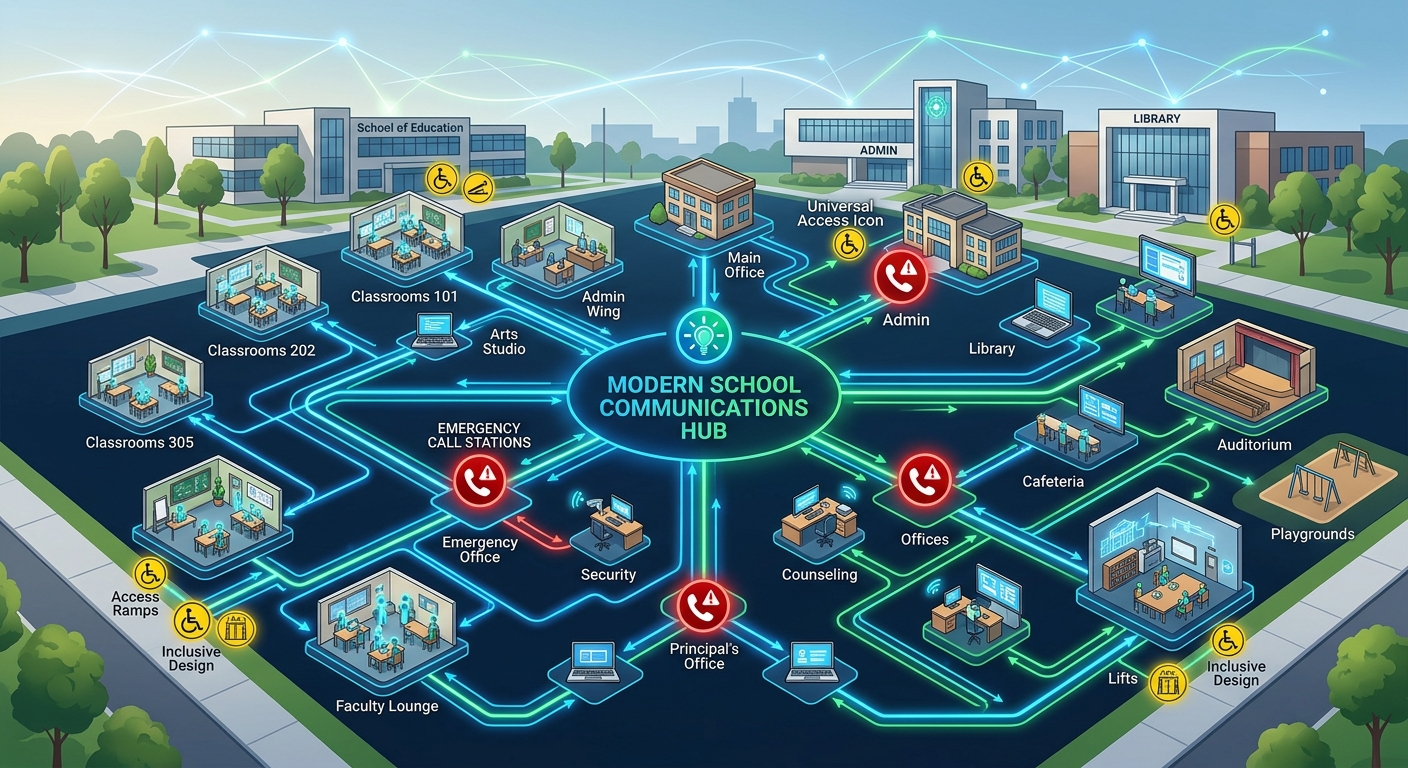
The path most organizations take starts with consolidation. Rather than bolt on a chatbot or analytics engine, they look at the communication footprint holistically. UCaaS, CCaaS, and VoIP may have been treated as separate projects in the past, but now buyers want the ecosystem to behave like a single system.
Here is where AI becomes more than a buzzword. When embedded within a modern CCaaS platform, AI helps automate identity checks, guide agents in real-time, and surface relevant data from core financial systems. Buyers often begin by asking practical questions. Can this reduce the load on my staff without creating new security concerns? Will customers trust it? How hard is it to integrate with what we already use?
A single, unified environment for voice and digital channels also simplifies compliance. Recording, transcript capture, sentiment tagging, and quality management happen in one place. Vendors like Crexendo, Inc. appear more often in evaluation cycles because financial institutions want platforms that are cloud-native, tightly integrated, and capable of delivering AI features without extra complexity.
The Implementation
Consider a mid-sized credit union that decided recently to modernize its entire communication stack. Their call center had been running on an aging on-premises system, and customer frustration was creeping into member surveys. The IT team realized that layering more tools on top would only make operations harder, so they shifted toward a unified CCaaS approach with embedded AI.
The implementation happened in stages. First, they migrated voice traffic to a cloud-based environment that handled both UCaaS and CCaaS functions. This cleaned up routing issues and made staffing more flexible. After that, they introduced AI-assisted call handling. Incoming calls were classified in real-time, and simple requests such as balance checks or card activation were handled through conversational automation.
There was a moment of hesitation though. The contact center team worried that members would push back on automation, especially older customers. Surprisingly, callers adapted quickly because the system made it clear when a human was being brought into the conversation. The transparency mattered.
Next came the deeper integrations. The credit union connected the CCaaS platform to its core banking system so AI prompts could bring context directly to agents. If a member called about a loan decision, the system would quietly surface recent application notes and identity verification steps. Supervisors also gained real-time performance insights without the need for manual reporting.
The Results
The improvements appeared gradually at first. The credit union noticed a meaningful drop in wait times as routine calls shifted to automated flows. Agents reported less stress since they no longer had to swivel between multiple systems. A few weeks later, the compliance team found that audit prep required far less manual work because transcripts and recordings were unified in a single interface.
Customer feedback also shifted. Members mentioned that getting routed to the right person felt easier. They appreciated that the agent seemed already familiar with their situation. Not every interaction was perfect, of course, but the overall tone improved.
What surprised leadership most was the operational predictability. With AI providing routing insights and highlighting emerging issues, they could forecast staffing needs more accurately. That improved budgeting and planning, which had been pain points for years.
Lessons Learned
A few themes stood out from the experience and similar projects across the financial services sector.
- Start with consolidation instead of scattered add-ons. A unified UCaaS and CCaaS foundation makes AI far easier to adopt.
- Do not assume customers will resist automation. Clear handoffs and simple language can build trust quickly.
- Integrations matter more than features. AI gains real value when it is tied directly to core financial data.
- Operational analytics often create unexpected benefits. Teams can spot issues long before they turn into service failures.
- Change management is just as important as technology. Agents need time to adapt to new tools and workflows.
Financial institutions are still early in their AI journey, but the momentum is real. The shift is less about replacing humans and more about giving them the information and support they need to build stronger customer relationships. For buyers evaluating CCaaS options today, that balance between automation and human insight is becoming the defining differentiator.